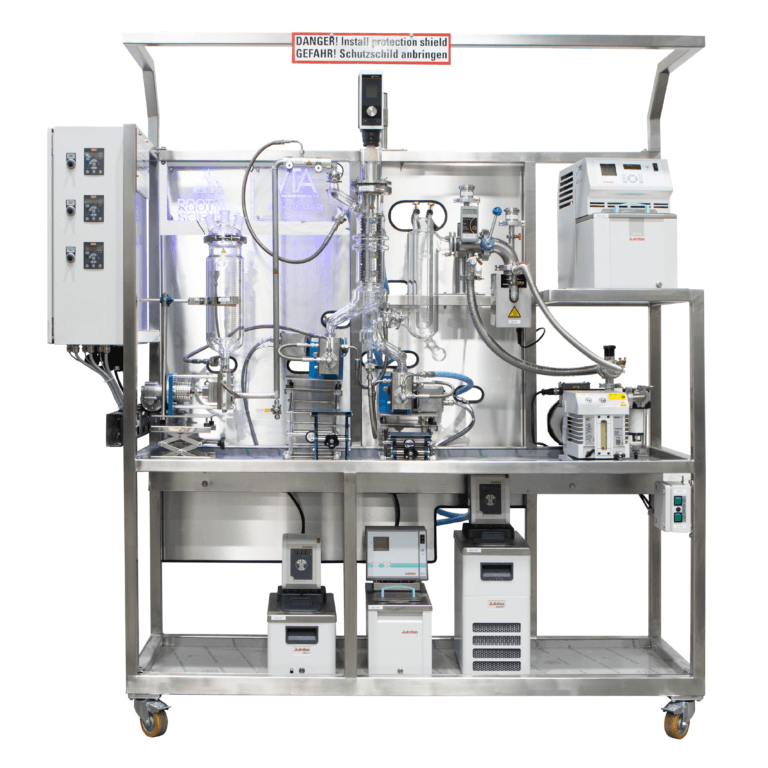
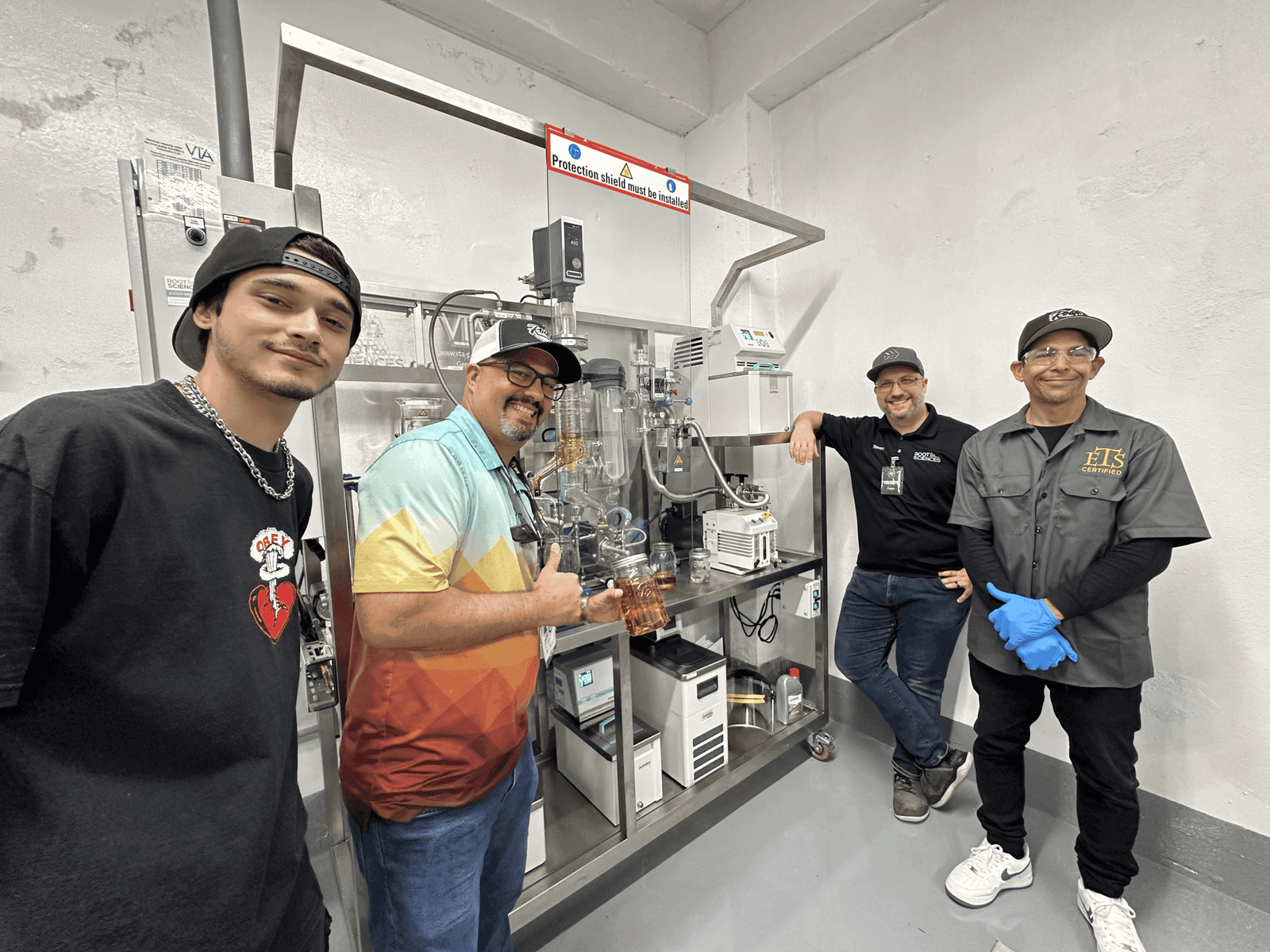
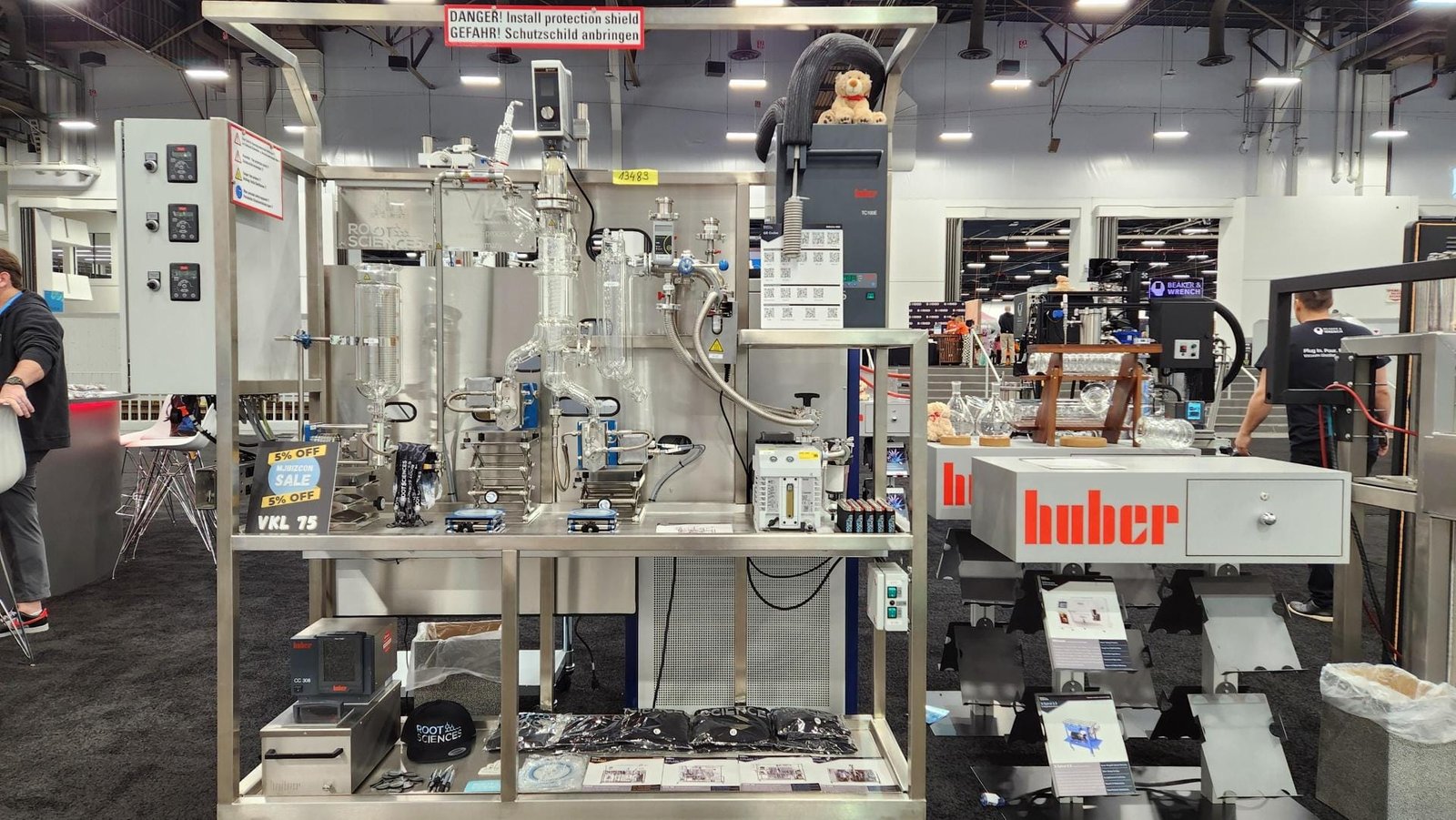
1. Where does the VKL 75 typically fit within a cannabis or hemp processing workflow?
The VKL 75 is most often used after extraction and winterization as a dedicated refinement step. It serves as a bridge between crude oil preparation and finished distillate, integrating into post-extraction workflows that prioritize consistency and controlled separation.
2. How does wiped-film distillation differ from short-path bench-scale systems?
Unlike batch-based bench systems, wiped-film distillation spreads material continuously into a thin film, allowing steadier operation and more predictable separation. This approach is commonly preferred in commercial settings where throughput and repeatability are important.
3. What types of facilities commonly use the VKL 75?
The VKL 75 is typically used by commercial cannabis and hemp processors operating at small-to-mid production scale. It is well suited for facilities that require daily operation without moving into large industrial distillation footprints.
4. How does material preparation impact performance on the VKL 75?
Upstream steps such as proper winterization, filtration, and moisture removal play a significant role in how smoothly material processes through the system. Well-prepared feedstock supports more stable operation and consistent distillate output.
5. What role does operator visibility play during distillation?
Visual access to key distillation components allows operators to observe film behavior and process conditions in real time. This visibility can help with process understanding, troubleshooting, and maintaining consistent operation over extended runs.
6. How is the VKL 75 typically integrated with supporting equipment?
The system is commonly paired with external vacuum systems, heaters, feed pumps, and downstream collection vessels. Its layout allows it to be incorporated into existing lab infrastructure without requiring a complete facility redesign.
7. What considerations should processors evaluate before choosing a wiped-film distillation system?
Processors often evaluate available floor space, desired throughput range, operator experience, and long-term production goals. Understanding how distillation fits into the broader process is just as important as equipment capacity.
8. Can the VKL 75 support consistent output across multiple production runs?
When operated under stable conditions with consistent feedstock preparation, the VKL 75 is designed to support repeatable performance across ongoing distillation runs, which is important for downstream formulation and manufacturing.
9. How does wiped-film distillation support temperature-sensitive cannabinoids?
By operating under vacuum and using a short vapor path, wiped-film distillation allows cannabinoids to separate at lower effective temperatures, helping limit unnecessary thermal exposure during refinement.
10. Is the VKL 75 better suited for batch or continuous processing environments?
The VKL 75 is generally used in continuous or semi-continuous processing environments where steady operation and predictable workflow are preferred over batch-style processing.