
Controlled Cannabis Filtration
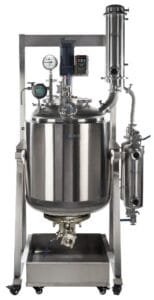
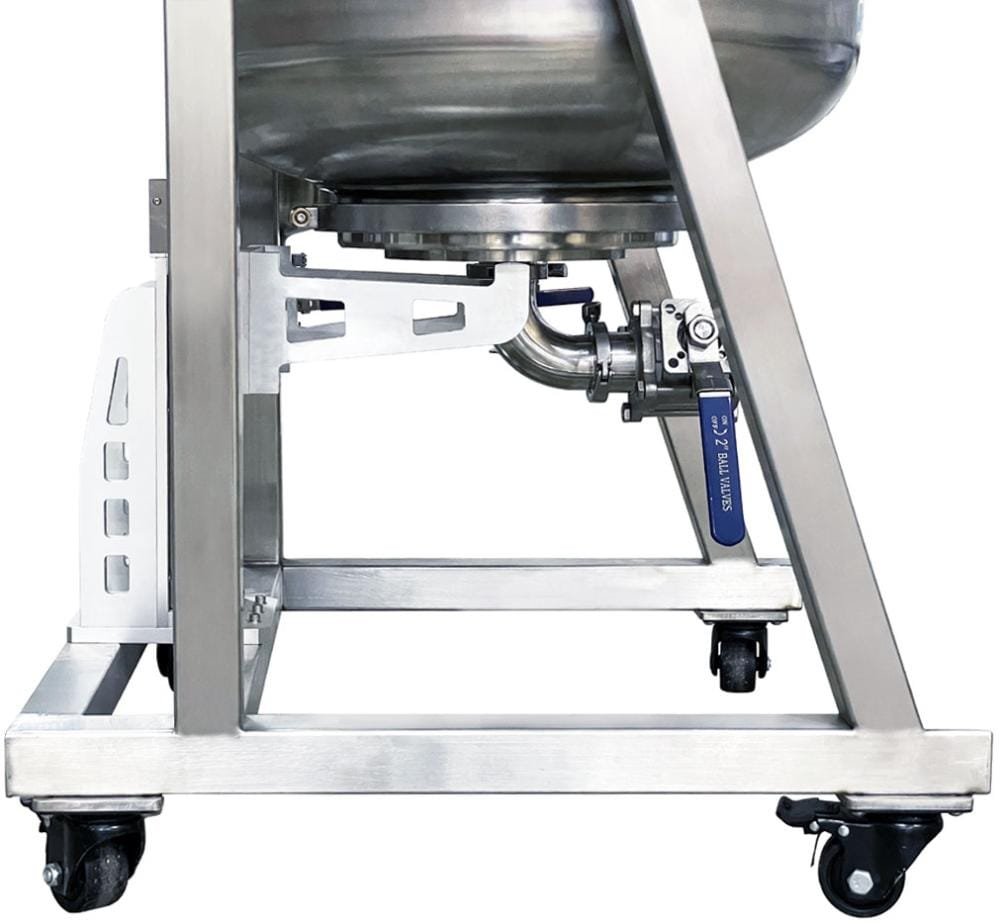
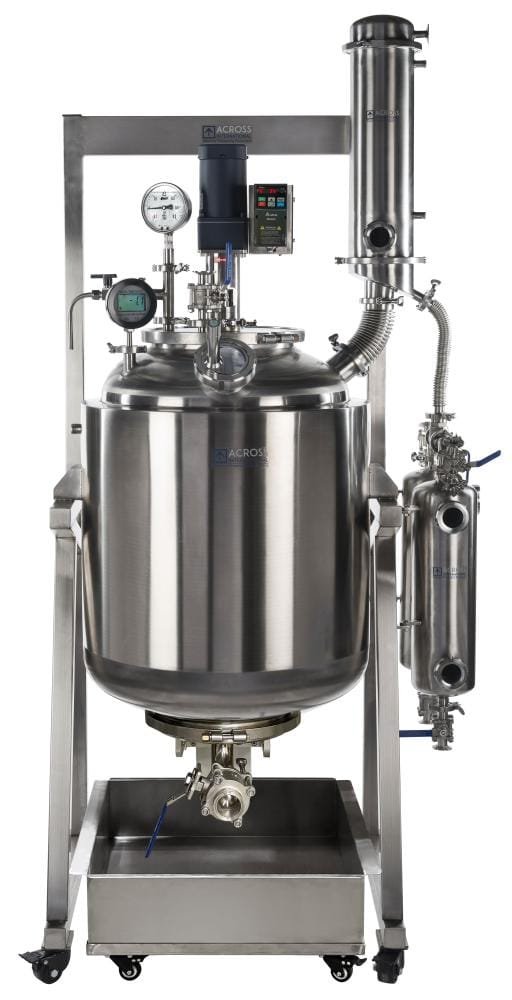
A dual-jacketed 200 L stainless steel reactor designed to support temperature-controlled reactions and efficient filtration across a range of cannabis processing steps.
200 L stainless steel filter reactor
Dual-jacketed for heating and cooling control
316L stainless steel construction
In-vessel filtration design
Compatible with vacuum operation
Supports cannabis and hemp workflows
Easy-to-clean interior surface
| Dimensions: | 34” L x 32” W x 80” H |
| Power: | 1-phase, 220 V, 50/60 Hz, 200 Watts, 1/4 HP |
The SR200f: Dual-jacketed reactor for cannabis and hemp workflows
An all-in-one reactor supporting winterization, post-reaction filtration, and intermediate processing stages
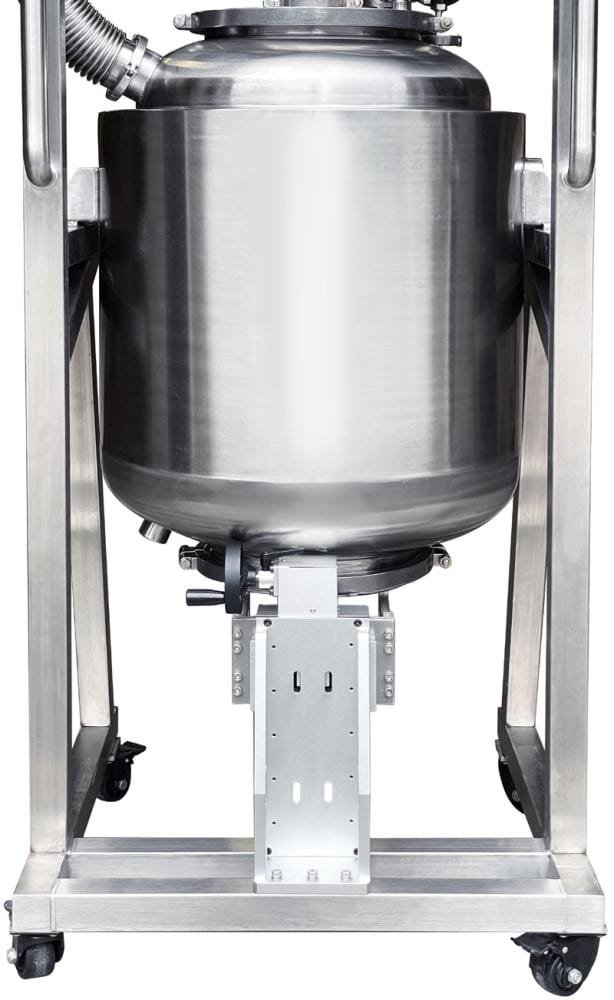
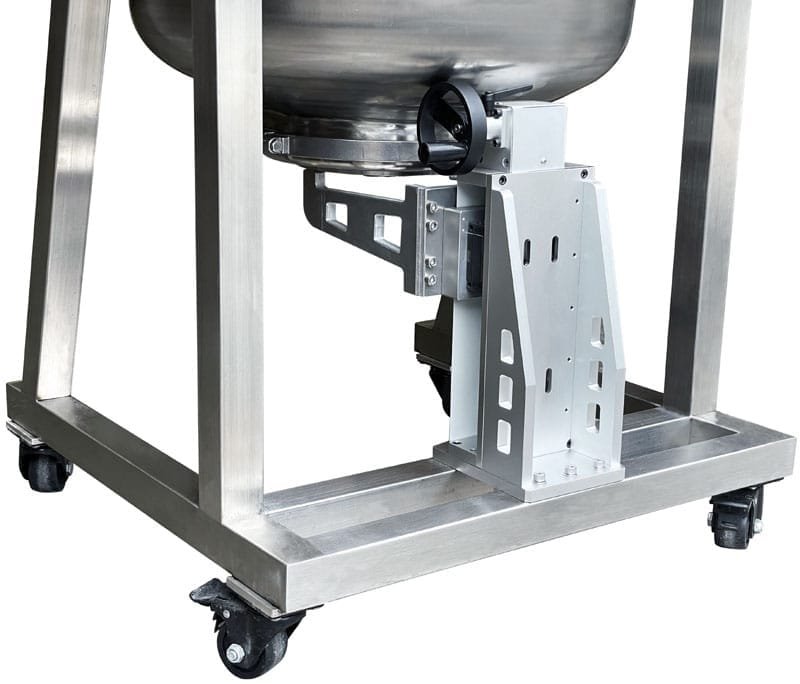
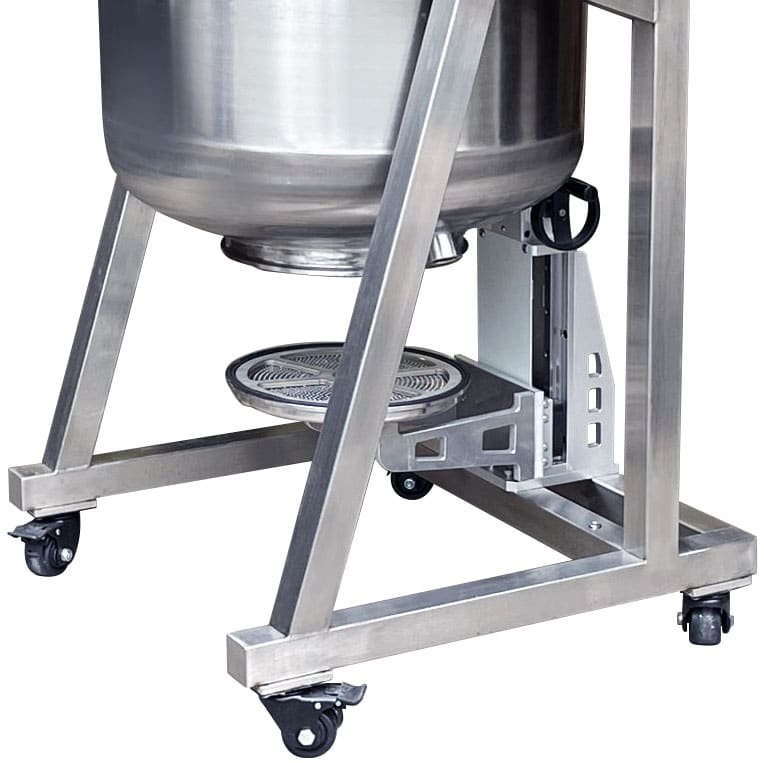
The 200 L dual-jacketed stainless steel filter reactor is used in cannabis and hemp processing applications that require controlled temperatures and integrated filtration within a single vessel. The jacketed chamber allows operators to circulate heating or cooling fluid to manage process conditions, while the built-in filter plate enables solid-liquid separation without the need to transfer material between systems. This combination helps streamline steps such as winterization, post-extraction filtration, and intermediate purification. Constructed from 316L stainless steel, the reactor is compatible with a wide range of cannabis and hemp extracts and is designed to support consistent, repeatable processing in laboratory and small production environments.
Cannabis isolation and crystallization are downstream processing methods used to separate and purify individual cannabinoids from cannabis and hemp extracts. These processes take advantage of differences in solubility, temperature behavior, and molecular structure to encourage specific cannabinoids, such as THCA or CBD, to separate from the surrounding solution.
During isolation, controlled temperature conditions and solvents are used to dissolve or suspend cannabinoids before slowly changing the environment to promote crystallization. As conditions stabilize, targeted cannabinoids form solid crystals that can be separated from the remaining liquid. This approach allows processors to produce high-purity cannabinoid isolates or partially crystallized products for further refinement.
Isolation and crystallization are commonly used in regulated cannabis and hemp processing to support consistency, compositional control, and downstream product formulation. These methods are often integrated with filtration, temperature-controlled reactors, and other controlled processing equipment to maintain repeatable results throughout the crystallization cycle.
The dual-jacketed stainless steel filter reactor functions as a single processing vessel used in cannabis and hemp workflows that require temperature control and in-vessel filtration. Material is loaded into the reactor, where heating or cooling fluid circulates through the jacketed wall to help maintain stable conditions during mixing, reaction, or holding steps commonly used in cannabis processing.
After processing, the integrated filter plate enables solid-liquid separation directly inside the filter reactor, reducing the need for material transfers between vessels. The system may be operated under vacuum to support efficient filtration, making it suitable for cannabis and hemp applications such as winterization, post-reaction filtration, and intermediate purification within controlled processing environments.
The dual-jacketed stainless steel filter reactor is commonly used in cannabis and hemp processing steps where both temperature control and in-vessel filtration are required. Its design supports batch-based applications that benefit from maintaining stable process conditions while separating solids from liquids within a single vessel.
- Winterization and chilled filtration of cannabis and hemp extracts
- Post-reaction filtration following synthesis or refinement steps
- Intermediate purification between processing stages
- Solid-liquid separation in temperature-sensitive workflows
- Batch processing requiring controlled heating or cooling
Cannabis isolation and crystallization offer several advantages in controlled processing environments by enabling the separation of individual cannabinoids from complex extract mixtures. These methods allow processors to better manage product composition and support repeatable downstream formulation.
- Allows production of high-purity cannabinoid isolates
- Supports tighter control over cannabinoid composition
- Improves consistency between production batches
- Enables tailored inputs for formulation and product development
- Facilitates efficient separation of cannabinoids from residual compounds
- Integrates well with temperature-controlled filtration and refinement steps
1. What is a dual-jacketed filter reactor used for in cannabis processing?
A dual-jacketed filter reactor is used when cannabis or hemp processing steps require both temperature control and in-vessel filtration. It allows heating or cooling while separating solids from liquids within the same vessel.
2. How does temperature control support cannabis filtration workflows?
Temperature control helps maintain consistent processing conditions during steps such as winterization, crystallization preparation, or reaction holding, supporting repeatable filtration performance.
3. Can this filter reactor be used for winterization?
Yes. The reactor is commonly used for winterization and chilled filtration, where extracts are cooled to separate waxes or fats using the internal filter plate.
4. Is the reactor compatible with vacuum-assisted filtration?
The vessel can be operated under vacuum, which may help improve filtration efficiency during solid-liquid separation steps.
5. What size batches is a 200 L filter reactor suitable for?
A 200-liter filter reactor is typically used for pilot-scale and small production cannabis and hemp processing, depending on the specific workflow and material density.
6. What materials is the reactor constructed from?
The reactor is constructed from 316L stainless steel, a material commonly used in cannabis and hemp processing due to its chemical compatibility and cleanability.
7. How does in-vessel filtration benefit cannabis workflows?
In-vessel filtration reduces the need to move material between separate pieces of equipment, helping minimize handling steps and support consistent processing conditions.
8. Can this reactor support isolation or crystallization processes?
The reactor may be used during preparation or intermediate stages of cannabinoid isolation and crystallization, where controlled temperatures and filtration are required before or after crystal formation.
9. Is this system designed for continuous processing?
This type of filter reactor is intended for batch-based processing rather than continuous operation.
10. How does this reactor fit into a larger cannabis processing system?
Filter reactors are commonly used alongside extraction, solvent recovery, winterization, crystallization, and refinement equipment as part of an integrated cannabis or hemp processing workflow.