-
7 min read
Cannabis distillation systems typically range from $20,000-$75,000 for entry-level craft units, $75,000-$250,000 for mid-scale systems, up to $250,000-$1,000,000+...
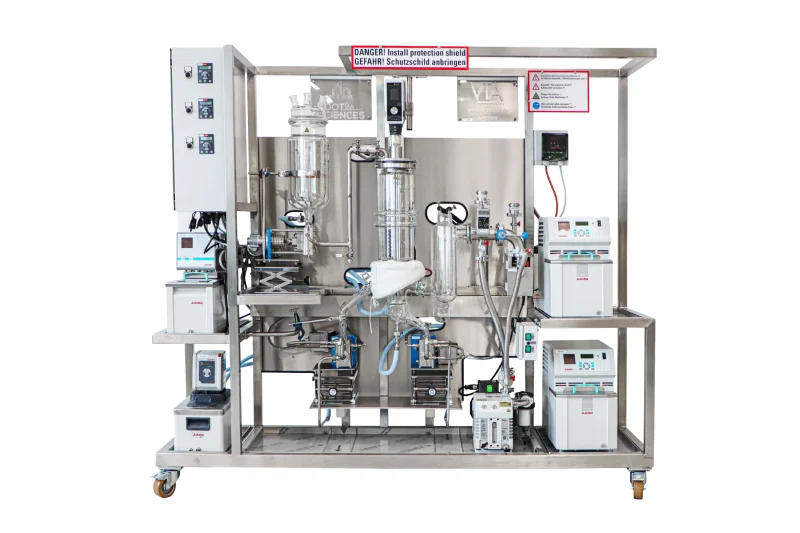
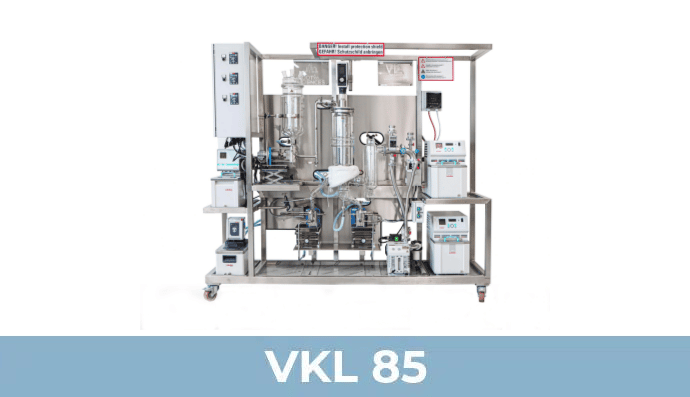
The VKL 85 is a German-engineered wiped-film short-path distillation system designed for cannabis and hemp processors ready to increase production while maintaining exceptional distillate quality. Built by VTA in Germany, it features the largest glass evaporator in the VTA lineup, true continuous feed operation, and a fully jacketed system to deliver reliable, high-throughput cannabinoid refinement. Ideal for commercial-scale processing, the VKL 85 produces consistent, high-purity distillate for vapes, edibles, tinctures, topicals, and other infused products. Its premium construction, service-friendly design, and proven long-term reliability make it a trusted solution for processors focused on maximizing efficiency, product consistency, and scalable production.
| Maximum Feed Rate: | 4.25 L/h |
| Typical Throughput: | 2.8 L/h |
| Evaporator Surface Area: | 0.15 m² |
| Stages: | Single |
| Power Requirements: | 1 Φ, 240 V, 60 Hz, 90 A or 3 Φ, 400 V, 50 Hz, 25 A |
| Dimensions (L x W x H): | 7.2’ x 2.2 x 6.5’ (2.20 x 0.68 x 1.97 m) |
| Materials Used: | 316 SS interior, 304 SS exterior, borosilicate glass, graphite, Viton, PTFE |
| Warranty: | One year on system (excluding glassware and vacuum system), manufacturer’s warranty on components |
Cannabis distillation systems typically range from $20,000-$75,000 for entry-level craft units, $75,000-$250,000 for mid-scale systems, up to $250,000-$1,000,000+...
A complete breakdown of cannabis distillates and extracts, including potency, purity, flavor, production methods, and how to choose...
In a world with industrial separation and purification, gentleness and efficiency are very important, mainly when dealing with...
Whether you’re expanding production or upgrading your existing process, our team can help you evaluate a solution that aligns with your production goals.