
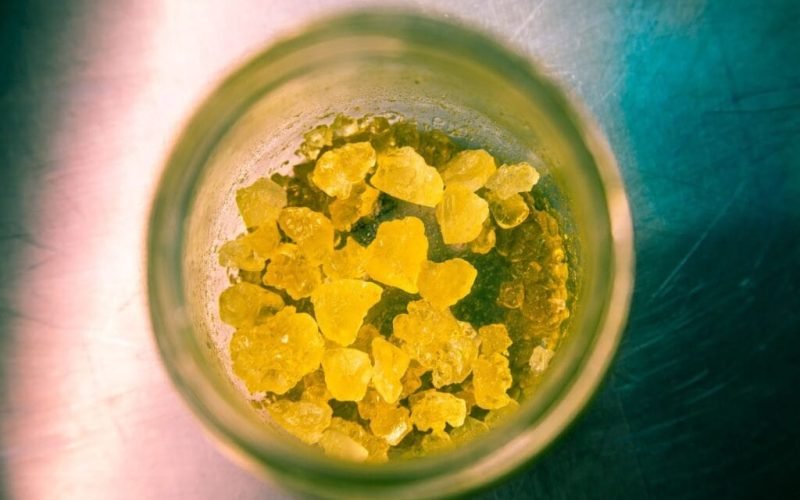
Cannabis concentrate offerings have evolved remarkably, with the emergence of solventless products. Priced for their purity, flavor, and natural production methods, solventless concentrates are worth the price.
So, what are solventless concentrates?
Solventless concentrates are cannabis extracts made without chemical solvents such as butane, propane, ethanol, or CO2. Instead, they use mechanical and physical methods such as heat, pressure, ice, water, agitation, and filtration to separate resin-rich trichomes from the plant.
The result is a concentrate that can preserve the plant’s natural cannabinoids, terpenes, aroma, and flavor more closely than many solvent-based extraction methods.
In this guide, we explain how solventless concentrates are made, the main solventless concentrate types, how solventless bubble hash and rosin differ, and how to identify a trusted solventless dab for strong but smooth effects.
Sections
ToggleWhat Are Solventless Concentrates?
Solventless concentrates are cannabis extracts produced without chemical solvents. They rely on mechanical separation instead of chemical dissolution.
In simple terms, solventless extraction separates trichome heads from cannabis flower or trim. Trichomes contain the cannabinoids and terpenes responsible for potency, aroma, flavor, and overall experience.
Common solventless extraction methods include:
- Ice water agitation
- Dry sifting
- Hand rubbing
- Heat and pressure
- Filtration through micron screens or bags
Because no chemical solvents are used, solventless concentrates do not require solvent purging. This is one reason they are often associated with purity, clean flavor, and premium product positioning.
Why Solventless Concentrates Matter
Solventless concentrates matter because they answer three major consumer concerns: purity, flavor, and transparency.
In solvent-based extraction, compounds are pulled from the plant using substances such as butane, propane, ethanol, or CO2. These methods can be effective and scalable, but they also require additional refinement, purging, and testing to confirm that the finished product is safe and clean.
Solventless extraction avoids that concern by not introducing chemical solvents in the first place.
For consumers, this can mean:
- Cleaner ingredient perception
- Strong terpene preservation
- More authentic strain aroma
- No concern about residual solvents
- A more natural concentrate experience
For producers, solventless concentrates offer premium market positioning. However, they also require excellent starting material, skilled operators, and careful process control.
Main Solventless Concentrate Types
There are several types of solventless concentrates. Each one uses a different mechanical process and produces a different texture, flavor profile, potency level, and price point.
The most common solventless concentrate types are:
- Kief
- Dry sift
- Charas
- Solventless hash
- Solventless bubble hash
- Rosin
- Live rosin
- THCA and terpene-separated solventless products
1. Kief
Kief is one of the simplest solventless concentrates. It is made by separating dry trichomes from cannabis flower through gentle agitation and screening.
As dried cannabis is handled or sifted, brittle trichomes break away from the plant material. These trichomes are then collected as a fine, powdery concentrate.
Kief is easy to produce, requires minimal equipment, and is often used as an entry-level solventless product. However, it can contain more plant material than refined dry sift or bubble hash.
Best for:
- Sprinkling into flower
- Simple solventless use
- Low-cost concentrate production
- Consumers new to solventless hash
2. Dry Sift
Dry sift is a refined form of solventless hash made by passing dried cannabis material across screens with different micron sizes.
The goal is to separate clean trichome heads from plant material. Higher-quality dry sift can approach full-melt quality, while lower-grade dry sift is better suited for bowls, joints, or further processing.
Dry sift requires patience and skill. The quality depends heavily on starting material, screen size, temperature, humidity, and handling.
Best for:
- Traditional solventless hash
- Refined trichome collection
- Hash makers who want a water-free process
- Rosin production feedstock
3. Charas
Charas is one of the oldest forms of solventless hash. It is made by hand-rubbing fresh cannabis plants and collecting the resin that sticks to the hands.
This method captures resin from living plants and can produce a unique aromatic profile. However, it is extremely labor-intensive and produces small yields, which makes it less common in commercial production.
Best for:
- Traditional hash consumers
- Small-batch production
- Cultural or artisanal hash products
4. Solventless Bubble Hash
Solventless bubble hash, also called ice water hash, is made using ice, water, agitation, and filtration bags.
Cannabis material is mixed with cold water and ice. The cold temperature makes trichomes brittle, while agitation helps separate them from the plant. The mixture is then filtered through bubble bags with different micron sizes to separate grades of hash.
High-quality bubble hash can be extremely pure and flavorful. The best grades may melt cleanly when heated, which is why premium bubble hash is often called full-melt hash.
Best for:
- High-flavor solventless products
- Dabbing when full-melt quality is achieved
- Rosin production
- Premium solventless hash menus
What Makes Good Solventless Bubble Hash?
Good bubble hash should have a clean aroma, light color, minimal plant contamination, proper drying, and strong melt quality. Poor drying or excess moisture can create quality and safety issues, so post-processing is important.
5. Rosin
Rosin is a solventless concentrate made by applying heat and pressure to cannabis flower, kief, or hash. The pressure forces resin out of the starting material and onto a collection surface.
Rosin became popular because it can be made without chemical solvents and with relatively accessible equipment. However, commercial-quality rosin still requires precision, proper temperature control, and high-quality input material.
Rosin can be made from:
- Flower
- Kief
- Dry sift
- Bubble hash
Hash rosin is generally considered higher quality than flower rosin because it is pressed from refined hash rather than directly from flower.
Best for:
- Dabbing
- Flavor-focused consumers
- Premium concentrate menus
- Solventless product lines
6. Live Rosin
Live rosin is one of the most premium solventless concentrates.
It is usually made by first producing ice water hash from fresh-frozen cannabis, then pressing that hash into rosin. Because the cannabis is frozen soon after harvest rather than dried and cured, more of the plant’s volatile terpene profile can be preserved.
Live rosin is often prized for its aroma, flavor, smoothness, and strain expression.
Best for:
- Connoisseur consumers
- Premium dabs
- Strong terpene expression
- Top-shelf solventless menus
7. THCA and Terpene Separation
Advanced solventless processing can separate THCA-rich crystals from terpene-rich fractions. This is sometimes done through controlled temperature, time, and pressure conditions that allow THCA to crystallize while terpene-rich portions remain more fluid.
This is a more specialized area of solventless production and requires strong process knowledge.
Best for:
- Advanced solventless processors
- Premium product differentiation
- High-potency concentrate formats
What Is the Best Solventless Concentrate?
The best solventless concentrate depends on what the user values most.
For flavor, live rosin is often considered one of the best solventless concentrates because it preserves a strong terpene profile and delivers a smooth, strain-specific experience.
For purity and traditional hash quality, full-melt bubble hash is one of the best options. High-grade bubble hash can vaporize cleanly with very little residue.
For accessibility, flower rosin is often the easiest solventless concentrate to produce and consume.
For traditional solventless hash, dry sift and charas offer simpler, older methods of collecting resin.
In most premium retail settings, the top solventless products are usually live rosin and full-melt bubble hash.
Benefits of Solventless Concentrates
Solventless Concentrate | Purity & Safety | Flavor & Aromatic Integrity | Ingredient Transparency | Environmental Impact | Accessibility / Small-Scale Production |
Kief | No solvents involved; pure trichome collection Safe for immediate consumption | Preserves natural terpenes Authentic strain flavor Minimal terpene loss | Visible, simply separated plant trichomes | Zero chemical waste Minimal energy consumption | Accessible to all cannabis users No equipment investment required |
Dry Sift | Progressive refinement increases purity Full-melt grades achieve 80-90% cannabinoids | Excellent terpene retention No water or heat degradation Natural strain characteristics | Simple screening process Visual purity assessment possible | No water usage required Minimal electricity consumption | Low barrier to entry; screens affordable Suitable for small-batch production |
Charas | Hand-collected from living plants No equipment contamination | Original living-plant terpene profile Unique aromatic complexity | Most transparent method; visible hand collection | Zero environmental footprint Completely natural process | Requires only hands and plants No commercial operational sustainability |
Ice-Water Hash (Bubble Hash) | Cold water prevents degradation Premium grades achieve 85-95% cannabinoids | Preserves delicate terpenes Clean, pure flavor profile | Visible micron-grade separation Understandable filtration process | Water-based; renewable resource Minimal environmental impact | Accessible with basic bubble bags Scalable to commercial operations |
Flower Rosin | Direct flower pressing; zero additives Immediate consumption without purging | Good terpene preservation Authentic flower flavor Strain-specific characteristics | Visible pressing process No hidden processing steps | No solvent handling or disposal Small environmental footprint | Most accessible premium concentrate Democratizes quality concentrate production |
Hash Rosin / Live Rosin | Two-stage purity: hash creation then pressing Highest cannabinoid concentration | Maximum terpene preservation Unmatched flavor complexity and authenticity | Premium quality visibly apparent Craft production with full traceability | Cold water and mechanical pressing Renewable resource utilization | Professional equipment Skill-based differentiation possible |
Challenges & Limitations of Solventless Concentrates
- For commercial operations, yields are lower compared to solvent based extraction
- The process is highly labor-intensive and requires skilled operators and hands-on processing
- The quality of solventless concentrates significantly depends on the starting material quality, as solventless extraction processes cannot remediate poor inputs
- More complex storage requirements as solventless concentrate products degrade faster
How to Choose a Trusted Solventless Dab for Strong but Smooth Effects
To choose a trusted solventless dab, look beyond the label. A strong but smooth solventless concentrate should show quality in its aroma, texture, test results, and source material.
Look for:
- A fresh, complex aroma
- Light golden, blonde, or clean amber color
- No green or brown plant-heavy appearance
- Smooth texture with no visible contamination
- Third-party lab testing
- Clear potency and terpene results
- Microbial and pesticide testing
- Proper storage conditions
- Transparent producer information
For solventless bubble hash, check the melt quality. High-grade hash should bubble and melt cleanly rather than leaving heavy residue.
For rosin and live rosin, check consistency, aroma, and freshness. A strong but smooth dab usually comes from quality starting material, careful extraction, and proper storage.
Solventless vs Solvent-Based Concentrates
Factor | Solventless Concentrates | Solvent-Based Concentrates |
Extraction method | Heat, pressure, ice, water, agitation, screens | Butane, propane, ethanol, CO2 |
Solvent residue concern | No chemical solvent used | Requires purging and testing |
Flavor | Often highly terpene-rich | Can be strong, but depends on method |
Yield | Usually lower | Usually higher |
Cost | Often higher | Often lower |
Scalability | More labor-intensive | Easier to scale |
Best known products | Bubble hash, rosin, live rosin, dry sift | BHO, distillate, resin, shatter, wax |
Solvent-based extraction can be efficient and commercially valuable, but solventless extraction is often preferred by consumers looking for purity, flavor, and a more natural production method.
How to Identify High-Quality Solventless Concentrates
High-quality solventless concentrates usually have several visible and testable signs.
1. Aroma
The aroma should be fresh, strong, and strain-specific. A muted or stale smell can suggest poor starting material, oxidation, or improper storage.
2. Color
Premium solventless concentrates are often blonde, light gold, pale amber, or clean in appearance. Very dark, green, or brown tones may indicate plant contamination, oxidation, or lower-grade material.
3. Texture
Texture depends on the product type. Bubble hash may be sandy or greasy. Rosin may appear as badder, jam, fresh press, or sauce-like consistency. The key is consistency and cleanliness.
4. Melt Quality
For bubble hash, melt quality is a major quality signal. Full-melt hash should vaporize cleanly with minimal residue.
5. Lab Testing
A trustworthy solventless product should come with third-party testing for potency, pesticides, microbes, heavy metals, and other contaminants.
6. Storage
Solventless concentrates are sensitive to heat, light, and oxygen. Premium products should be stored cold and handled carefully to preserve terpenes and texture.
Who Are Solventless Concentrates Best For?
Solventless concentrates particularly appeal to health-conscious consumers. With concerns about the presence of toxic chemicals in solvent-based products, these extracts offer much-needed organic and natural alternatives. Connoisseurs seeking maximum flavor and authentic strain aroma will find solventless extraction products like live rosin worth premium pricing. Additionally, for unmatched terpene profiles, it is impossible to achieve this through solvent based techniques. Medical patients or consumers with chemical sensitivities prefer solventless concentrates.
The Future of Solventless Concentrates
With rising awareness about the natural and organic approach of solventless extraction, the demand for such concentrates is growing. To meet the growing demand, producers are developing technological advances in solventless extraction equipment, including more efficient rosin presses, faster freeze-dryers, and automated bubble hash systems. All these improvements will make premium solventless concentrate production more accessible and scalable than ever before. In the future, we can see an exponential demand for solventless concentrates. The continued price premiums over solvent based alternatives indicate a sustained consumer willingness to pay more for perceived purity and quality.
Conclusion
Understanding solventless concentrates and their extraction process is empowering knowledge. It facilitates consumers’ decision-making as they can better choose the extracts they consume. For producers, it means having a clear idea of whether prioritizing purity, flavor, authenticity, or environmental considerations over the higher yields and consistency of solvent-based alternatives is a worthwhile business decision. With the diverse range of solventless extraction techniques, it is possible to offer options across price points and quality tiers within the solventless concentrate category. Whether a producer or consumer, solventless concentrates do offer value and safety.
FAQs
Solventless bubble hash is ice water hash made by separating trichomes from cannabis using cold water, ice, agitation, and filtration bags.
Bubble hash is one type of solventless hash. Other types include dry sift, charas, kief, and hash rosin.
Solventless concentrates are often preferred for flavor, purity, and natural processing. Solvent-based concentrates may offer higher yields, lower cost, and easier scalability.
Most solventless concentrates are not made through air extraction. They are usually made with mechanical methods such as dry sifting, ice water agitation, heat, pressure, and filtration.