
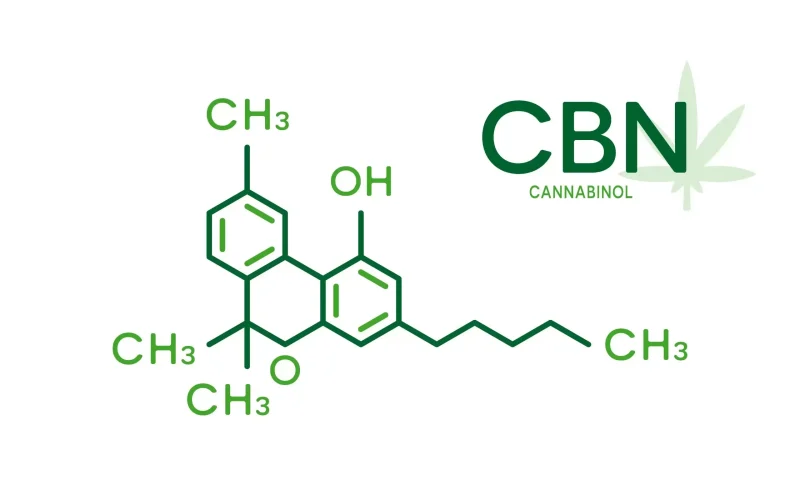
CBN (cannabinol) is gaining attention for its sedative and calming properties. Unlike THC or CBD, CBN is not naturally abundant in fresh cannabis. Instead, it forms when THC degrades over time through exposure to heat, oxygen, and light.
If your goal is to increase CBN levels, the process differs from standard THC or CBD decarboxylation. This guide explains the optimal CBN decarb temperature, how THC converts into CBN, proper timing, alternative methods, and key precautions for best results.
Sections
ToggleUnderstanding How CBN Is Formed
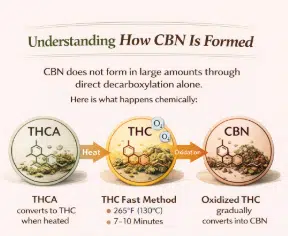
CBN does not form in large amounts through direct decarboxylation alone.
Here is what happens chemically:
- THCA converts to THC when heated
- THC exposed to oxygen and heat begins to oxidize
- Oxidized THC gradually converts into CBN
Standard decarboxylation primarily activates THC. To increase CBN, THC must be pushed beyond activation into controlled degradation.
CBN formation is a gradual oxidation process, not a simple heat-triggered conversion.
Because of this, maximizing CBN requires extended heat exposure and some oxygen presence.
Optimal CBN Decarb Temperature
Temperature Range | Duration | Primary Effect | CBN Conversion Level | Risk Level |
220–240°F (104–116°C) | 30–45 minutes | Mainly activates THC (THCA → THC) | Minimal CBN formation | Very Low |
220–240°F (104–116°C) | 60–90 minutes | THC begins gradual degradation | Moderate CBN increase | Low |
220–240°F (104–116°C) | 90+ minutes | Continued THC oxidation | Gradual CBN increase | Moderate (cannabinoid loss begins) |
Above 250°F (121°C+) | 30+ minutes | Rapid THC degradation | Faster CBN formation but unstable | High (risk of cannabinoid destruction) |
Optimal Production Method
For controlled CBN production:
- Preheat oven to 230°F
- Break cannabis into small, even pieces
- Place material in a covered glass container or loosely covered baking dish
- Heat for 60 minutes
- Extend up to 90 minutes if stronger CBN conversion is desired
Using a covered container prevents excessive moisture loss and reduces terpene evaporation while still allowing controlled oxidation.
Alternative Method: Natural Oxidation Over Time
CBN can also form naturally without applying high heat.
When dried cannabis flower is exposed to air over several months:
- THC slowly oxidizes
- Potency shifts from psychoactive to sedative
- CBN levels gradually increase
This process can take several months to over a year depending on storage conditions.
Factors that accelerate natural CBN formation:
- Oxygen exposure
- Light exposure
- Warmer storage temperatures
While slower, natural aging preserves more minor cannabinoids compared to aggressive heating.
Temperature Context: CBN vs THC and CBD Decarboxylation
To understand why extended heating is required, compare typical decarb ranges:
- THCA to THC: 220°F to 240°F for 30 to 45 minutes
- CBDA to CBD: 230°F to 250°F for 60 to 90 minutes
These processes activate cannabinoids.
CBN production happens after THC is activated and begins degrading.
Once THC is exposed to heat for longer durations, gradual oxidation increases CBN levels.
However, extreme heat does not mean more CBN. Excessive temperatures destroy cannabinoids instead of converting them.
Important Note on Terpene Loss and Burning Risk
Using temperatures above 250°F for extended periods can cause:
- Increased terpene evaporation
- Loss of flavor and aroma
- Cannabinoid degradation
- Burning of plant material
Terpenes are volatile and begin evaporating at relatively low temperatures. However, evaporation is gradual and depends on time and airflow.
Prolonged heating above 240°F significantly reduces aromatic quality.
If your goal is sedative edibles rather than flavor preservation, moderate terpene loss may be acceptable. Temperatures above 260°F should generally be avoided.
Step by Step Guide to Maximizing CBN
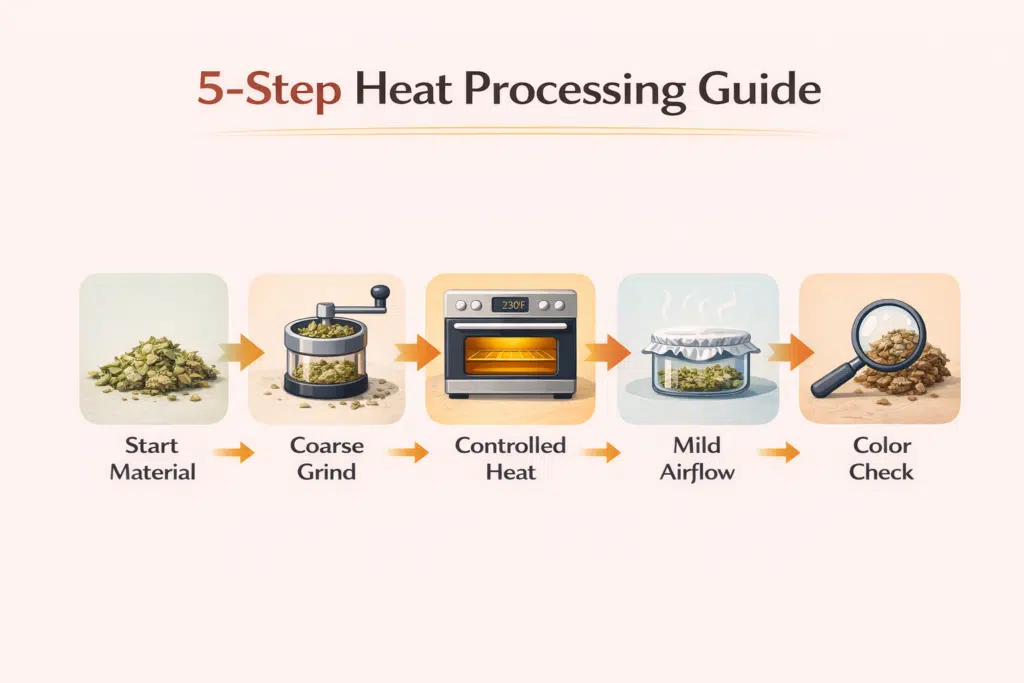
Step 1: Start with THC-Rich Cannabis
CBN forms from THC. Higher starting THC levels increase potential CBN yield.
Slightly aged flower may already contain minor CBN.
Step 2: Grind Coarsely
Avoid fine grinding. Very small particles heat unevenly and may burn.
Step 3: Use Controlled Heat
Set the oven between 220°F and 240°F.
Use an oven thermometer, as many ovens fluctuate significantly.
Step 4: Allow Mild Airflow
Use:
- A loosely covered foil tent
- A glass container with a slightly vented lid
Complete sealing reduces oxidation. Complete exposure increases terpene loss. Aim for balance.
Step 5: Monitor Color Change
Properly converted material typically turns:
- Medium to dark brown
- Dry but not black
- Slightly toasted smell
If material turns black, cannabinoids are being destroyed.
How Long Should You Decarb for Maximum CBN
Time is critical.
- 30 minutes → Mainly THC activation
- 60 minutes → Beginning THC degradation
- 75–90 minutes → Noticeable increase in sedative properties
- 120+ minutes → Rapid cannabinoid destruction
For most users, 75 minutes at 230°F offers a balance between CBN formation and total cannabinoid retention.
Remember: CBN increase is gradual, not extreme.
Can You Test CBN Levels at Home
Precise CBN measurement requires lab testing. However, indicators include:
- Reduced psychoactive intensity
- More sedative and body heavy effects
- Increased drowsiness
For commercial producers, third party lab analysis is recommended to verify cannabinoid profile shifts.
Common Mistakes When Decarbing for CBN
- Using excessively high temperatures above 275°F
- Leaving material uncovered and drying it out completely
- Grinding too finely
- Not using an oven thermometer
- Expecting immediate high CBN from fresh flower
CBN formation requires either extended heat or extended time.
Is Higher Temperature Always Better
No.
Higher temperatures speed up THC degradation but also:
- Destroy cannabinoids
- Reduce yield
- Increase harsh taste
- Eliminate beneficial terpenes
Moderate heat for longer duration is more effective than extreme heat for short bursts.
Final Thoughts on Optimal CBN Decarb Temperature
CBN production is about controlled THC degradation rather than simple activation.
The most effective method involves:
- 220°F to 240°F
- 60 to 90 minutes
- Covered container
- Careful monitoring
If patience is not an issue, long term oxidation can also increase CBN naturally.
Balancing temperature, time, and oxygen exposure ensures maximum sedative cannabinoid production without unnecessary cannabinoid loss.
FAQs
If you already have “CBN” (neutral CBN / CBN isolate): No, it’s already in the active (non-acid) form.
If you have the acid form (CBNA): Yes, CBNA → CBN requires decarboxylation (heat-driven loss of CO₂).
This mainly applies to cannabinoid acids (like THCA/CBDA/CBNA), not to already-neutral CBN.
A common “low-and-slow” decarb window for cannabis acids is roughly 104–118 °C for ~7–60 minutes depending on material and thickness.
At 120 °C, a practical starting point many processors use is ~30–45 minutes (often checked/optimized with lab testing). This sits just above the commonly recommended decarb range.
(Reality check: ovens can run hot/cold, and airflow + load size matter a lot.)
Two useful thresholds:
CBN boiling/vaporization point: CBN is commonly listed around 185 °C (365 °F). Above this, you’re in the zone where it will readily vaporize and can also start degrading with prolonged heat.
Combustion (burning) of cannabis plant material: Cannabis typically begins to combust/ignite around ~230 °C (446 °F), and an open flame “cherry” can be far hotter (hundreds to >900 °C).
So, if you’re trying to avoid burning, staying below ~230 °C is the key line in the sand.
For cannabis cannabinoid acids in general, decarboxylation is commonly done in the range of ~104-118 °C (200-245 °F) with time adjusted by temperature.