
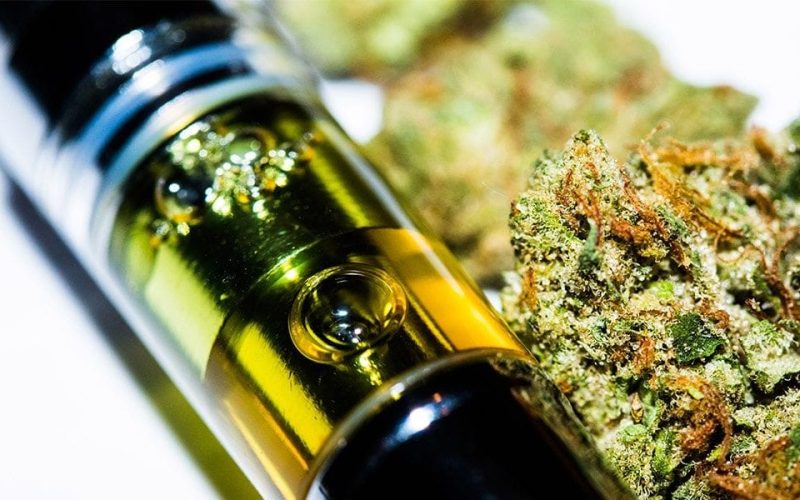
You’re standing at the dispensary counter. The budtender slides two cartridges across the glass, one labeled “CO2,” the other “distillate.” Both look similar. Both go in the same vape pen. So what’s the difference, and does it actually matter?
It matters more than most people realize. These two extracts deliver a fundamentally different experience, different potency, different flavor, different effect profiles. And if you’ve ever wondered why one cart hits differently than another, it often comes down to this exact distinction.
This guide breaks down everything you need to know about CO2 vs distillate, including how they’re made, how they compare, and which one is better for your specific needs.
Sections
ToggleWhat Is CO2 Distillate?
CO2 distillate refers to cannabis oil that is first extracted using CO2 and then further refined through distillation.
In other words, it combines both processes: the clean extraction of CO2 and the high purity of distillation.
However, in most cases, when people compare “CO2 vs distillate,” they are referring to CO2 extract (full-spectrum) versus distillate (refined oil) as two different end products.
What Is Distillate?
Cannabis distillate is one of the most refined forms of cannabis concentrate available. It starts with any cannabis extract, CO2, ethanol, butane hash oil, or others, and then runs it through short-path or molecular distillation.
In distillation, crude cannabis extract is heated to its boiling point. The cannabinoid vapor condenses and is collected in a new container while undesirable components such as chlorophyll remain behind. Residual solvent from the initial extraction is also removed during this step, resulting in a high-purity cannabis oil that is transparent to light yellow, with total cannabinoid potency ranging from 80% to 90% or higher.
The result is a nearly pure cannabinoid oil, versatile, consistent, and extremely potent.
Key characteristics of distillate:
- THC potency typically ranges from 80% to 99%
- Nearly flavorless and odorless in its base form
- Terpenes sometimes reintroduced after processing
- Ideal for vape carts, edibles, tinctures, and topicals
- Highly consistent batch to batch
What Is CO2?
CO2 in the context of cannabis refers to a specific extraction method called Supercritical Fluid Extraction (SFE). At standard temperature and pressure, CO2 is a gas. But under high pressure, it becomes a liquid capable of acting as a solvent.
During this process, CO2 is heated and pressurized before being forced through ground cannabis. This breaks down the trichomes in the plant, releasing cannabinoids, terpenes, and flavonoids, which then bond with the CO2 and are collected separately. When pressure returns to normal, the CO2 reverts to gas and evaporates, leaving behind a concentrated cannabis extract with zero residual solvent.
CO2 extraction is also considered pharmaceutical-grade. It operates at specific temperatures and pressures, allowing precise targeting of individual compounds without leaving harmful residues. This same method is used in food and pharmaceutical industries, including decaf coffee production and hop extraction for brewing.
Key characteristics of CO2 extract:
- THC potency typically ranges from 50% to 75%
- Retains natural terpenes, delivering strain-specific flavor and aroma
- Full-spectrum or broad-spectrum cannabinoid profile
- No residual hydrocarbon solvents
- Amber or golden in color, slightly viscous
CO2 vs Distillate: Key Differences
Before diving into the comparison, one important clarification: distillate and CO2 are not true equivalents. CO2 is an extraction method, and distillate is a refinement process. In fact, distillate often starts as a CO2 extract and is then taken a step further through distillation.
The processing pipeline looks like this:
Cannabis Flower
↓
CO2 Extraction → CO2 Extract (full-spectrum, 50–75% THC)
↓ [optional further processing]
Distillation → Distillate (isolated cannabinoid, 80–99% THC)
CO2 extract is a finished product at one stage of refinement. Distillate is what happens when you refine it further. Whether that additional step is desirable depends entirely on what you are looking for.
| Feature | CO2 Extract | Distillate |
| THC Potency | 50% to 75% | 80% to 99% |
| Flavor | Strain-specific, natural | Neutral or added terpenes |
| Terpene Content | Naturally preserved | Mostly removed, sometimes re-added |
| Spectrum | Full or broad-spectrum | Single cannabinoid |
| Entourage Effect | Yes | Limited unless terpenes added back |
| Purity | High | Very high |
| Price | Moderate | Higher |
| Batch Consistency | Can vary by harvest | Very consistent |
| Ideal For | Flavor, whole-plant effects | Potency, edibles, precise dosing |
| Solvent Residue | None | None |
Potency: Which One Is Stronger?
When comparing distillate vs CO2 potency, distillate clearly wins in terms of THC percentage. Distillate often exceeds 85% to 95% THC, while CO2 extract ranges from 60% to 75% depending on filtration and source material. Distillate delivers higher potency per volume, but lacks the full-spectrum effect of CO2.
But potency percentage does not always equal a stronger experience. Because CO2 extract contains a full spectrum of cannabinoids and terpenes, many users report a more well-rounded, modulated effect, one where CBD, CBG, and terpenes help balance the THC. This is the entourage effect: the theory that cannabis compounds work synergistically rather than in isolation.
Distillate has a limited profile of compounds interacting with your endocannabinoid system compared to full-spectrum cannabis extract. A narrower spectrum means less modulation between the various compounds. THC can be particularly impactful on its own, sometimes inspiring anxiety at high doses, especially without the moderating influence of CBD, CBG, and cannabis terpenes.
Bottom line: Distillate is chemically more potent. CO2 extract tends to feel more balanced and forgiving.
Flavor and Terpenes: Full-Spectrum vs Pure
This is where CO2 extract pulls ahead for flavor-focused consumers.
CO2 extraction operates at relatively low temperatures, which preserves the volatile terpene compounds responsible for cannabis’s aroma and taste. When you vape a CO2 cart labeled “Lemon Haze” or “Blue Dream,” you are likely getting something close to the actual terpene fingerprint of that plant.
CO2 extracts often retain more natural terpenes, giving them a flavorful edge in vaping and dabbing. They appeal to consumers who want both potency and flavor without sacrificing safety or purity.
Distillate loses most of its native terpenes during the high-heat distillation process. Many brands reintroduce terpenes afterward, either cannabis-derived terpenes (CDTs) or botanical terpenes from non-cannabis plants. While this can produce great flavor, it is a reconstructed profile, not native whole-plant chemistry.
Labels to look for at the dispensary:
- Cannabis-derived terpenes (CDTs): Closer to whole-plant, better quality
- Botanical terpenes: Common in budget carts, not cannabis-native
- Live resin terpenes: Premium tier, extracted from fresh-frozen flower
If authentic strain flavor matters to you, CO2 extract is the better choice. If you want potency without flavor complexity, distillate works perfectly well.
Safety and Purity: How Clean Are They?
Both are considered safe, high-quality products when sourced from licensed, tested producers.
CO2 extraction is one of the cleanest methods available. The CO2 simply evaporates when pressure is released, leaving behind no hydrocarbon residue. There is no volatile butane, no propane, and no chemical solvent lingering in the final product.
With distillate, all residual solvents from the initial extraction are eliminated during the distillation step itself. The final product tests at near-zero residual solvents and is highly consistent, making it easier to guarantee accurate THC percentages on labels.
The bigger safety variable is not the extraction method. It is where you buy. Always purchase from licensed dispensaries with third-party lab testing, and look for a Certificate of Analysis (COA) for any product before buying.
Which one to Choose:
There is no objectively better option here. CO2 extract and distillate are built for different priorities, and the right choice depends entirely on what matters most to you as a consumer.
If you want the flavor and feel of actual cannabis flower, go with CO2. If you want the highest potency in the cleanest, most consistent form, go with distillate. And if you are new to concentrates, try a little of each before committing. Your preference will become clear quickly.
Here is a quick breakdown by consumer type:
CO2 extract is the better fit if you:
- Prioritize strain-specific flavor and aroma
- Want a full-spectrum or whole-plant experience
- Are newer to concentrates and want a more balanced effect
- Use cannabis for medical purposes and value minor cannabinoids
Distillate is the better fit if you:
- Want maximum THC potency per puff
- Use concentrates for edibles or infused products
- Prefer neutral flavor in your vape cart
- Need precise, consistent dosing every time
Conclusion
The distillate vs CO2 debate is not really a debate at all. Both are legitimate, high-quality cannabis extracts. They just serve different purposes and different consumers.
CO2 extraction gives you something closer to the natural plant: fuller flavor, a broader cannabinoid profile, and a more modulated effect. Distillate gives you refinement taken to its extreme: near-pure THC, consistent potency, and a blank slate that works in almost any product format.
Understanding the difference means you walk into the dispensary with clarity instead of confusion. You know what you are buying, you know what to expect, and you know exactly which one fits your needs.
Whatever you choose, make the lab results the deciding factor. A clean COA from a licensed producer matters more than the label on the front.