
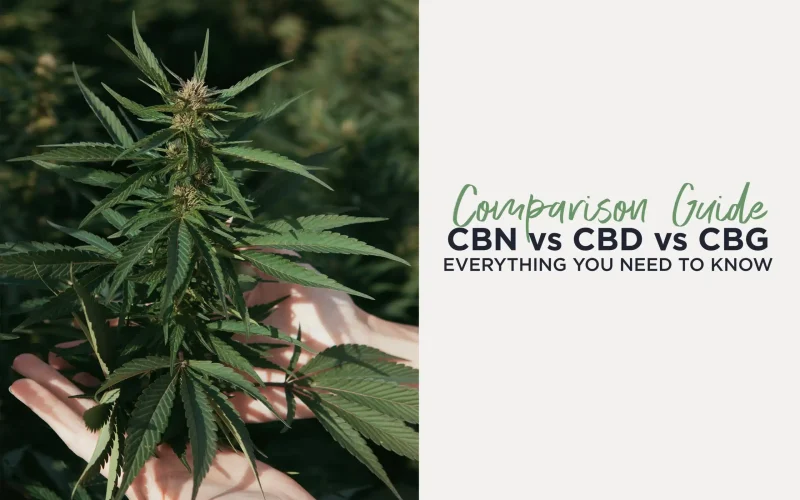
CBN, CBD, and CBG are three of the most popular cannabinoids found in hemp, but they serve very different purposes. CBD is best known for overall wellness and stress relief, CBG is often used for focus and daytime energy, while CBN is commonly associated with sleep and relaxation. Understanding how each one works can help you choose the right option based on your specific needs.
Walk into any wellness store today and you’ll see shelves filled with CBD, CBG, and CBN products. At first glance, they might seem similar, but they interact with your body in very different ways. Each cannabinoid has its own effects, ideal use cases, and best time of use.
In this guide, we’ll break down the key differences between CBN, CBD, and CBG, how they work, and which one is best for your goals, whether that’s better sleep, improved focus, or everyday balance.
Sections
ToggleWhat Are Cannabinoids and Why Do They Matter?
Cannabinoids are naturally occurring compounds found in the cannabis and hemp plants. Your body has a built-in system designed to interact with them, called the endocannabinoid system (ECS). The ECS is a cell-signaling network that helps regulate mood, sleep, pain response, immune function, and more. Think of it as your body’s internal balancing mechanism.
When cannabinoids enter your system, they interact with receptors in this network, primarily CB1 and CB2 receptors found throughout your nervous system and body. Each cannabinoid interacts with these receptors differently, which is exactly why CBN, CBD, and CBG produce noticeably different effects.
What Is CBD (Cannabidiol)?
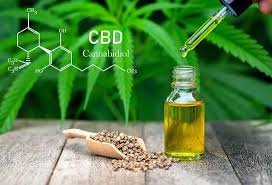
CBD is the most well-researched and widely used cannabinoid on the market, and for good reason. It is found in abundance in mature hemp plants, which makes it easier and more affordable to extract than other cannabinoids.
Rather than binding directly to CB1 or CB2 receptors, CBD works indirectly. It appears to inhibit an enzyme called FAAH, which is responsible for breaking down your body’s own natural endocannabinoids. By slowing that breakdown, CBD allows your internal system to stay in balance longer.
This is why CBD has such a broad range of reported uses: stress relief, inflammation support, pain management, better sleep, and overall wellness. It is also the only cannabinoid with an FDA-approved medication, Epidiolex, for treating certain childhood epilepsy disorders.
CBD is non-psychoactive, meaning it will not get you high, and research to date shows no signs of it being habit-forming or addictive.
Best for: Everyday wellness, stress management, inflammation, sleep support, and general balance.
What Is CBG (Cannabigerol)?
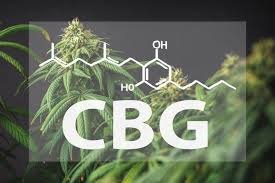
CBG is often called the “mother of all cannabinoids” or the “stem cell cannabinoid” because it is the chemical precursor from which other cannabinoids, including CBD and THC, are synthesized in the plant. In a young hemp plant, the compound cannabigerolic acid (CBGA) converts into the building blocks of CBD, THC, and other cannabinoids. By the time the plant matures, most of the CBG has already been converted, which is why CBG makes up less than 1% of a mature hemp plant.
This rarity makes CBG more expensive to produce and less widely available than CBD. But what makes it worth the attention?
Unlike CBD, CBG binds directly to both CB1 and CB2 receptors. Early research suggests it may have anti-inflammatory and antioxidant properties, and users frequently describe it as an uplifting, energizing compound. It has been associated with supporting focus and mental clarity, making it a popular choice for daytime use.
Best for: Daytime focus, mental clarity, energy, and anti-inflammatory support.
What Is CBN (Cannabinol)?
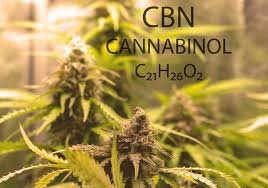
CBN has an unusual origin story. Unlike CBD and CBG, which are produced directly through the plant’s natural biosynthesis, CBN is not present in a living hemp plant at meaningful levels. It forms through the natural degradation of THC when the plant is exposed to heat or light over time. The older and more oxidized the cannabis plant, the higher the CBN concentration.
This also means CBN is a mildly psychoactive compound, though significantly weaker than THC. Most users report no perceptible “high” at typical serving sizes found in wellness products.
CBN is most commonly marketed for sleep and relaxation, and that reputation has grown quickly. However, it is worth being clear about what the research actually shows. The sedative reputation of CBN likely originated from the effects of aged cannabis, not from CBN alone. Prominent cannabis researcher Dr. Ethan Russo has noted that as cannabis ages, it loses stimulating compounds called monoterpenoids and retains more relaxing ones called sesquiterpenoids, which gives the overall impression of sedation. Recent studies do suggest that CBN combined with CBD and THC may improve sleep outcomes, but data on isolated CBN is still sparse.
That said, CBN-based sleep products have a strong and growing following, and it remains one of the most commonly used cannabinoids for winding down at the end of the day.
Best for: Nighttime relaxation, sleep support, and unwinding after a stressful day.
CBN vs CBD: How They Compare
Both CBN and CBD are non-intoxicating at typical wellness doses and both interact with the endocannabinoid system, but their mechanisms and primary uses diverge significantly. CBD is versatile enough for day or night use, while CBN is a more specialized compound built for evening wind-down. The two work especially well together for sleep.
Factor | CBD | CBN |
Origin | Direct biosynthesis in mature hemp | Forms from THC degradation via heat or light |
Psychoactivity | None | Very mild, barely noticeable at wellness doses |
How it works | Indirectly influences ECS via FAAH inhibition | Binds with affinity to CB1 receptors |
Primary use | Everyday wellness, stress, inflammation, sleep | Nighttime relaxation, sleep support |
Best time to take | Morning, afternoon, or evening | Evening or before bed |
Research depth | Extensive, including FDA-approved medication | Early stage, limited human studies |
Availability | Widely available, affordable | Lower availability, higher cost |
Works best | Alone or combined with CBG or CBN | Combined with CBD for sleep |
CBD vs CBG: How They Compare
If CBD is your body’s daily foundation, CBG is the activating compound you reach for when you want to stay sharp and focused. Both are non-psychoactive, hemp-derived, and ECS-interacting. The difference lies in their mechanism and time-of-day suitability.
Factor | CBD | CBG |
Origin | Produced from CBGA in mature hemp | The “mother cannabinoid,” precursor to CBD, THC, and others |
Plant abundance | High (major cannabinoid) | Low (less than 1% of mature plant) |
How it works | Indirectly influences ECS via FAAH inhibition | Binds directly to both CB1 and CB2 receptors |
Psychoactivity | None | None |
Primary use | Broad daily wellness, stress, sleep, inflammation | Daytime focus, mental clarity, energy, inflammation |
Best time to take | Any time of day | Morning or daytime |
Mood effect | Calming, balancing | Uplifting, energizing |
Research depth | Extensive | Promising but early stage |
Cost | Affordable | More expensive due to rarity |
Works best | Alone or with CBN or CBG | Combined with CBD for focus and calm |
CBG vs CBN: How They Compare
These two cannabinoids are opposites in function. CBG is the daytime compound built for focus and energy. CBN is the nighttime compound built for relaxation and sleep. If you are putting together a daily cannabinoid routine, CBG in the morning and CBN in the evening is a structure that makes logical sense and that many users find works well in practice.
Factor | CBG | CBN |
Origin | Precursor cannabinoid from young hemp plants | Byproduct of THC degradation in aged plants |
Primary use | Focus, clarity, daytime energy | Sleep support, nighttime relaxation |
Best time to take | Morning or daytime | Evening or before bed |
Psychoactivity | None | Very mild |
Receptor binding | Directly binds CB1 and CB2 | Affinity for CB1 receptors |
Mood effect | Uplifting, stimulating | Calming, sedating |
Research status | Early stage, anti-inflammatory potential | Early stage, sleep benefits mostly anecdotal |
Cost | Higher (rare in mature plants) | Moderate to high |
Works best with | CBD for a balanced daytime stack | CBD for a stronger sleep effect |
Using All Three Together: The Entourage Effect
One of the most important concepts in cannabinoid science is the entourage effect. The theory, supported by a growing body of research, suggests that cannabinoids, terpenes, and other hemp compounds work synergistically. The combined effect of multiple cannabinoids is often greater than what any single compound produces in isolation.
Full-spectrum hemp products that include CBD, CBG, and CBN alongside a range of naturally occurring terpenes are designed with this principle in mind. Rather than isolating one cannabinoid for a single purpose, full-spectrum formulations aim to support the entire ECS more comprehensively. This is one reason why many experienced hemp users gradually shift from single-cannabinoid products to full-spectrum or broad-spectrum options over time.
Which Cannabinoid Should You Choose?
Your Goal | Best Choice |
General daily wellness | CBD |
Stress and anxiety during the day | CBD or CBD + CBG |
Focus and mental clarity | CBG |
Sleep support | CBN + CBD |
Inflammation and physical discomfort | CBD or CBD + CBG |
Full-body balance | Full-spectrum blend (CBD + CBG + CBN) |
Are There Any Side Effects?
All three cannabinoids are generally well-tolerated. That said, some users do experience mild effects, particularly with CBD, which has the most robust safety data available. Reported side effects across CBN, CBD, and CBG can include dry mouth, drowsiness (especially with CBN), mild changes in appetite, and occasional digestive sensitivity.
CBD can also interact with certain medications, particularly blood thinners, so speaking with a healthcare provider before starting any cannabinoid supplement is always a smart step.
None of these three cannabinoids are currently known to create dependence or addiction.
Conclusion
Choosing between CBN, CBD, and CBG ultimately comes down to your personal goals and lifestyle. CBD remains the most versatile option for overall wellness and stress support, CBG stands out for focus and daytime clarity, while CBN is best suited for relaxation and sleep.
Rather than thinking of them as competitors, it’s more helpful to see these cannabinoids as complementary. Many users find the best results by combining them strategically or opting for full-spectrum products that take advantage of the entourage effect.
If you’re new to cannabinoids, starting with CBD is a safe and well-researched choice. From there, you can experiment with CBG for productivity or CBN for better sleep, depending on your needs.
FAQs
Both can support stress and calm, but CBD has significantly more research behind it for anxiety. CBG may offer a complementary effect, especially for daytime anxiousness where you want clarity rather than sedation. Many users find combining both works best.
Yes. The entourage effect suggests they may work better in combination than alone. Many full-spectrum hemp products already include all three. Starting at a lower dose when combining cannabinoids and adjusting gradually is a sensible approach.
CBN is mildly psychoactive, but at the concentrations found in wellness products, most users do not experience a perceptible high. It is significantly less psychoactive than THC.
CBG makes up less than 1% of a mature hemp plant, making it rare and costly to extract at scale. CBD, by contrast, is one of the most abundant compounds in mature hemp. As cultivation and extraction techniques improve, CBG prices are gradually coming down.
Direct evidence for CBN as a standalone sleep aid is still limited. Research does suggest that CBN combined with CBD and THC may improve sleep in adults with insomnia, but studies using CBN in isolation are still in early stages. Anecdotal evidence from users is strong, and many report noticeable results with CBN-based products.
CBD is the best starting point for most beginners. It is well-researched, widely available, affordable, and suitable for daytime use. Once comfortable, many users add CBG for focus support or CBN for sleep.
When derived from hemp plants containing less than 0.3% THC, all three are federally legal in the United States under the 2018 Farm Bill. State laws can vary, so checking your local regulations is always worthwhile.