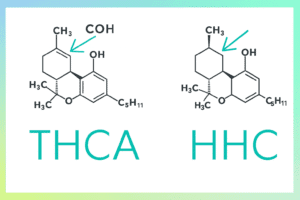
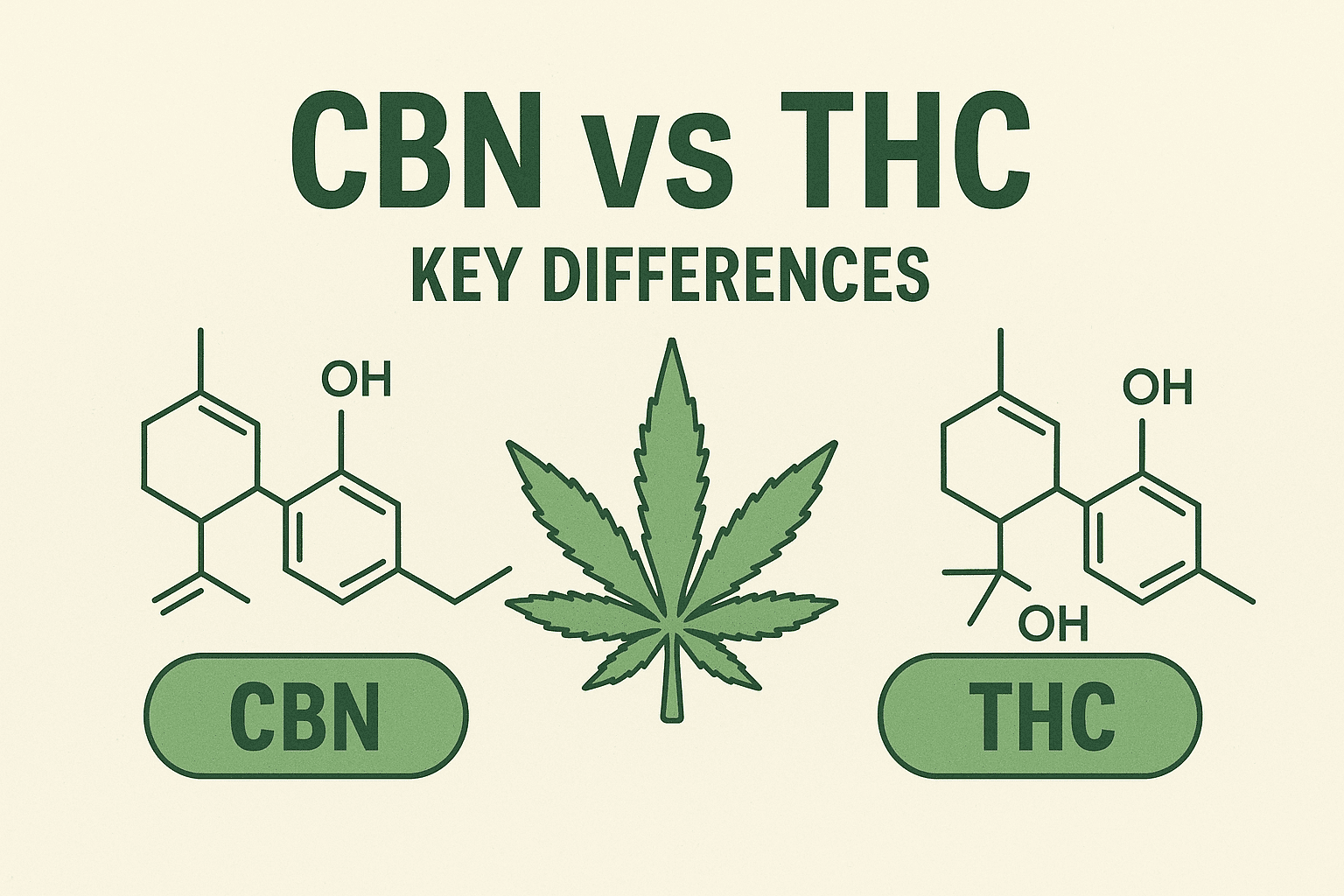
In cannabis processing, THC (Delta-9-tetrahydrocannabinol) and CBN (cannabinol) are widely used raw materials for an array of products. Understanding the CBN vs THC becomes essential to make informed choices about which cannabinoid best suits their wellness goals, sleep needs, or recreational preferences.
Even when both cannabinoids share the exact origin, the difference between THC and CBN is beyond their molecular structures, extending to effects, legal status, and therapeutic applications.
Sections
ToggleWhat Is CBN?
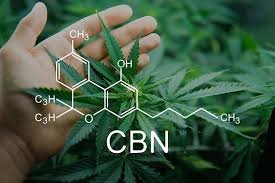
CBN (cannabinol) is a mildly psychoactive cannabinoid that forms when THC degrades through oxidation, heat exposure, or extended aging of cannabis material. An aged cannabis plant has high levels of CBN content due to natural THC breakdown. Due to the breakdown of THC, the psychoactive effects are limited, while there are notable sedative properties, earning it recognition as the “sleepy cannabinoid.”
Key characteristics:
- Occurs naturally in aged cannabis due to the breakdown of THC.
- Mildly psychoactive due to low THC, producing gentle relaxation without significant euphoria.
- Primarily known for sedative and sleep-promoting effects.
What Is THC?
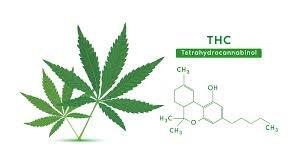
THC (delta-9-tetrahydrocannabinol) is the primary psychoactive cannabinoid that produces its characteristic “high.” It is synthesized by the plant from its acidic precursor THCA through decarboxylation. THC is the most popular cannabinoid known for its intoxicating effects, with diverse effects ranging from euphoria and relaxation to altered perception and increased appetite.
Key characteristics:
- Highly psychoactive cannabinoid producing euphoria, altered sensory perception, and cognitive changes.
- Offers therapeutic benefits including pain relief, appetite stimulation, nausea reduction, and mood enhancement.
- Primarily used for medical and recreational purposes.
CBN vs THC: Key Differences

Feature | CBN | THC |
Psychoactivity | Mildly psychoactive; ~10% THC’s potency | Highly psychoactive; produces pronounced “high” |
How It Forms | Degradation product of aged or oxidized THC | Synthesized directly by cannabis plant from THCA |
Primary Use-Cases | Sleep support, relaxation, sedation | Recreation, pain relief, appetite, mood enhancement |
Receptor Interaction | Weak CB1 binding; stronger CB2 affinity | Strong CB1 and CB2 receptor agonist |
Potency | Low psychoactive potency; strong sedative effects | High psychoactive and therapeutic potency |
Common Product Types | Sleep tinctures, nighttime gummies, topicals | Flower, vapes, edibles, concentrates, beverages |
Legal Status | Legal gray area; often hemp-derived and federally compliant | Federally illegal (Schedule I); state-dependent legality |
Drug Test Risk | May trigger positive test; limited research on detection | Definitely triggers positive THC drug tests |
Effects: How CBN and THC Feel
The effects CBN and THC have on the users vary significantly.
CBN Effects
- Minimal psychoactive effects, produces gentle sedation and drowsiness without overwhelming intoxication.
- Excellent for mild body relaxation and muscle tension relief, producing a comfortable physical calm.
- Produces a subtle sense of mental calmness that may facilitate sleep onset without cognitive impairment.
THC Effects
- Pronounced euphoria or high, which results in significant mood elevation.
- Psychoactive effects include altered sensory perception affecting time, sound, color, and taste experiences.
- Increased appetite after use, due to hunger stimulation.
Potential Benefits of CBN
Understanding the benefits of CBN puts you in a better position to make the choice.
1. Sleep Support
CBN has gained recognition as a sleep enhancer, improving sleep onset and quality. Several cannabis products combine CBN with other sedating cannabinoids or terpenes like myrcene to offer overall sleep improvement.
2. Physical Relaxation
CBN promotes muscle relaxation and physical ease without heavy sedation. It provides support for evening unwinding or post-exercise recovery.
3. Mental Calm
This cannabinoid produces gentle anxiolytic effects. It helps quiet racing thoughts and promotes mental tranquility before sleep.
4. Anti-Inflammatory Potential
Clinical research suggests that CBN may offer anti-inflammatory benefits through interaction with the CB2 receptor. This can help with conditions involving chronic inflammation.
5. Eye Health
Some studies suggest that CBN may reduce intraocular pressure. This is beneficial for glaucoma patients, though further investigation is needed.
6. Enhances THC Effects
When combined with THC, CBN can extend specific effects through the entourage effect. The combination can potentially increase sedation effects.
Potential Benefits of THC
THC is the most widely used cannabinoid, which offers a range of benefits.
1. Stress and anxiety relief (depending on dose)
Low to moderate THC doses provide significant anxiety reduction and stress relief. However, for these benefits, users must carefully dose the THC as high doses may paradoxically increase anxiety.
2. Pain & inflammation support
THC has well-documented analgesic properties through multiple mechanisms, including CB1 receptor activation. It can be effective for various pain conditions, including neuropathic pain, arthritis, and cancer-related discomfort.
3. Improved sleep
Controlled THC use can help users fall asleep faster and may increase deep sleep stages. However, chronic use might disrupt REM sleep and create dependency.
4. Appetite stimulation
THC powerfully stimulates appetite through CB1 receptor activation in appetite-regulating brain regions. It is helpful for patients with conditions like cancer experiencing medication-induced appetite loss.
5. Relief from nausea & vomiting
THC effectively reduces nausea and prevents vomiting, particularly in chemotherapy patients. This THC application is FDA-approved.
How CBN vs THC Works in the Body
Cannabinoid acts as weak partial agonists at CB1 receptors with stronger affinity for CB2 receptors. By interacting with the immune system and peripheral tissues, it produces mild psychoactivity combined with sedative, anti-inflammatory, and potentially therapeutic effects.
Delta-9-tetrahydrocannabinol functionsDelta-9-tetrahydrocannabinol functions as a potent agonist at both CB1 and CB2 receptors, with powerful affinity for the CB1 receptor. This CB1 interaction produces characteristic psychoactive effects. THC can mimic the body’s endocannabinoids, influencing neurotransmitter release, affecting mood, perception, pain, and appetite.
Side Effects & Safety
For an informed choice, understanding the side effects of both these cannabinoids is essential.
CBN Side Effects
- For sensitive individuals, drowsiness and sedation may impair their ability to drive or operate machinery.
- Can cause dizziness, lightheadedness, or dry mouth.
- Potential drug test failures as CBN metabolites may cross-react with THC tests.
THC Side Effects
- Strong doses can result in anxiety, paranoia, or panic.
- THC may result in impaired short-term memory and cognitive function.
Sensitive individuals may experience increased heart rate, impaired coordination, and reduced motor skills.
CBN vs THC vs CBD: How They Compare
Each cannabinoid has its own effect profile.
CBN vs CBD
- CBD is entirely non-psychoactive, while CBN produces mild psychoactive effects, as CBD works primarily outside the endocannabinoid receptor system.
- CBD has a broad effect on anxiety, while CBN specifically promotes sedation and sleep.
- CBD has extensive clinical research supporting its effects, while most effects of CBN are still under research.
THC vs CBD
- THC is highly psychoactive, while CBD causes no intoxication or psychoactive sensation.
- THC has significant appetite-stimulating effects, whereas CBD typically does not noticeably affect hunger.
- CBD’s negative allosteric effects may counteract or reduce some unwanted THC effects like anxiety.
Legality: CBN vs THC

The legal status of these cannabinoids varies.
CBN derived from hemp containing less than 0.3% delta-9 THC is federally legal under the 2018 Farm Bill. When buying a product, ask if CBN contains THC, as CBN products may contain trace amounts depending on the source.
THC is federally illegal as a Schedule I controlled substance. However, at the state level, it is legalized for medical and recreational use in some states.
CBN vs THC: Which Is Better for You?
There is no ultimate choice; the CBN vs THC choice depends entirely on your goals, tolerance, and legal situation. We recommend CBN if you’re seeking sleep support without significant intoxication. Go with THC if you desire pronounced psychoactive effects or need powerful pain relief or appetite stimulation.
Conclusion
Proper understanding of the difference between THC and CBN empowers you to select cannabinoids that best match your specific wellness needs and lifestyle considerations. Both cannabinoids offer unique therapeutic potential. While CBN is emerging as a sleep aid and gentle relaxant without intense intoxication, THC remains unmatched for pain relief, appetite stimulation, and recreational enjoyment with associated psychoactive risks.