
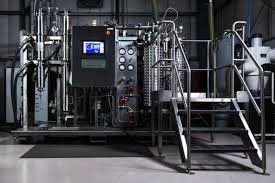
The CO2 extraction method has become one of the most precise, safe, and versatile techniques used across industries such as cannabis, food processing, pharmaceuticals, and cosmetics.
Using controlled temperature and pressure, carbon dioxide transforms into a powerful solvent capable of extracting cannabinoids, terpenes, and essential oils without leaving harmful residues. This makes it one of the cleanest extraction techniques available today, and many experts consider it the gold standard when compared to traditional solvent-based methods.
To understand how this technology is applied in real-world production, many professionals refer to a detailed supercritical CO2 extraction guide that explains its role in modern extraction systems.
Sections
ToggleWhat Is the CO2 Extraction Method?
The CO2 extraction method uses carbon dioxide in a pressurized environment to extract valuable compounds from plant material. When CO2 reaches a specific temperature and pressure, it enters a supercritical state where it behaves like both a gas and a liquid.
This allows it to penetrate plant material efficiently while dissolving target compounds with high precision. The result is a clean extract that contains cannabinoids, terpenes, and bioactive compounds without toxic solvent contamination. The FDA has classified CO2 as Generally Recognized As Safe (GRAS) for industrial extractions, which gives it a significant regulatory advantage over hydrocarbon-based solvents.
For a broader understanding of how this method is used in cannabis production, many processors explore a CO2 cannabis extraction ultimate guide that breaks down commercial applications and workflows.
What Makes CO2 a Powerful Extraction Solvent
Before exploring the methods, it helps to understand why CO2 works so well as a solvent. At standard conditions, CO2 is simply a gas. But when temperature and pressure are manipulated, CO2 undergoes a phase change that gives it solvent-like properties capable of dissolving and carrying targeted plant compounds.
The critical point of CO2 sits at 31.1°C and 73.8 bar (approximately 1,071 psi). Below this point, CO2 behaves differently than above it — and that difference is exactly what defines each extraction method.
The Three CO2 Extraction Methods
1. Subcritical CO2 Extraction
Subcritical extraction operates below CO2’s critical point, using lower temperatures and pressures than the other two methods. This makes it the gentlest of the three approaches.
Because the process runs at reduced intensity, it is slower, typically running 2 to 4 times longer per batch compared to supercritical extraction. Yields are also lower. However, what subcritical extraction sacrifices in speed and volume, it makes up for in compound preservation.
Heat-sensitive molecules, particularly terpenes, remain intact under subcritical conditions. For producers targeting terpene-rich, full-spectrum specialty products, subcritical extraction delivers an aromatic, complex extract that other methods struggle to match. Post-processing requirements are also minimal since the method does not pull waxes or lipids from the plant material.
Best suited for: Premium terpene-rich extracts, aromatic oils, full-spectrum specialty products.
2. Midcritical CO2 Extraction
Midcritical extraction occupies the space between the other two methods. It operates at temperatures above 31.1°C but pressures below 73.8 bar, placing it in a transitional zone that blends the strengths of both subcritical and supercritical approaches.
This method extracts a broader range of compounds than subcritical extraction while remaining gentler than supercritical conditions. The result is a more balanced extract, one that retains a good terpene profile while also capturing a wider spectrum of cannabinoids.
Midcritical extraction requires more fine-tuning than the other methods. Operators need precise control over both temperature and pressure to consistently hit the desired compound profile. However, for producers looking to create balanced full-spectrum extracts without committing to the full intensity of supercritical conditions, midcritical offers a practical middle ground.
Best suited for: Full-spectrum extracts, balanced cannabinoid and terpene profiles.
3. Supercritical CO2 Extraction
Supercritical extraction is the most widely used CO2 method in commercial cannabis and hemp processing. It operates above CO2’s critical point – above 31.1°C and 73.8 bar – pushing CO2 into a supercritical state where it simultaneously exhibits properties of both a liquid and a gas.
In this state, CO2 can penetrate plant material like a gas while dissolving targeted compounds like a liquid. This makes it exceptionally efficient. Extraction runs are faster, yields are higher, and the method scales well for large production volumes. A typical batch of around 20 lbs of plant material processes in approximately 4 to 6 hours under supercritical conditions.
The trade-off is that supercritical extraction is less selective. It pulls waxes and lipids alongside cannabinoids, which means most supercritical crude oils require winterization, a post-processing step that removes unwanted fats and waxes before the extract is refined further.
Best suited for: Bulk cannabis oil, CBD concentrates, vape cartridge oil, large-scale commercial production.
Which CO2 Extraction Method Should You Choose?
Choosing the right method comes down to three factors: your target product, your production volume, and your budget for post-processing.
If your priority is a premium, terpene-rich extract where aroma and full-spectrum complexity matter most, subcritical is the right starting point. If you are producing full-spectrum oils that need a balance of cannabinoids and terpenes without heavy post-processing, midcritical offers the most flexibility. And if you are running high-volume commercial production where yield and speed are the primary drivers, supercritical is the industry standard for a reason.
Many established producers run all three methods strategically depending on the product line. Subcritical for premium SKUs, midcritical for full-spectrum formulations, and supercritical for bulk concentrate production. This multi-method approach gives producers the freedom to serve different market segments without compromising on quality.
So before investing in equipment or locking into a single workflow, map your product goals first. The right extraction method will follow naturally.
Conclusion
Each CO2 extraction method serves a distinct purpose. Subcritical extraction prioritizes compound preservation over speed, making it the go-to for premium terpene-forward products. Midcritical extraction bridges the gap, offering broader compound capture with moderate gentleness. Supercritical extraction leads in efficiency and yield, making it the dominant choice for commercial-scale production.
The right method depends entirely on what the final product demands. Producers focused on quality and complexity often lean toward subcritical or midcritical methods, while those prioritizing volume and consistency rely on supercritical extraction. In many commercial operations, all three methods are used strategically depending on the product line being produced.