
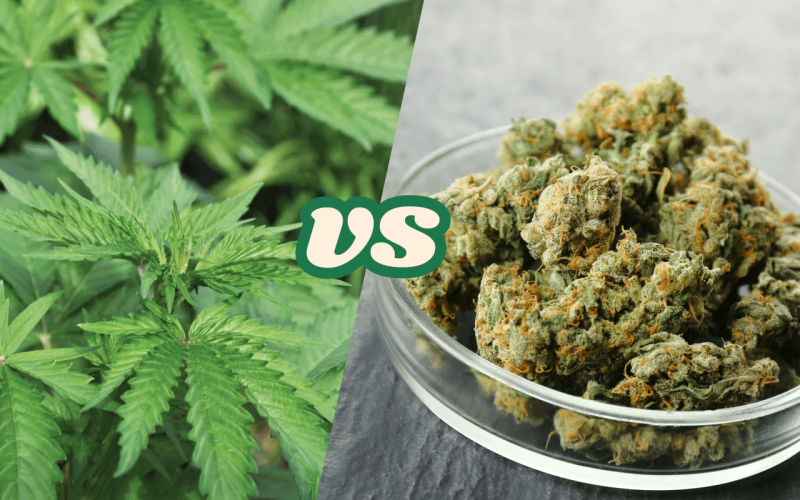
Hemp and cannabis are often used interchangeably, but they are not the same. Both come from the Cannabis sativa plant species, yet they differ significantly in their chemical composition, uses, and legal status.
The main difference lies in THC, the compound responsible for psychoactive effects. While cannabis contains higher levels of THC, hemp contains only trace amounts, which means it does not produce a high.
Understanding this distinction is important for anyone exploring CBD products, wellness solutions, or simply trying to stay informed about evolving laws and uses.
Sections
ToggleWhat is Cannabis?
Cannabis refers to varieties of the Cannabis sativa plant that are rich in THC. This compound interacts with the brain and produces the psychoactive effects commonly associated with marijuana.
Cannabis is used for:
- Recreational purposes due to its intoxicating effects
- Medical applications such as pain management, anxiety relief, and sleep support
Different strains of cannabis can vary widely in potency and effects depending on their THC and CBD levels.
What is Hemp?
Hemp is a variety of Cannabis sativa that contains very low levels of THC, typically less than 0.3 percent. Because of this, it does not cause any psychoactive effects.
Hemp has been cultivated for centuries and is widely used for:
- Industrial purposes
- Nutritional products
- Wellness and CBD-based applications
Its versatility and sustainability make it one of the most valuable crops globally.
What Does the Cannabis Plant Look Like?
Although hemp and cannabis belong to the same species, their physical appearance differs due to how they are cultivated.
- Hemp plants are tall, thin, and can grow up to 15 feet
- They have fewer branches and are grown closely together
- Cannabis plants are shorter, bushier, and more compact
- They produce dense flowers or buds
These differences are intentional and reflect their end use.
Key Differences Between Hemp and Cannabis
The distinction between hemp and cannabis becomes clearer when comparing their characteristics side by side:
| Feature | Hemp | Cannabis |
| Scientific Classification | Cannabis sativa | Cannabis sativa |
| THC Content | Less than 0.3 percent | More than 0.3 percent |
| Psychoactive Effects | Does not produce a high | Produces a high |
| CBD Content | High in CBD | Varies depending on strain |
| Primary Use | Industrial, wellness, and food products | Medical and recreational use |
| Legal Status | Legal in many regions under THC limits | Restricted or regulated in many regions |
| Plant Structure | Tall, thin, and less branched | Short, bushy, and dense |
| Cultivation Method | Grown in large-scale fields | Grown with controlled spacing and care |
| Common Products | Hemp oil, seeds, textiles, CBD products | Edibles, oils, flowers, medicinal products |
What is Hemp Used For?
Hemp is widely known for its diverse applications across industries.
Industrial Uses
- Textiles and fabrics
- Paper and packaging
- Biodegradable plastics
Health and Wellness
- CBD oil and tinctures
- Skincare and topical products
- Dietary supplements
Food Products
- Hemp seeds
- Hemp oil
- Plant-based protein
What is the Relationship Between Hemp and CBD?
CBD, or cannabidiol, is a naturally occurring compound found in cannabis plants. Most CBD products are derived from hemp because it contains high levels of CBD and very low THC.
This makes hemp a preferred source for producing non-psychoactive wellness products that are widely accepted and legally compliant in many regions.
Are Hemp and Cannabis the Same Thing?
Hemp and cannabis come from the same plant species, but they are classified differently based on THC levels.
In simple terms:
- Hemp is cannabis with very low THC
- Cannabis typically refers to plants with higher THC content
This classification determines how the plant is used and regulated.
Common Myths About Hemp and Cannabis
Myth 1: Hemp can get you high
Hemp contains minimal THC and does not produce any intoxicating effects.
Myth 2: Hemp and cannabis are completely different plants
They are part of the same species but are cultivated differently.
Myth 3: CBD and THC are the same
CBD does not cause a high, while THC is responsible for psychoactive effects.
Conclusion
Hemp and cannabis share the same origin but serve very different purposes. The key difference lies in THC content, which affects their impact, usage, and legality.
Hemp is ideal for industrial, nutritional, and wellness applications, while cannabis is primarily used for medicinal and recreational purposes.
Knowing the difference helps you make better decisions and understand the growing role of these plants in modern industries.
FAQs
Hemp is legal in many regions, but laws vary by country and state. Most places allow hemp products if THC levels stay below the legal limit, so it is important to check local regulations.
While hemp contains very low THC, some products may still have trace amounts. Regular use of certain hemp-derived products could, in rare cases, lead to a positive drug test.
Hemp is fast-growing, requires fewer chemicals, and produces durable fibers. These qualities make it ideal for textiles, paper, construction materials, and eco-friendly products.
CBD can come from both hemp and cannabis, but most commercial CBD is extracted from hemp due to its low THC content and wider legal acceptance.
Yes, hemp seeds are safe and highly nutritious. They are rich in protein, healthy fats, and essential nutrients, making them a popular addition to a balanced diet.
Hemp is considered a sustainable option because it grows quickly and can be used to produce biodegradable plastics, fabrics, and building materials with lower environmental impact.