CO2 extraction is widely considered the gold standard for producing pure, potent botanical extracts across industries such as cannabis, hemp, food, cosmetics, and pharmaceuticals. But how does CO2 extraction actually work?
This guide explains the full science and process behind supercritical CO2 extraction, including step-by-step workflow, equipment, comparisons, and advantages, so you can fully understand why it produces cleaner and more controllable results than alternative extraction methods.
Sections
ToggleWhat Is CO2 Extraction?
CO2 extraction, also known as supercritical fluid extraction (SFE), is a process that uses carbon dioxide under controlled temperature and pressure to extract valuable compounds from plant material.
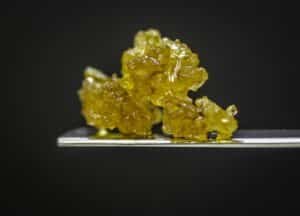
The result is a clean, solvent-free extract containing cannabinoids, terpenes, essential oils, flavonoids, and other bioactive compounds.
Unlike solvents such as butane or ethanol, CO2 is:
- Non-toxic
- Non-flammable
- GRAS-certified (Generally Recognized As Safe)
After extraction, CO2 returns to a gas and leaves zero residual solvent.
The Science Behind CO2 Extraction (Supercritical State)
CO2 becomes supercritical at:
- Temperature: 31.1°C
- Pressure: 1,071 psi
In this state, CO2 behaves like both a gas and a liquid:
- Gas-like penetration into plant material
- Liquid-like ability to dissolve compounds
This allows highly efficient and selective extraction without chemical degradation.
Supercritical vs Subcritical CO2 Extraction
| Parameter | Supercritical | Subcritical |
| Temperature | Above 31.1°C | Below 31.1°C |
| Pressure | Above 1,071 psi | Below 1,071 psi |
| Yield | High | Lower |
| Speed | Faster | Slower |
| Terpene Preservation | Moderate | Excellent |
| Best Use | Cannabinoids & full-spectrum | Terpenes |
How Does CO2 Extraction Work? (Step-by-Step Process)
- Biomass Preparation
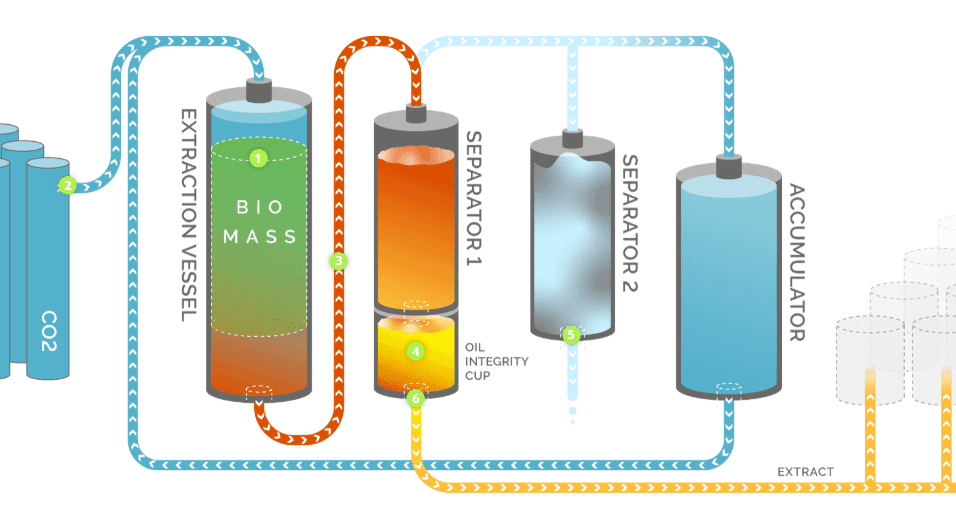
The process begins with preparing the plant material for extraction. Biomass is dried to an optimal moisture level, usually below 10–12%, and milled to a consistent particle size. This improves surface area and allows the CO2 to move evenly through the material for a more efficient extraction.
- Loading the Extraction Vessel
Once prepared, the biomass is packed into a high-pressure extraction vessel. Even packing is important because it prevents channeling, where CO2 flows through gaps instead of making full contact with the plant material. Proper loading helps ensure consistent extraction across the entire batch.
- CO2 Liquefaction
Carbon dioxide from the supply tank is first cooled to very low temperatures, typically between -20°C and -40°C. This converts the gas into liquid form, which is easier to pump and pressurize accurately. Without this step, the system can become unstable and less efficient.
- Pressurization to the Supercritical State
The liquid CO2 is then pressurized and heated above its critical point. At this stage, it enters a supercritical state, where it behaves like both a gas and a liquid at the same time. This unique state gives CO2 the ability to penetrate plant material and dissolve valuable compounds efficiently.
- Extraction Phase
The supercritical CO2 passes through the packed vessel and interacts directly with the plant material. As it moves through, it dissolves target compounds such as cannabinoids, terpenes, essential oils, and other bioactive molecules. This is the main extraction stage, where the desired compounds are pulled from the biomass.
- Separation and Collection
After leaving the extraction vessel, the CO2 carrying dissolved compounds moves into one or more separator chambers. Here, pressure is reduced in a controlled way, causing the extracted compounds to fall out of solution and collect separately. This step allows operators to isolate and gather the final crude extract.
- CO2 Recycling
Once the compounds have been separated, the CO2 is cooled and condensed so it can be reused in the next cycle. Most commercial systems operate in a closed loop and recover more than 95% of the CO2 used. This makes the process both cost-efficient and environmentally responsible.
- Post-Processing
Depending on the desired end product, the crude extract may go through additional refinement steps. These can include winterization to remove waxes, decarboxylation to activate cannabinoids, and distillation to increase purity. Post-processing helps transform the raw extract into a product that meets final formulation requirements.
CO2 Extraction Equipment
- CO2 Extraction Equipment Explained: A commercial CO2 extraction system is made up of several interconnected components, each playing a specific role in the extraction process. Understanding what each piece of equipment does helps operators make informed decisions when selecting and configuring a system for their operation.
- CO2 Tank: The CO2 tank stores the carbon dioxide supply used throughout the extraction process. Industrial-grade CO2 is typically sourced in liquid form and stored in high-pressure vessels. The purity of the CO2 supply directly affects the quality of the final extract, which is why food-grade or instrument-grade CO2 is standard in professional operations.
- Chiller: The chiller cools the CO2 before it enters the pump, keeping it in a stable liquid state. Without adequate chilling, CO2 can cavitate inside the pump, causing pressure instability and inconsistent extraction results. Most commercial systems maintain chiller temperatures between -20°C and -40°C to ensure smooth, reliable operation.
- High-Pressure Pump: The pump is responsible for pressurizing the liquid CO2 and pushing it through the extraction system. It must be capable of maintaining consistent pressure across the entire run. Fluctuations in pump performance directly impact extraction efficiency and the consistency of the final product, which is why pump quality is one of the most important factors when evaluating a CO2 system.
- Extraction Vessels: The extraction vessel is where the biomass is loaded and where the actual extraction takes place. Vessels come in different sizes depending on the scale of the operation, from small laboratory units to large industrial vessels handling hundreds of kilograms per run. The vessel must withstand extremely high pressures while maintaining consistent internal conditions throughout the extraction cycle.
- Separators: After the supercritical CO2 passes through the biomass and picks up dissolved compounds, it moves into the separator chambers. By reducing pressure in a controlled sequence, different compounds drop out of solution at different points, allowing operators to collect fractions with distinct cannabinoid and terpene profiles. Multi-stage separator systems give processors greater control over the composition of their final extract.
- Back-Pressure Regulators: Back-pressure regulators maintain consistent pressure throughout the system by controlling the flow of CO2 between components. They are critical for ensuring stable extraction conditions from the beginning to the end of each run. Without proper regulation, pressure spikes can disrupt extraction efficiency and potentially damage equipment.
- Condenser: Once the CO2 has passed through the separators and released its dissolved compounds, the condenser cools it back into liquid form so it can be recycled into the next cycle. An efficient condenser is essential for systems that operate in a closed loop, as it directly affects how much CO2 is recovered and reused, which has a significant impact on operating costs.
- Control System (PLC): The programmable logic controller, or PLC, is the brain of the extraction system. It monitors and adjusts temperature, pressure, flow rate, and timing across all components in real time. Advanced PLC systems allow operators to save extraction profiles for different strains and target compounds, enabling consistent, repeatable results across every run.
Key Process Parameters
Temperature
Higher temperatures improve yield but may degrade terpenes.
Pressure
Higher pressure increases solvent strength for cannabinoids.
Co-solvents
Small amounts of ethanol may be used to extract polar compounds.
Advantages of CO2 Extraction
- Zero residual solvent
- Tunable selectivity
- Full-spectrum extraction capability
- Regulatory-friendly (FDA GRAS)
- Sustainable and recyclable
- Preserves heat-sensitive compounds
Get a free consultation from the Root Sciences team and find the right system for your operation.
CO2 Extraction vs Other Methods
CO2 vs Ethanol
- CO2: Cleaner, selective, less post-processing
- Ethanol: Faster but extracts unwanted compounds
CO2 vs BHO (Butane)
- CO2: Safe, non-flammable
- BHO: Higher risk, stricter regulations
CO2 vs Cold Pressing
- CO2: Selective extraction
- Cold press: Only suitable for oils/fats
Applications of CO2 Extraction
- Cannabis & hemp (CBD, THC, distillates)
- Food & beverage (coffee, hops, spices)
- Pharmaceuticals (botanical extracts)
- Cosmetics (essential oils)
Why CO2 Extraction Is the Industry Standard
CO2 extraction has earned its reputation as the industry standard not because of a single advantage but because of how many critical requirements it satisfies at once. For processors operating in regulated markets, where purity, safety, consistency, and compliance are non-negotiable, no other extraction method checks as many boxes.
1. Purity and Clean Label Appeal
One of the most compelling reasons CO2 has become the dominant method in professional extraction is the purity of the final product. Because CO2 leaves zero residual solvent, processors do not need to worry about chemical contamination in their extract. This is particularly important in cannabis and hemp markets where finished products are tested for residual solvents before they can be sold legally. It also matters in food, pharmaceutical, and cosmetic applications where clean label standards are becoming increasingly strict and consumers are actively scrutinizing ingredient sourcing.
2. Regulatory Compliance
CO2 is GRAS-certified by the FDA, meaning it is officially recognized as safe for use in food and consumer products. This status gives CO2 extraction a significant regulatory advantage over solvent-based methods like butane or propane, which require far more stringent facility certifications, permitting, and ongoing safety oversight. For businesses operating across multiple industries or looking to scale into pharmaceutical or food-grade production, CO2 extraction provides a compliance-friendly foundation that other methods simply cannot match.
3. Precision and Repeatability
Modern CO2 extraction systems equipped with PLC controls allow operators to set and save exact extraction parameters for every run. Temperature, pressure, flow rate, and cycle time can all be programmed and reproduced with precision, meaning that once an operator dials in the right settings for a specific strain or target compound profile, they can replicate those results consistently across hundreds of runs. This level of repeatability is critical for commercial operations where batch-to-batch consistency directly affects product quality and brand reputation.
4. Scalability
CO2 extraction systems are available at every scale, from small laboratory units designed for research and product development to large industrial systems capable of processing hundreds of kilograms of biomass per day. This scalability means that a business can start with a smaller system and expand its capacity as demand grows without having to switch to an entirely different extraction method. The process parameters and operator knowledge built up on a smaller system transfer directly to larger equipment, reducing the learning curve as operations scale.
5. Environmental Responsibility
Unlike butane or ethanol, CO2 is a naturally occurring compound that is recycled within the extraction system rather than released into the environment. Most commercial CO2 extraction systems recover more than 95% of the CO2 used in each run, significantly reducing operating costs and environmental impact. For businesses that are building their brand around sustainability and clean production practices, CO2 extraction aligns naturally with those values in a way that hydrocarbon or large-volume ethanol extraction does not.
6. Long-Term Investment Value
While CO2 extraction systems require a higher upfront investment compared to some other methods, the long-term economics are compelling. Lower solvent costs due to CO2 recycling, reduced post-processing requirements, fewer regulatory hurdles, and the ability to produce premium-grade extracts that command higher market prices all contribute to a strong return on investment over time. For serious processors who are building a sustainable, scalable operation, CO2 extraction is not just a method choice but a long-term business decision.
Conclusion
CO2 extraction combines science, precision, and sustainability to deliver some of the cleanest botanical extracts available today. Whether you’re in cannabis processing, food production, or pharmaceuticals, it remains one of the most advanced and reliable extraction methods available.
Ready to build your CO2 extraction operation?
Root Sciences provides end-to-end CO2 extraction equipment and lab setup consulting for cannabis and hemp processors worldwide.