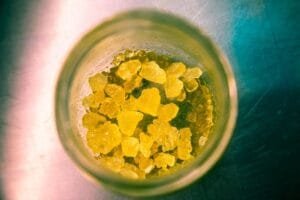
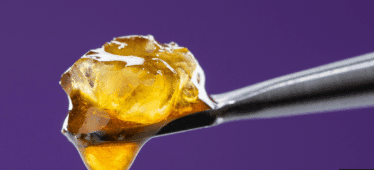
Cannabis concentrates are highly potent cannabis products created by extracting cannabinoids such as THC and CBD, along with aromatic terpenes, from the cannabis plant. By removing excess plant material, this process produces a refined product that is significantly stronger than traditional flower. Most cannabis concentrates range from 40 percent to over 90 percent THC, while high grade cannabis flower typically averages around 15 percent to 25 percent THC according to data from the National Institute on Drug Abuse.
Because of their strength and terpene concentration, cannabis concentrates are commonly used for dabbing, vaping, and infusion into edibles. Their growing popularity reflects increasing consumer demand for potency, flavor preservation, and efficient consumption.
Below is a detailed guide on cannabis concentrate products, including how they are made, the different types available, how they are used, potential risks, legal considerations, and how to choose the right product.
Sections
ToggleWhat Is a Cannabis Concentrate?
A cannabis concentrate is a processed cannabis product designed to isolate and intensify the plant’s active compounds. Unlike flower, which contains plant fibers, chlorophyll, and inactive material, a concentrate focuses primarily on cannabinoids and terpenes.
The purpose of creating a cannabis concentrate is efficiency. By removing non essential plant matter, the final concentrate delivers a higher concentration of active compounds per gram. This makes cannabis concentrates significantly more potent than traditional cannabis flower.
Concentrates vary in texture, consistency, and cannabinoid profile depending on the extraction method and post processing techniques used.
Why Cannabis Concentrates Are Growing in Popularity
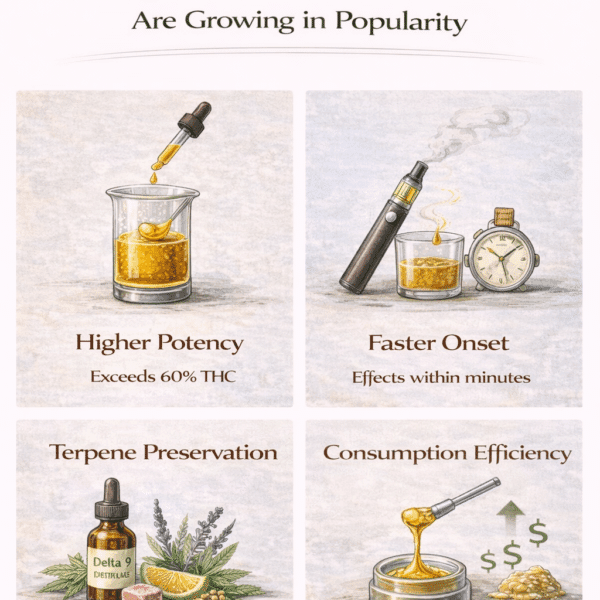
Cannabis concentrates have become one of the fastest growing categories in the legal cannabis market.
According to industry analytics firm Headset, concentrates account for approximately 25 percent to 35 percent of total cannabis sales in mature markets such as Colorado and California.
Key reasons for growth include:
1. Higher Potency
A cannabis concentrate often exceeds 60 percent THC, providing stronger effects with smaller amounts.
2. Faster Onset
When vaporized, concentrate products can produce effects within minutes.
3. Terpene Preservation
Many cannabis concentrates retain higher terpene levels, enhancing aroma and flavor.
4. Consumption Efficiency
A small amount of concentrate can produce effects comparable to a larger quantity of flower.
How Cannabis Concentrates Are Made
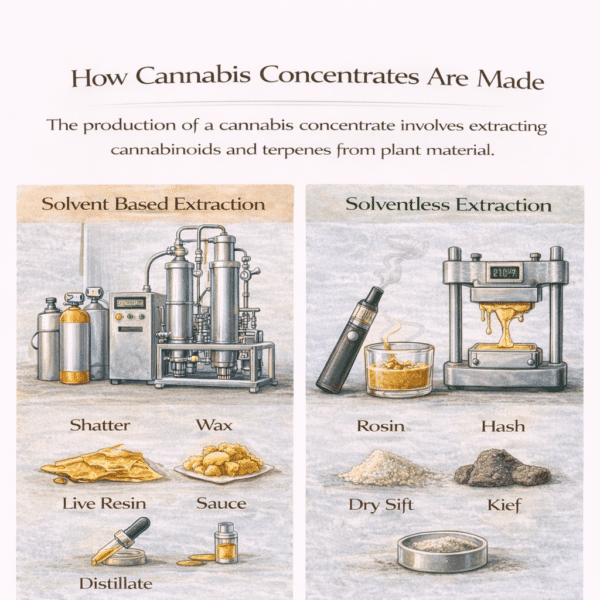
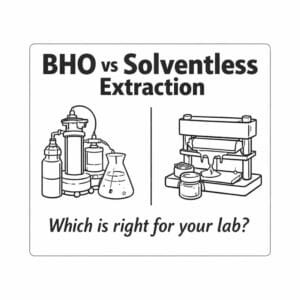
The production of a cannabis concentrate involves extracting cannabinoids and terpenes from plant material. There are two primary categories of extraction.
Solvent Based Extraction
This method uses substances such as butane, propane, ethanol, or carbon dioxide to separate cannabinoids from plant material. After extraction, the solvent is purged from the final concentrate.
Common solvent based cannabis concentrates include:
- Shatter
- Wax
- Live resin
- Sauce
- Distillate
State regulations require lab testing to ensure residual solvent levels meet safety standards.
Solventless Extraction
Solventless cannabis concentrates are created using heat, pressure, or mechanical separation.
Examples include:
- Rosin
- Hash
- Dry sift
- Kief
These concentrate products are popular among consumers who prefer minimal processing methods.
Types of Cannabis Concentrates
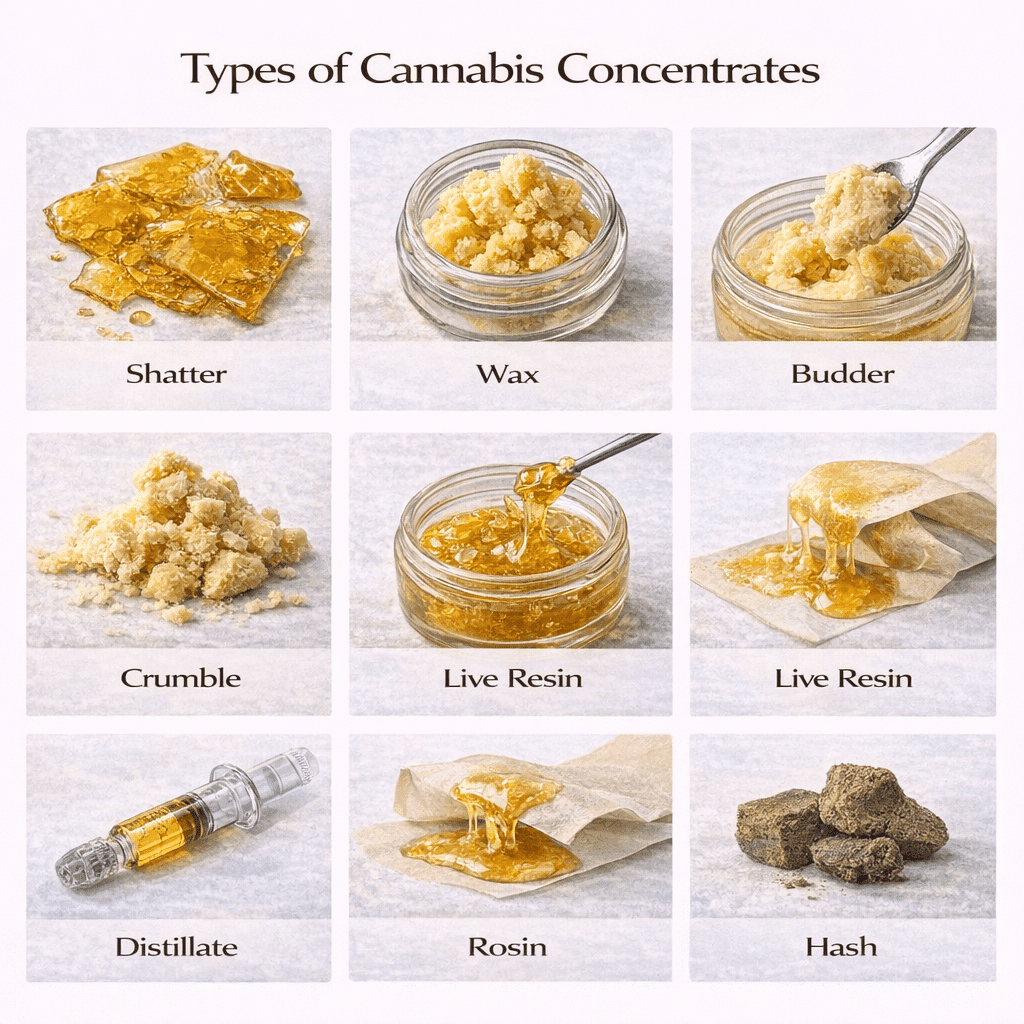
There are several types of cannabis concentrates available in licensed dispensaries, each varying in texture, potency, terpene content, and method of production. The right cannabis concentrate depends on your experience level and preferred consumption method.
Below is a brief overview of the most common cannabis concentrates:
1. Shatter
A hard and glass-like concentrate known for high THC levels and clarity.
2. Wax
A softer concentrate with a pliable texture that is commonly used for dabbing.
3. Budder
A creamy concentrate that is easier to handle and often rich in terpenes.
4. Crumble
A dry concentrate that breaks apart easily for controlled dosing.
5. Live Resin
A cannabis concentrate made from fresh frozen plants to preserve terpene profiles and enhance flavor.
6. Distillate
A highly refined concentrate that can exceed 90 percent THC and is frequently used in vape cartridges and edibles.
7. Rosin
A solventless cannabis concentrate created using heat and pressure.
8. Hash
One of the oldest forms of cannabis concentrates, produced by compressing trichomes.
If you would like a deeper breakdown of extraction methods, potency comparisons, and which cannabis concentrate is best for beginners versus experienced users, read our detailed guide on the types of cannabis concentrates.
How to Use Cannabis Concentrate
A cannabis concentrate can be consumed in several ways depending on preference and experience level.
1. Dabbing
Dabbing involves vaporizing concentrate on a heated surface. This method delivers rapid and intense effects.
2. Vaping
Many cannabis concentrates are formulated for vaporizer cartridges.
3. Mixing With Flower
Some users add concentrate to flower to increase potency.
4. Infusing Into Edibles
Distillate and certain other concentrate products are commonly used in edible production.
Potency and Effects
Cannabis concentrates are significantly stronger than flower.
According to the National Institute on Drug Abuse, THC levels in concentrates can reach up to 90 percent. In contrast, average cannabis flower potency has historically ranged between 15 percent and 25 percent THC.
Effects may include:
- Euphoria
- Relaxation
- Heightened sensory perception
- Temporary anxiety at high doses
- Impaired coordination
Due to high potency, beginners should start with a very small amount of concentrate.
Risks and Safety Considerations
Higher THC exposure has been associated with increased risk of cannabis use disorder and certain mental health effects in susceptible individuals, according to research published in the Journal of the American Medical Association.
Potential side effects of a cannabis concentrate include:
- Increased heart rate
- Dizziness
- Anxiety
- Impaired judgment
Responsible dosing and purchasing lab tested cannabis concentrates reduce potential risks.
Cannabis Concentrate vs Flower
The primary difference between cannabis concentrate and flower is potency and composition.
Flower contains plant matter along with cannabinoids. A concentrate isolates cannabinoids and terpenes, making it more potent per gram.
Concentrates require smaller doses and are typically vaporized rather than combusted.
Legal Status in the United States
Cannabis concentrate products are legal in states that have approved medical or adult use cannabis programs. However, cannabis remains federally illegal in the United States.
State regulated cannabis concentrates must meet requirements for:
- Lab testing
- THC labeling
- Child resistant packaging
- Residual solvent limits
Consumers should verify local laws before purchasing a concentrate.
How to Choose the Right Cannabis Concentrate
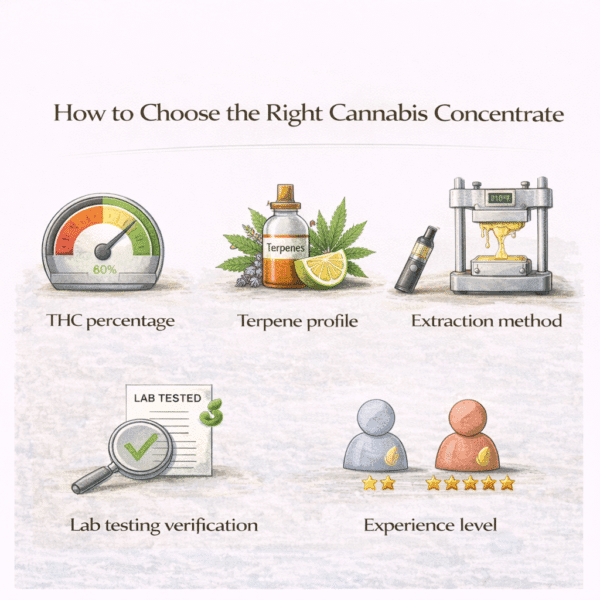
When selecting a cannabis concentrate, consider:
- THC percentage
- Terpene profile
- Extraction method
- Lab testing verification
- Experience level
New users may prefer lower potency concentrate options such as hash or rosin. Experienced users may select higher THC concentrate varieties.
Always review a product’s certificate of analysis before purchase.
Final Thoughts
Cannabis concentrates represent a powerful and rapidly expanding category within the legal cannabis market. A cannabis concentrate offers potency, flavor preservation, and efficiency that traditional flower cannot match.
Understanding how cannabis concentrates are produced, how they differ from flower, and how to use them responsibly allows consumers to make informed decisions. As legalization continues to expand across the United States, cannabis concentrates will likely remain a major segment of the industry.
FAQs
Distillate and THC crystalline products are among the strongest cannabis concentrates, often exceeding 85 percent THC.
Cannabis concentrates are considered safe when purchased from licensed dispensaries and used responsibly.
A beginner should start with a very small amount, approximately the size of a grain of rice when dabbing.
Yes. Exposure to heat, light, and oxygen can degrade a concentrate over time.