
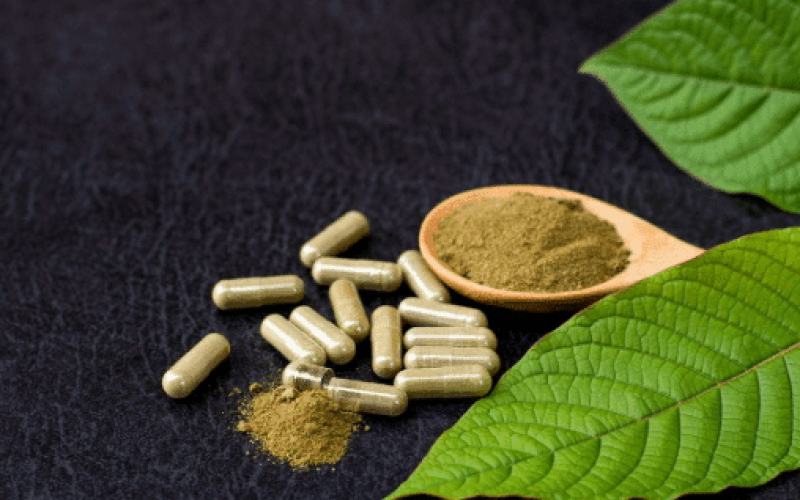
Kratom is an herbal extract that has controversies and interest around its effects and applications in alternative medicine. This tropical herb has long been utilized in traditional medicine across Southeast Asia. However, with potential benefits, there are associated risks that must be understood.
In this guide, we dive deeper into what kratom is, its potential benefits, and side effects. Let’s explore the science and concerns surrounding kratom.
Sections
ToggleWhat Is Kratom?
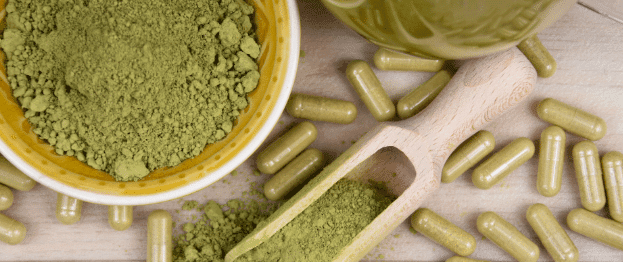
Kratom is an herbal supplement derived from Mitragyna speciosa, a tropical evergreen tree native to Southeast Asia, specifically Thailand, Malaysia, Indonesia, Myanmar, and Papua New Guinea. The tree belongs to the Rubiaceae family, the same family as coffee, which partly explains kratom’s stimulant properties at low doses.
The leaves of the Mitragyna speciosa tree contain over 40 alkaloid compounds. The two primary active alkaloids are mitragynine and 7-hydroxymitragynine. These compounds interact with opioid receptors and several other receptor systems in the brain, producing a wide range of dose-dependent effects.
In Southeast Asia, kratom has been used for centuries. Laborers chewed raw leaves or brewed kratom tea to combat fatigue, manage pain, and increase work endurance in hot climates. It was also used in traditional medicine for fever, diarrhea, and wound treatment. Western markets became aware of kratom primarily through its reported use for opioid withdrawal and chronic pain management during the opioid crisis of the 2010s.
How is kratom sold?
In the United States and most Western markets, kratom is sold in several forms:
- Powder: Dried kratom leaves ground into a fine powder. The most common form. Taken mixed into water or juice, added to tea, or packed into capsules.
- Capsules: Pre-measured powder in gelatin or vegetarian capsule shells. Convenient for consistent dosing and masking the bitter taste.
- Extracts: Concentrated liquid, powder, or resin forms with higher alkaloid concentrations than standard powder. Significantly more potent per gram.
- Tea: Prepared by simmering kratom powder or dried leaves in water, often with lemon juice added to improve alkaloid extraction. A traditional preparation method.
- Crushed leaf: Less processed than powder, used primarily for brewing tea.
What Is Kratom Used For? The Main Applications

Kratom’s reported uses span from physical pain management to mental wellness support. The following are the most documented applications based on user reports, survey data, and available research.
1. Pain management
Pain relief is the most commonly cited reason people use kratom. The alkaloids mitragynine and 7-hydroxymitragynine bind to mu-opioid receptors in the central nervous system, producing analgesic effects comparable in mechanism, though not in potency, to prescription opioids.
Users report kratom helpful for conditions including chronic back pain, arthritis, fibromyalgia, migraines, and post-injury discomfort. A meaningful reported advantage over prescription opioids is that kratom does not appear to produce significant respiratory depression at typical doses, which is the primary cause of opioid overdose deaths. However, this should not be taken as a safety guarantee; high doses and combinations with other substances carry serious risks.
2. Mood enhancement and anxiety relief
At low to moderate doses, many users report kratom produces noticeable improvements in mood, motivation, and social ease. The alkaloids appear to influence dopamine and serotonin systems in addition to opioid receptors, which may account for reported antidepressant and anxiolytic effects.
People use kratom for social anxiety, general anxiety disorder symptoms, and low mood. It is important to note that clinical trials specifically evaluating kratom for these mental health applications do not yet exist. Current evidence is primarily from surveys and self-report studies.
3. Energy and focus
At doses below 5 grams, kratom produces effects that users describe as similar to a strong cup of coffee but more pronounced. Reported effects include increased alertness, physical stamina, motivation, and mental clarity. This application is closest to kratom’s traditional use in Southeast Asia, where field workers chewed leaves for sustained energy during long working days.
4. Opioid withdrawal support
This is one of the most clinically significant and most debated applications of kratom. Because kratom alkaloids act as partial agonists at opioid receptors, they can partially satisfy opioid cravings and reduce withdrawal symptoms such as anxiety, muscle aches, insomnia, and nausea without producing the full euphoric effect of opioids like heroin or oxycodone.
Survey data consistently shows a significant proportion of kratom users began taking it specifically to reduce or stop opioid use. However, kratom itself carries dependence potential, and substituting one dependency for another is not without consequence. Medical supervision is strongly advised for anyone considering this application.
5. Sleep support
At moderate to higher doses, kratom’s sedative effects are reported by users as helpful for insomnia and sleep maintenance. This application is less commonly cited than pain relief or energy but appears consistently in user survey data.
How Kratom Works in the Body?
Understanding what kratom does requires understanding its two primary alkaloids and how they interact with the nervous system.
The primary alkaloids: mitragynine and 7-hydroxymitragynine
Mitragynine is the most abundant alkaloid in kratom leaves, typically comprising 60 to 70% of the total alkaloid content. It acts as a partial agonist at mu-opioid receptors, meaning it activates those receptors but with a ceiling effect below what full agonists like morphine produce. It also interacts with adrenergic, serotonergic, and dopaminergic receptor systems.
7-hydroxymitragynine is present in smaller quantities but is significantly more potent at opioid receptors than mitragynine, estimated at roughly 13 times more potent than morphine in animal studies. At high doses, it is responsible for kratom’s stronger opioid-like effects.
The interaction of these two alkaloids across multiple receptor systems is what makes kratom’s effects so dose-dependent and difficult to predict. It is not simply an opioid substitute; it is a pharmacologically complex plant with effects on multiple neurotransmitter pathways simultaneously.
Why dosage changes everything
Unlike most substances that simply intensify their primary effects with higher doses, kratom shifts its effect profile dramatically as dose increases. Low doses produce stimulant effects. Higher doses produce sedative and opioid-like effects. This dual nature is why kratom is used both as a morning energy supplement and as a pain or sleep aid, depending on the dose taken.
Kratom Effects by Dose Level
The table below summarizes kratom’s documented effects across dose ranges. Individual responses vary based on body weight, tolerance, strain, and whether the user has eaten beforehand.
Dose range | Effect category | Reported effects | Risk level |
1 to 5 grams | Stimulant | Increased energy, alertness, focus, mild euphoria, sociability | Low |
5 to 10 grams | Balanced | Pain relief, calmness, mood improvement, mild sedation | Moderate |
10 to 15 grams | Sedative | Strong pain relief, sedation, euphoria, increased side effect risk | High |
15+ grams | Heavy sedation | Intense sedation, nausea, vomiting, confusion, severe side effects | Very high |
Positive effects users report
- Natural energy and focus stimulation at low doses, comparable to caffeine but more sustained
- Pain relief ranging from mild to substantial depending on dose and individual response
- Improved mood, motivation, and mild euphoria contributing to better emotional well-being
- Reduced anxiety and social inhibition, making interactions feel more comfortable
- Sedation and relaxation at moderate to high doses useful for stress and sleep
Negative effects users report
- Nausea and vomiting, especially at higher doses or when taken on an empty stomach
- Dizziness and lightheadedness, particularly in sensitive individuals or at higher doses
- Dry mouth and increased thirst requiring higher fluid intake
- Cognitive fog and reduced concentration at doses above 10 grams
- Dependence with regular prolonged use, followed by withdrawal symptoms on cessation
Potential Side Effects and Health Risks
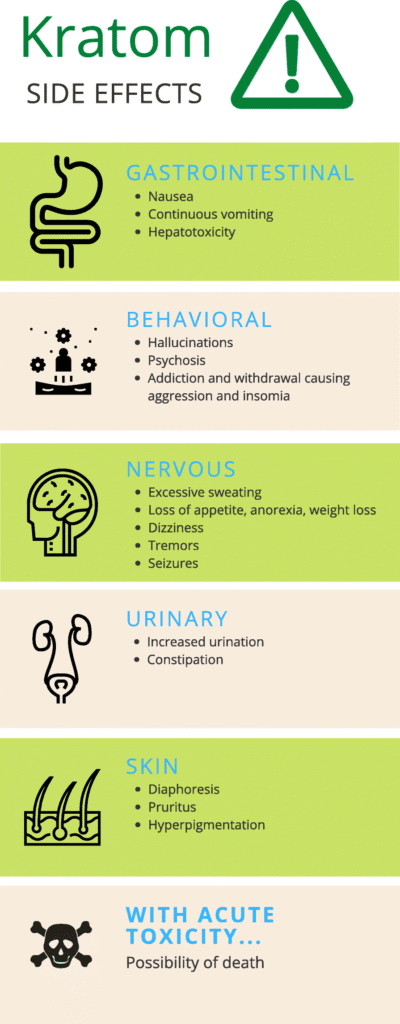
Kratom’s side effects range from mild and temporary to serious with long-term use. A responsible guide must present these clearly.
Short-term side effects
Short-term side effects are most common when doses exceed individual tolerance or when kratom is taken without food or sufficient water:
- Nausea and vomiting: The most common adverse effect, especially at doses above 5 grams or when taken on an empty stomach. Nausea is dose-dependent and usually resolves within an hour.
- Constipation: A direct result of opioid receptor activation slowing gut motility. Common with regular use. Manageable with adequate hydration and dietary fiber.
- Dizziness and lightheadedness: More common in new users and at higher doses. Can be severe enough to cause falls in elderly users.
- Dry mouth: Autonomic response to alkaloid activity. Requires increased fluid intake.
- Loss of appetite: Reported at moderate to high doses. Can lead to unintended weight loss with chronic use.
- Sweating and itching: Classic opioid receptor activation effects. Generally mild at low doses.
- Increased urination: Reported by some users, mechanism not clearly established.
Long-term health risks
Chronic heavy kratom use is associated with more serious health outcomes:
- Physical dependence and withdrawal: Daily kratom use reliably produces physical dependence. Withdrawal symptoms include muscle aches, insomnia, irritability, anxiety, nausea, sweating, and runny nose. Symptoms typically begin 12 to 24 hours after last dose and peak around day 2 to 3. While generally less severe than opioid withdrawal, kratom withdrawal is uncomfortable and can persist for weeks in heavy users.
- Liver toxicity: Case reports of kratom-associated liver injury have been published, with symptoms including jaundice, fatigue, and elevated liver enzymes. The mechanism is not fully understood and may involve idiosyncratic reactions or contaminants in unregulated products. Risk appears low in the general kratom-using population but is a serious concern for individuals with existing liver conditions.
- Cardiovascular effects: Some case reports associate kratom use with elevated heart rate and blood pressure. People with preexisting cardiac conditions should exercise particular caution.
- Weight loss: Sustained appetite suppression from regular use can lead to significant unintended weight loss.
- Sleep disruption: Paradoxically, while kratom is used for sleep at moderate doses, chronic use and withdrawal both disrupt normal sleep architecture.
- Hyperpigmentation: Darkening of facial skin is reported among heavy long-term users, particularly in Southeast Asia. The mechanism involves melanocyte stimulation by certain kratom alkaloids.
Kratom Dosing and Usage Guidelines
Kratom’s potency varies significantly by strain, source, alkaloid content, and preparation method. These figures are general guidelines based on user reports and should not be interpreted as medical dosing recommendations.
Dose range | Effect profile | Notes |
1 to 2 grams | Threshold / beginner | Recommended starting dose for new users. Mild stimulation. Low side effect risk. |
2 to 5 grams | Stimulant | Energy, focus, and mood boost. Most appropriate for productivity or social use. |
5 to 10 grams | Balanced analgesic | Pain relief and relaxation. Increased nausea risk. Not recommended for beginners. |
10 to 15 grams | Sedative / strong analgesic | High risk of side effects. Dependence risk increases significantly at this range. |
15+ grams | Dangerous territory | Severe side effects likely. Vomiting, confusion, extreme sedation. Not recommended. |
Safety guidelines for kratom use
- Start at the lowest effective dose. Begin at 1 to 2 grams. Wait 30 to 45 minutes before considering a second dose. Kratom onset varies considerably based on food in the stomach and individual metabolism.
- Avoid daily use. Using kratom every day, even at low doses, produces tolerance and physical dependence within weeks. Most harm reduction guides recommend using no more than 3 to 4 days per week with at least 2 consecutive days off.
- Stay hydrated. Kratom’s opioid-like effects slow gut motility. Drinking adequate water reduces constipation and helps clear alkaloid metabolites.
- Never combine with CNS depressants. Combining kratom with opioids, benzodiazepines, alcohol, or sleep medications significantly increases the risk of respiratory depression and overdose. This is the most important safety rule.
- Buy only from vendors with third-party lab testing. The kratom market is largely unregulated. Reputable vendors provide certificates of analysis from independent labs confirming alkaloid content and absence of heavy metals, pesticides, and adulterants.
- Rotate strains if using multiple types. Using the same kratom strain repeatedly accelerates tolerance development. Rotating between strains helps maintain effectiveness at lower doses.
- Do not use if pregnant or breastfeeding. Kratom alkaloids cross the placental barrier and have been associated with neonatal abstinence syndrome in infants born to mothers who used kratom during pregnancy.
Kratom Legal Status: US and International Overview
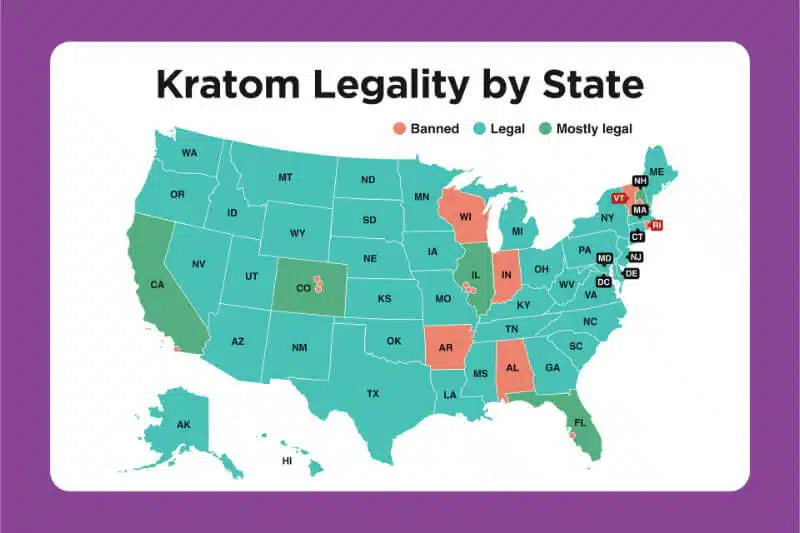
Kratom’s legal status is one of the most frequently asked questions about the substance, and the answer is genuinely complicated because it varies significantly by country, and in the US, by state.
Federal legal status in the United States
Kratom is currently legal at the federal level in the United States. The FDA has not approved kratom for any medical use, and the agency has issued multiple import alerts and warnings about kratom products. The DEA considered scheduling kratom as a Schedule I controlled substance in 2016 but withdrew the proposal following significant public and congressional opposition. As of 2025, no federal scheduling action has been taken.
US states where kratom is banned
Six US states have enacted full bans on kratom possession, sale, and use:
- Alabama (classified as a Schedule I controlled substance)
- Arkansas (classified as a Schedule I controlled substance)
- Indiana (classified as a synthetic drug)
- Rhode Island (classified as a Schedule I controlled substance)
- Vermont (classified as a regulated drug)
- Wisconsin (classified as a Schedule I controlled substance)
Several additional states including Tennessee, New Hampshire, and Nevada have introduced bills to regulate kratom age restrictions and product standards through the Kratom Consumer Protection Act framework rather than an outright ban.
International legal status
Kratom is banned in its countries of origin for most regulated purposes. Thailand, where kratom has centuries of traditional use, partially reversed its prohibition in 2021 to allow regulated medical and research use. Malaysia classifies kratom as a poison under the Poisons Act. Australia, Sweden, Denmark, Latvia, Lithuania, Poland, Romania, and the United Kingdom all prohibit kratom in various legal frameworks.
Always verify current laws before purchasing or traveling with kratom
Kratom’s legal status changes regularly as new legislation is introduced at the state and international level. If you travel, research the laws in your destination before carrying any kratom product. Possession in a banned jurisdiction can result in criminal charges.
Conclusion
Understanding what kratom is, its biochemistry, and effects is essential for exploring its potential therapeutic applications. It can help with pain management, mood enhancement, and opioid withdrawal support, but kratom side effects and health risks are also a genuine concern. The absence of FDA approval and limited clinical research further complicate the choice. Please consult your healthcare provider about its usage, particularly the kratom drug interactions list. For safety, start with minimal doses, only buy from tested suppliers, and monitor for adverse reactions.
FAQs
The most commonly reported uses of kratom are pain management, mood enhancement, anxiety relief, energy and focus improvement, opioid withdrawal support, and sleep aid. None of these applications have been approved by the FDA, and clinical trial evidence is limited.
At low doses (1 to 5 grams), kratom produces effects similar to a strong stimulant, with increased energy, alertness, and mild euphoria. At moderate to high doses, effects shift toward pain relief, relaxation, and sedation similar in character to opioid effects but generally less intense.
Kratom products are made from the dried and ground leaves of Mitragyna speciosa trees. The primary bioactive compounds are the alkaloids mitragynine and 7-hydroxymitragynine, which are concentrated during extraction for kratom extract products.
The most common methods are mixing powder into water or juice and drinking it, brewing kratom tea, taking pre-filled capsules, or using the traditional ‘toss and wash’ method of placing powder directly in the mouth and washing it down with liquid. Tea preparation often involves simmering kratom powder in water with added lemon juice for 15 to 20 minutes, then straining.