
-
8 min read
Rotary evaporation is one of the most widely used techniques in modern laboratories for the efficient removal and...
Root Sciences offers advanced solvent recovery and decarboxylation technologies that play a critical role in optimizing cannabis and hemp extraction workflows. By streamlining solvent removal and activating cannabinoids, these systems improve overall efficiency, reduce processing time, and support regulatory compliance. Partnering with Ecodyst, our solutions help enhance the purity and potency of the final product—ensuring that extracts meet the highest quality standards for both therapeutic and commercial use.
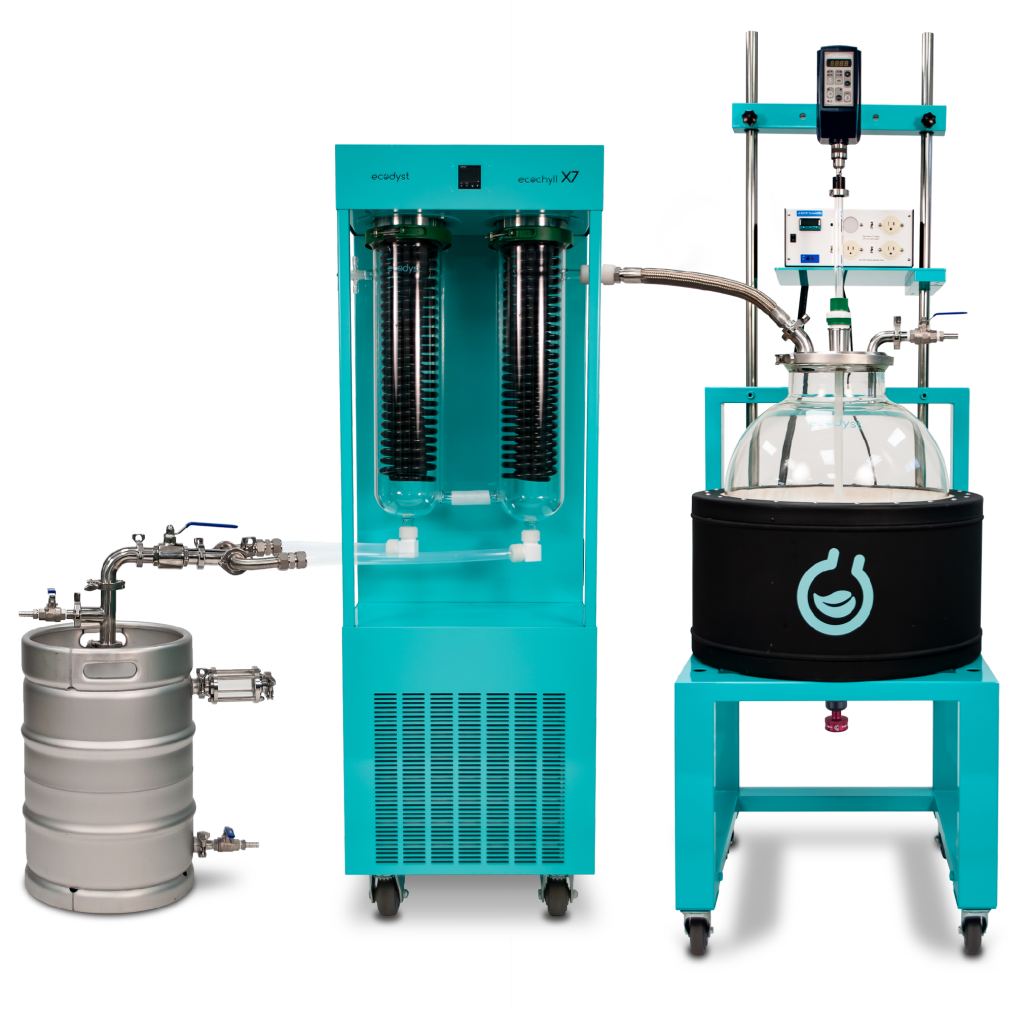
Solvent recovery removes residual ethanol, hydrocarbons, or other solvents from crude cannabis oil, helping processors produce cleaner, safer extracts that meet quality and compliance standards.
01
Controlled decarboxylation converts acidic cannabinoids like THCA and CBDA into active THC and CBD, improving potency, bioavailability, and consistency for finished cannabis products.
02
EcoChyll systems support solvent reuse, faster evaporation, self-cooling operation, and scalable batch sizes, helping labs reduce waste, lower energy use, and increase post-extraction throughput.
03
Choose the right scale for your operation, from compact lab systems to high-throughput industrial solutions.
Lab Scale
The EcoChyll X1 is a compact, turnkey system designed for efficient solvent recovery and decarboxylation in cannabis and hemp processing. Engineered with intelligent self-cooling technology, the X1 eliminates the need for external chillers or glycol, streamlining workflows while reducing energy consumption. Ideal for small to mid-scale operations, this benchtop system enables faster evaporation rates and consistent performance for post-extraction processing.
Lab Scale
The EcoChyll X3 is a high-performance solvent recovery and decarboxylation system designed for scalable cannabis and hemp processing. Available in 12 L and 20 L sizes, the X3 features an energy-efficient self-cooling condenser that eliminates the need for external chillers. Its rapid evaporation capability, easy operation, and compact footprint make it ideal for labs seeking consistent throughput in post-extraction workflows.
Commercial Scale
The EcoChyll X5 is a scalable solution for solvent recovery and decarboxylation in cannabis and hemp processing. Offered in 22 L and 50 L configurations, it supports larger batch sizes while maintaining efficient evaporation rates. With a built-in self-cooling condenser, the X5 removes the need for external chillers, helping processors streamline post-extraction workflows while reducing operational complexity.
Commercial Scale
The EcoChyll X7 is a large-scale solvent recovery and decarboxylation system engineered for high-throughput cannabis and hemp processing. Available in 22 L, 50 L, 72 L, and 100 L capacities, the X7 accommodates a range of production volumes while maintaining consistent recovery performance. Its self-cooling condenser technology eliminates the need for external chillers, helping labs increase efficiency, reduce energy use, and simplify post-extraction operations.
Industrial Scale
The EcoChyll X9 is designed for large-scale cannabis and hemp operations requiring efficient solvent recovery and decarboxylation. With a 200 L capacity, it supports high-throughput workflows while minimizing downtime. The X9 features a self-cooling condenser that removes the need for external chillers or glycol, streamlining operations and lowering energy use. Ideal for post-extraction processing at an industrial scale.
Solvent recovery and decarboxylation are essential post-extraction steps in cannabis and hemp processing. Solvent recovery separates and reclaims solvents such as ethanol, butane, propane, methanol, or isopropanol from cannabis oil, helping reduce residual solvent content, waste, and operating costs. Decarboxylation uses controlled heat to convert acidic cannabinoids such as THCA and CBDA into their active forms, THC and CBD, improving potency, bioavailability, and product consistency. Root Sciences offers EcoChyll systems through its partnership with Ecodyst for lab, commercial, and industrial-scale post-processing workflows.
| Process Stage | What Happens |
|---|---|
| Post-Extraction Preparation | Cannabis or hemp oil is collected after extraction and prepared for solvent removal by filtering solids and adjusting solvent content. |
| Vacuum-Assisted Recovery | The oil is heated under vacuum so solvents evaporate at lower temperatures and separate from the extract. |
| Condensation & Reuse | Evaporated solvent passes through a condenser, is collected, and can be reused in the extraction workflow. |
| Cannabinoid Activation | The remaining oil is gently heated to convert acidic cannabinoids like THCA and CBDA into active THC and CBD. |
| Final Oil Output | The result is cleaner, solvent-reduced, decarboxylated cannabis oil ready for refinement, formulation, or product development. |
Production Scale
Choosing a system that aligns with your production volume is essential for maintaining workflow efficiency. Smaller labs may benefit from benchtop units with lower throughput, while larger facilities require high-capacity systems capable of continuous operation. Matching system size to your extraction scale helps avoid bottlenecks and improves overall process performance.
Solvent Types
Different extraction methods use various solvents such as ethanol, methanol, or hydrocarbons. It’s important to select a recovery system designed to handle the specific solvent(s) used in your operation. Systems compatible with multiple solvent types provide greater flexibility, especially for facilities using hybrid extraction techniques.
Decarboxylation Temperature and Time Control
Accurate control over decarboxylation parameters is key to consistent cannabinoid activation. Look for systems with programmable settings that allow you to fine-tune temperature and exposure time. This ensures effective conversion of acidic cannabinoids like THCA and CBDA into THC and CBD without degrading the extract.
Automation Features
Modern systems often include automation to streamline workflows and reduce operator error. Features like automated solvent removal, decarboxylation cycles, and digital monitoring help maintain consistency, improve safety, and minimize labor demands—ideal for facilities focused on scaling production.
Compliance & Certifications
To meet regulatory requirements, choose equipment that adheres to safety and quality standards such as cGMP, CE, or UL certifications. Closed-loop designs, accurate data logging, and material traceability support both internal QA programs and external inspections.
Energy Efficiency
Energy-efficient systems help reduce operational costs and environmental impact. Self-cooling condensers, vacuum-assisted evaporation, and low-temperature decarboxylation options are all features that can contribute to energy savings without compromising performance.
Budget & ROI
When selecting a system, consider both upfront cost and long-term return on investment. While advanced models may carry a higher initial price, their efficiency, solvent savings, and labor reduction often result in lower total operating costs—making them a smarter choice for long-term profitability.
Maximized Solvent Recovery
Solvent recovery systems are designed to reclaim the majority of solvents used during extraction, often achieving recovery rates above 95%. This reduces the need for constant solvent replenishment, lowers hazardous waste output, and supports sustainable cannabis and hemp processing practices.
Consistent Decarboxylation
Automated decarboxylation systems provide precise control over temperature and time, ensuring cannabinoids like THC and CBD are consistently activated. This consistency enhances potency, bioavailability, and product performance—especially important for medicinal and edible applications where dosing accuracy matters.
Improved Product Quality
By efficiently removing residual solvents and fully activating cannabinoids, these systems help produce cleaner, more potent extracts. The result is a high-quality end product with improved purity, better flavor, and greater therapeutic value, aligning with both consumer expectations and industry standards.
Increased Efficiency
Integrating solvent recovery and decarboxylation into post-extraction workflows streamlines operations by reducing manual handling and processing time. With faster turnaround and reduced labor demands, processors can increase throughput while maintaining quality control across each batch.
Regulatory Compliance
Properly engineered systems support compliance with safety and quality regulations by minimizing solvent exposure and ensuring traceable, controlled processing. Closed-loop recovery, accurate temperature monitoring, and documentation features help meet cGMP, OSHA, and other local or national regulatory requirements.
Cost-Effective Solutions
Over time, solvent recovery and decarboxylation systems contribute to significant cost savings. Reusing solvents, minimizing product loss, and reducing labor hours all translate into lower operational expenses—making these systems a practical investment for processors seeking scalable, long-term growth.
Our solvent recovery systems are designed to handle a wide range of commonly used extraction solvents, including ethanol, methanol, isopropanol, and hydrocarbons like butane and propane. These systems effectively separate and reclaim solvents from cannabis extracts, supporting clean processing and sustainable lab operations.
Solvent recovery reduces both waste and operational costs by recycling extraction solvents for reuse. By reclaiming solvents directly after extraction, processors can minimize downtime, lower solvent purchases, and speed up post-processing—resulting in a more efficient and cost-effective extraction workflow.
Decarboxylation is the process of heating cannabis oil to convert acidic cannabinoids (like THCA and CBDA) into their active forms (THC and CBD). This activation step is essential for achieving the desired potency and therapeutic effects in cannabis products, especially those intended for inhalation or oral consumption.
Yes, many decarboxylation systems allow you to adjust temperature and duration settings to suit different cannabinoid profiles. This flexibility is especially useful when working with minor cannabinoids or when targeting specific formulations, as each compound may decarboxylate at slightly different rates.
Our solvent recovery systems are engineered for high efficiency, with recovery rates typically exceeding 95%. Actual performance may vary depending on solvent type, input volume, and operating conditions, but most processors can expect consistent recovery results that support sustainable and cost-effective extraction.
To maintain compliance, it’s important to use closed-loop systems that minimize solvent exposure and meet industry safety standards. Accurate temperature control, validated operating procedures, and proper documentation of batch processes also help meet local and national regulations for cannabis and hemp processing.
While exact parameters may vary based on the system and cannabinoid profile, decarboxylation typically occurs between 220°F and 250° F (104° C to 121° C) over 30 to 90 minutes. Our equipment provides precise control over both temperature and duration to ensure consistent cannabinoid activation while avoiding degradation.
Yes, most solvent recovery and decarboxylation systems are designed to integrate seamlessly with existing extraction workflows. Whether you operate an ethanol, hydrocarbon, or CO₂-based system, these units can be installed as standalone modules or incorporated into a continuous processing line to enhance throughput and efficiency.
Rotary evaporation is one of the most widely used techniques in modern laboratories for the efficient removal and...
In the food processing and cannabis industry, separation and purification processes play a crucial role. To bring efficiency...
The cannabis market is evolving; consumers expect more innovative products offering better experiences. To meet this growing demand...
Contact our team to discuss your production needs and find the perfect cannabis post-processing solution.