
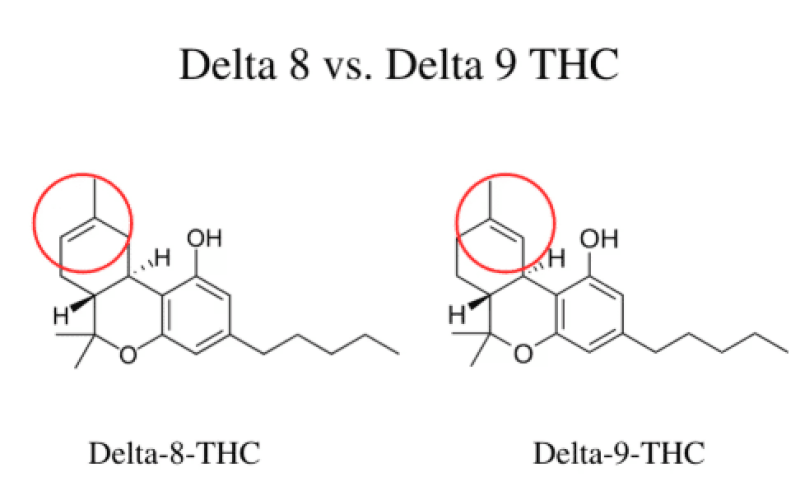
Delta-8 THC and Delta-9 THC are two closely related cannabinoids that can produce psychoactive effects. Because they are similar (but not identical) compounds, people often compare them for potency, effects, risks, and legality. This guide explains the difference between Delta-8 and Delta-9 in plain English, including how CBD compares and why laws vary worldwide.
Sections
ToggleWhat Is Delta-8 THC?
Delta-8 THC (delta-8-tetrahydrocannabinol) is an intoxicating cannabinoid found naturally in hemp and cannabis, but usually in very small amounts. Because Delta-8 occurs in low concentrations, many Delta-8 products are made by converting hemp-derived CBD into Delta-8 through chemical processes. This makes product quality and lab testing especially important.
Many consumers describe Delta-8 as producing a milder than Delta-9 THC, but effects depend on dose, product formulation, tolerance, and individual sensitivity.
Potential Benefits of Delta-8
Research on Delta-8 is still limited compared to Delta-9, but common reported and studied areas of interest include:
- Milder psychoactive effects for many users, which may feel more manageable at low doses
- Relaxation and mood lift in some people
- Appetite stimulation
- Nausea relief (reported by some consumers and explored in early research contexts)
If you are comparing Delta-8 with other emerging cannabinoids, you may also want to read HHC vs Delta-8.
Side Effects and Risks of Delta-8
Delta-8 can still cause typical THC-related side effects, including:
- Dry mouth, red eyes, dizziness
- Drowsiness or fatigue
- Increased heart rate
- Anxiety or paranoia (possible, especially with higher doses)
- Impaired coordination and slower reaction time
A key risk category for Delta-8 is product consistency. Since many commercial Delta-8 items are made through conversion from CBD, poorly made products may contain inaccurate potency, residual solvents, or unknown byproducts. To reduce risk, look for third-party lab reports (COAs) that include potency and contaminant screening.
What Is Delta-9 THC?
Delta-9 THC (delta-9-tetrahydrocannabinol) is the primary intoxicating compound most people mean when they say “THC.” It is naturally abundant in cannabis and is responsible for the classic cannabis high. Delta-9 interacts strongly with the body’s endocannabinoid system, especially CB1 receptors in the brain, which can influence mood, perception, memory, and coordination.
If you want a deeper breakdown, read more on what is Delta-9 THC.
Potential Benefits of Delta-9
Delta-9 is more widely studied than Delta-8. Depending on local medical frameworks and individual response, Delta-9 THC is commonly associated with potential therapeutic uses such as:
- Pain and discomfort management (especially in chronic contexts)
- Nausea reduction and appetite stimulation (including in some medical settings)
- Sleep support for some people
- Relaxation and mood effects, which vary by dose and individual tolerance
Benefits are not guaranteed, and stronger effects also mean a higher chance of side effects, especially at higher doses.
Side Effects and Risks of Delta-9
Delta-9’s side effects are often dose-dependent and can include:
- Anxiety, panic, or paranoia (more likely at higher doses or in sensitive individuals)
- Short-term memory impairment and difficulty concentrating
- Impaired coordination and slowed reaction time (driving risk)
- Increased heart rate, dry mouth, dizziness
- Sleep disruption for some users
Frequent heavy use can increase the likelihood of dependence in some people. If you have underlying medical conditions or take medications that affect the central nervous system, it is wise to speak with a qualified healthcare professional before using intoxicating cannabinoids.
What Are the Differences Between Delta-8 and Delta-9?
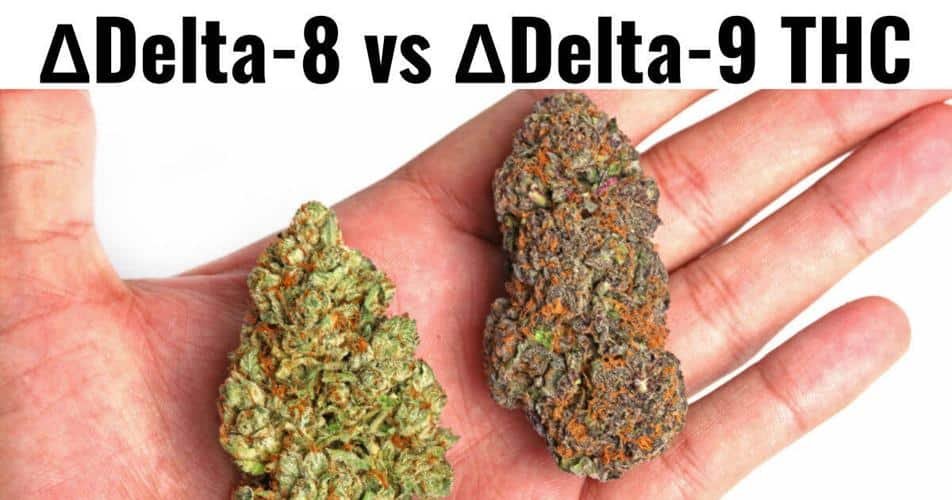
The difference between delta 8 and delta 9 arises from the source material. Depending on the plants they originate from – hemp or cannabis, their THC content can vary. Both hemp and cannabis plants belong to the Cannabis sativa species, but they have some key distinctions:
Characteristic | Hemp | Cannabis |
THC Content | ≤0.3% | >0.3% |
CBD Content | High CBD with more natural profile | Variable CBD content |
Legal Status | Federally legal for medicinal use | Classified as a Schedule I Substance, but varies by state |
Primary Use | Industrial, CBD products | Recreational, medicinal |
Legally, hemp is defined as cannabis plants containing 0.3% or less THC by dry weight. This differentiation is essential to understand as it can put the legal status of the end product in question. Cannabis (often referred to as marijuana) contains higher levels of THC and is primarily grown for its psychoactive properties. The 2018 Farm Bill legalized hemp cultivation in the United States, increasing the availability of hemp-derived products. It is important to note that both plants can produce various cannabinoids, including Delta-8 and Delta-9 THC.
How Does CBD Compare to Delta-8 and Delta-9?
CBD (cannabidiol) is non-intoxicating and interacts differently with the endocannabinoid system than THC. CBD typically does not produce a euphoric high and is often used for wellness-oriented purposes.
A simple comparison:
- CBD: Non-intoxicating. Often used for calming and general wellness goals, although outcomes vary.
- Delta-8 THC: Intoxicating. Often described as milder than Delta-9, with quality depending heavily on manufacturing and testing.
- Delta-9 THC: Intoxicating. Typically stronger and more impairing at comparable doses.
CBD may also influence how THC feels for some people, depending on dose ratios and individual biology. Many Delta-8 products are derived from CBD through conversion, which is why lab testing matters.
Are Delta-8 and Delta-9 Legal?
Legality varies worldwide and can change quickly. Many jurisdictions regulate THC based on intoxication, source (hemp vs cannabis), THC concentration limits, and whether the cannabinoid is naturally extracted or produced through chemical conversion.
Common legal patterns you will see across regions:
- Delta-9 THC is often more strictly regulated because it is the main intoxicating THC in cannabis.
- Delta-8 THC may be treated as a gray-area cannabinoid in some places, but many jurisdictions restrict it, especially if it is produced through chemical conversion.
Always check local laws before purchasing or using Delta-8 or Delta-9 products.
Choosing Between Delta-8 and Delta-9 THC
The selection between delta 8 and delta 9 THC products must be based on several factors, including:
- Desired Effects: If you’re seeking milder effects with less anxiety, delta 8 might be preferable. Delta 9 is more suitable for stronger pain relief or more intense psychoactive effects.
- Tolerance: Consumers with lower cannabis tolerance might find Delta-8 more manageable.
- Legal Status: Check your local laws to ensure compliance, as some states restrict entirely delta-8 THC while other allows it for medical application.
- Medical Conditions: Consult with a healthcare provider to determine which compound might be more beneficial for your specific needs.
Will Delta-8 THC Show Up on a Drug Test?
Lower intensity of delta-8 THC can give the impression to some people that it can be safer for consumption to pass drug tests as compared to delta-9 THC, but this doesn’t seem right. Both compounds are metabolized similarly in the body, and standard drug tests typically can’t distinguish between Delta-8 and Delta-9 THC. Delta-8 THC can result in a positive test for THC.
Conclusion
Delta 8 vs Delta 9 decisions can be challenging as both compounds offer potential benefits but also have risks and legal considerations. Delta-8 THC is a potentially milder alternative to Delta-9 THC, but understanding what’s the difference between Delta 8 and Delta 9 is essential for making informed decisions about cannabis use.
FAQs
For most people, Delta-9 THC is stronger and more intoxicating than Delta-8 THC at comparable doses. Delta-8 is often described as milder, but effects vary by dose, tolerance, and product quality.
Delta-9 is a form of THC. Confusion usually comes from how laws define hemp, cannabis, and allowable THC levels. In some regions, certain hemp-derived products may be permitted if they meet specific THC concentration rules, while other THC products remain restricted. The details depend on local laws.
Among Delta-8, Delta-9, and Delta-10, Delta-9 THC is generally considered the most potent in terms of classic psychoactive effects. Other cannabinoids may feel stronger, but they are different compounds and not part of the “delta” comparison.
Yes. Delta-9 is what most people mean by “real THC.” Differences in perceived strength usually come from dose, tolerance, formulation, and method of consumption.