
Cannabis solventless extraction techniques have evolved from simple mechanical methods to more advanced techniques. With increasing demand for cleaner, safer, and more organic cannabis extracts, producers are looking for alternatives to chemical-heavy methods.
That’s why we put together this guide on solventless extraction techniques. Let’s explore how these methods use physical separation rather than chemical solvents to preserve the plant’s original profile and meet evolving regulatory and consumer expectations.
Sections
ToggleWhat Is Solventless Cannabis Extraction?
The process of solventless cannabis extraction relies on physical principles, including heat, pressure, agitation, and temperature control, to extract compounds from plant material. This approach differs from solvent-based methods, which utilize hydrocarbons, alcohols, or industrial solvents. As solventless cannabis extraction methods explained below will explain, the approaches emphasize purity, mechanical precision, and raw plant integrity. All solventless extraction techniques work by isolating trichomes that contain THC, CBD, and terpenes.
Why Solventless Extraction Matters
The solventless extraction techniques are not just a trend-driven marketing strategy or a means of premium positioning, but rather a result of a fundamental shift toward cleaner, more organic cannabis extracts. The eliminated risk of residual solvents makes them especially critical for medical patients and health-conscious consumers.
Another reason why solventless extraction matters is that it preserves the plant’s natural terpene profile. As terpenes are highly volatile and can easily degrade, the use of gentle physical separation rather than chemical dissolution retains most of the original aroma, flavor, and strain-specific character.
How Solventless Extraction Works
It is easy to understand solventless extraction techniques at a technical level, as these processes are simple. Solventless extraction relies on physical force and environmental control.
Whether it’s dry sift or rosin press, trichomes are separated using pressure and heat. Methods vary from sieving to ice water agitation and remain chemical-free. Solventless extraction does not dissolve cannabinoids; rather, it physically separates them using physical force. Throughout the process, temperature management is critical as excessive heat can degrade terpenes. When correctly implemented, solventless extraction techniques produce clean and potent concentrates.
Cannabis Solventless Extraction Techniques
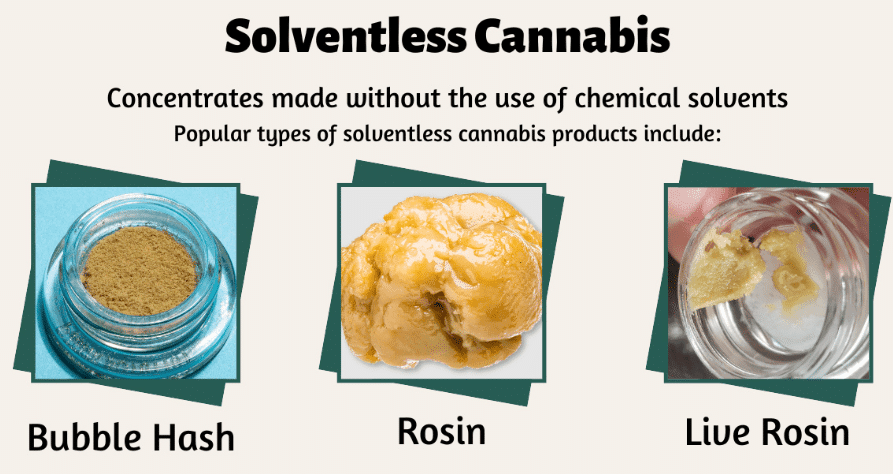
Different types of solventless concentrates employ different extraction techniques. Here are the most widely used solventless extraction techniques:
1. Dry Sift (Kief Extraction)
Dry sift extraction is a straightforward process that utilizes fine mesh screens to separate trichomes from dried cannabis flowers mechanically. Dried cannabis plant material is gently agitated, breaking trichomes away. Dry sift kief can be consumed directly or further processed to produce hash or rosin.
Advantages
- Simple, fully solvent-free process
- Low investment requirements make it more accessible
- Preserves cannabinoids without chemical exposure
Limitations
- Yield and purity are hard to maintain consistently
- Labor-intensive process and time-consuming
2. Hand-Rolled Hash (Traditional Hash)
More commonly known as charas, hand-rolled hash is produced by gently rubbing live cannabis flowers between the hands. The friction and natural heat cause trichomes to detach and separate as a sticky resin. The method is not optimized for commercial scale and is more of an artisanal process.
Advantages
- No equipment or solvents required
- Rich, full-spectrum resin profile
- Natural and organic extract
Limitations
- Extremely low yield
- Highly labor- and skill-intensive
- No scope for commercialization
3. Ice Water Extraction (Bubble Hash)
Ice water extraction or bubble hash uses ice water and agitation to separate trichomes from plant material. The water and trichome solution is then filtered through a micron-rated bag with progressively finer pores, producing varying grades of hash. This solventless extraction technique offers an excellent balance of purity and efficiency.
Advantages
- High trichome purity
- Excellent terpene preservation
- Full-spectrum flavor when pressed into rosin
Limitations
- Requires more temperature control
- Equipment and process complexity are higher
- More labor-intensive process
4. Flower Rosin Extraction
Flower rosin extraction applies controlled heat and pressure directly to cannabis buds, producing resin collected on parchment paper. With its simpler setup, it is one of the most accessible solventless extraction techniques. It is popular among home producers and enthusiasts.
Advantages
- Simple and quick process
- No solvents, water, or post-processing
- Can be carried out using a simple hair dryer
Limitations
- Quality depends heavily on flower freshness
- Lower purity than hash-based rosin
- Heat use can degrade some terpenes
5. Hash Rosin (Including Live Rosin)
What is Solventless Live Rosin?
Hash rosin produced by pressing bubble hash rather than raw flower is called solventless live rosin. It has much higher purity and flavor. Among all solventless extracts, live rosin is considered the premium standard, delivering an unmatched terpene profile and cleanliness.
Advantages
- Exceptional terpene and flavor preservation
- Extremely clean, high-purity concentrate
- Premium market positioning
Limitations
- Lower overall yield
- Requires multiple processing steps
- Higher equipment and production costs
Comparison of Solventless Extraction Techniques
Extraction Technique | Yield | Quality & Potency | Flavor & Terpene Retention | Skill Required | Equipment Needed |
Dry Sift (Kief) | Low-Medium | Medium | Moderate | Medium | Screens, sifters |
Hand-Rolled Hash (Charas) | Low | Medium-High | High | Very High | None |
Ice Water Extraction (Bubble Hash) | Medium | High | High | High | Ice, water, micron bags, washer |
Flower Rosin | Medium | Medium-High | Moderate-High | Medium | Rosin press |
Hash Rosin / Live Rosin | Low-Medium | Very High | Exceptional | High | Wash system, freeze dryer, rosin press |
Advantages of Solventless Cannabis Extracts
A common question is what solventless concentrates are and their advantages.
- No Chemical Solvents
Solventless extraction techniques eliminate the use of solvents, resulting in concentrates with no residual chemicals. These extracts are excellent for medical and wellness consumers.
- Cleaner Flavor and Aroma
As cannabis extracts are not exposed to harsh solvents, solventless extraction techniques preserve the plant’s full terpene profile. Such extracts produce richer, strain-accurate flavors.
- Consumer Trust and Market Demand
Clean and transparent production of solventless extracts drives demand. Consumers trust these concentrates and associate them with craftsmanship and premium quality. All these factors command higher prices.
Limitations and Challenges of Solventless Cannabis Extracts
Solventless extraction process for high-quality extracts is not without challenges, especially if you are exploring commercial operations.
- Lower Yields
Compared to chemical methods, solventless extraction techniques typically yield lower results. These methods prioritize quality over quantity, and this limits the output. It requires more raw materials to produce the same amounts of concentrates as solvent-based methods.
- Labor and Skill Intensity
Due to the use of mechanical methods and equipment, solventless extraction requires hands-on involvement and precise control. The operation requires more labor and expertise to produce repeatable results.
- Higher Production Costs
Higher demand for skilled labor and longer processing periods drive the cost of solventless extracts. Also, modern freeze-dryers, rosin presses, and climate control add costs.
Future of Solventless Cannabis Extraction
Industry is evolving, and if you compare BHO Vs Solventless Extraction, you will find several developments are on the horizon:
- Technology Improvements
New presses, automated washers, and precision tools are advancing solventless extraction techniques. With these innovations, the efficiency of the solventless extraction methods will become more scalable.
- Live and Fresh-Frozen Material Trends
For high-quality extracts like live rosin, solventless extraction techniques rely on fresh-frozen cannabis. The use of live materials for capturing volatile terpenes is expected to accelerate.
- Industry Growth Outlook
With consumer preference shifting toward solvent-free products, more producers will choose solventless extraction techniques over other methods, such as CO₂ Extraction.
Conclusion
With demand for natural concentrates on the rise, producers should understand solventless extraction techniques. These methods produce the cleanest and most authentic cannabis concentrates, from dry sift to live rosin. If you want to prioritize purity, craftsmanship, and consumer trust, solventless extraction is the ideal choice.