
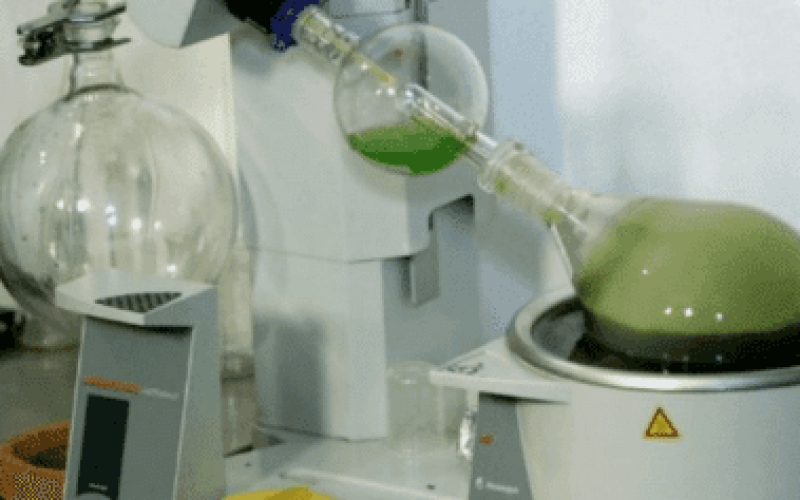
If your extraction process is leaving behind solvent, losing terpenes, or producing inconsistent results, the issue is often not the extraction itself. It is how the solvent is being removed.
That is where the rotovap extraction method comes in.
This method is used to separate solvent from extract using controlled heat, vacuum pressure, and rotation. When done correctly, it produces a clean, concentrated extract while preserving sensitive compounds.
In this guide, you will learn the complete rotovap extraction method step by step, including how it works, the exact process flow, and how to run it efficiently.
Sections
ToggleHow the Rotovap Extraction Method Works
The rotovap extraction method is based on two principles:
1. Reduced Pressure
Lowering pressure reduces the boiling point of the solvent. This allows evaporation at lower temperatures, which protects cannabinoids and terpenes.
2. Rotation
The rotating flask spreads the liquid into a thin film. This increases surface area and speeds up evaporation without increasing heat.
These two factors work together to create fast, low-temperature solvent removal.
Where the Rotovap Extraction Method Fits
This method is used after extraction, not during it.
Typical workflow:
- Extraction pulls compounds from plant material
- Winterization removes fats and waxes
- Rotovap extraction method removes solvent
- Further refinement such as distillation may follow
This step converts a solvent-heavy extract into a usable concentrated oil.
Step-by-Step Rotovap Extraction Method
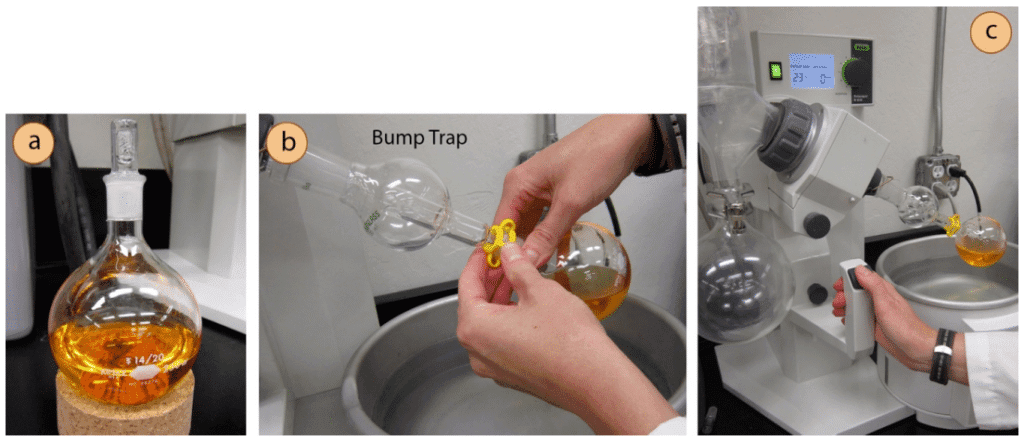
This is the core of the process.
Step 1: Prepare the System
- Turn on the chiller and allow it to reach temperature
- Set heating bath to 30°C to 40°C for ethanol
- Check all connections and seals
Starting without proper setup reduces efficiency and increases risk.
Step 2: Load the Extract
- Fill the rotating flask to 40% to 50% capacity
- Secure the flask properly
Overfilling reduces evaporation efficiency and increases bumping risk.
Step 3: Apply Vacuum Gradually
- Start at higher pressure and reduce slowly
- Watch for rapid boiling or foam
Sudden pressure drops can cause bumping and product loss.
Step 4: Start Rotation and Heating
- Set rotation to 100 to 150 RPM
- Lower flask into heating bath
The extract forms a thin film, allowing solvent to evaporate efficiently.
Step 5: Monitor Solvent Evaporation
- Watch for steady dripping into the collection flask
- Ensure condenser remains cold
Consistent dripping means the process is working correctly.
Step 6: Complete the Process
- Evaporation slows as solvent is removed
- Extract becomes thick and concentrated
At this stage, most of the solvent has been recovered.
Step 7: Release Vacuum and Collect Extract
- Release vacuum slowly
- Remove flask carefully
- Transfer concentrated extract
This completes the rotovap extraction method.
Key Parameters for the Rotovap Extraction Method
For ethanol-based extraction:
- Bath temperature: 30°C to 45°C
- Vacuum pressure: 80 to 150 mbar
- Chiller temperature: -10°C to -20°C
- Rotation speed: 120 to 180 RPM
Lower temperatures protect terpenes. Higher temperatures increase speed.
Balancing these parameters is essential for optimal results.
Common Problems in the Rotovap Extraction Method
1. Bumping
Cause: Pressure dropped too quickly
Fix: Apply vacuum slowly
2. Poor Solvent Recovery
Cause: Warm condenser or leaks
Fix: Check seals and chiller temperature
3. Slow Evaporation
Cause: Weak vacuum or low heat
Fix: Adjust pressure and temperature
4. Residual Solvent
Cause: Incomplete run
Fix: Extend process or improve vacuum conditions
How to Improve Efficiency
- Use correct flask size for batch volume
- Pre-chill extract before loading
- Optimize vacuum and temperature together
- Track solvent recovery rates
Small adjustments can significantly improve output.
Safety Considerations
The rotovap extraction method involves heat, vacuum, and flammable solvents.
Always:
- Use proper ventilation
- Inspect glassware before use
- Apply vacuum gradually
- Keep system grounded
- Store recovered solvent safely
Verifying the Final Extract
After completing the method:
- Extract should be thick and free of bubbling
- No visible solvent should remain
- Lab testing should confirm low residual solvent
If solvent remains, additional purging is required.
Conclusion
The rotovap extraction method is a controlled process used to remove solvent efficiently while preserving extract quality.
By combining reduced pressure, gentle heat, and rotation, it allows solvent to evaporate at lower temperatures and be recovered for reuse.
The method follows a clear sequence: preparation, loading, gradual vacuum application, evaporation, and final recovery.
When performed correctly, it produces a clean, concentrated extract and ensures consistency across batches.
Understanding and applying the rotovap extraction method properly is essential for achieving reliable, high-quality results in any extraction workflow.
The rotovap extraction method removes solvent by combining vacuum, heat, and rotation to enable efficient, low-temperature evaporation. The process involves loading the extract, applying vacuum gradually, heating, and condensing the solvent for recovery. When done correctly, it produces a clean, concentrated extract while preserving compound quality and consistency.
FAQs
It is used to remove solvent from extracts after the initial extraction process.
No. It only removes solvent. Distillation is a separate process.
Common solvents include ethanol, butane, and isopropanol.
Apply vacuum gradually and avoid overfilling the flask.