
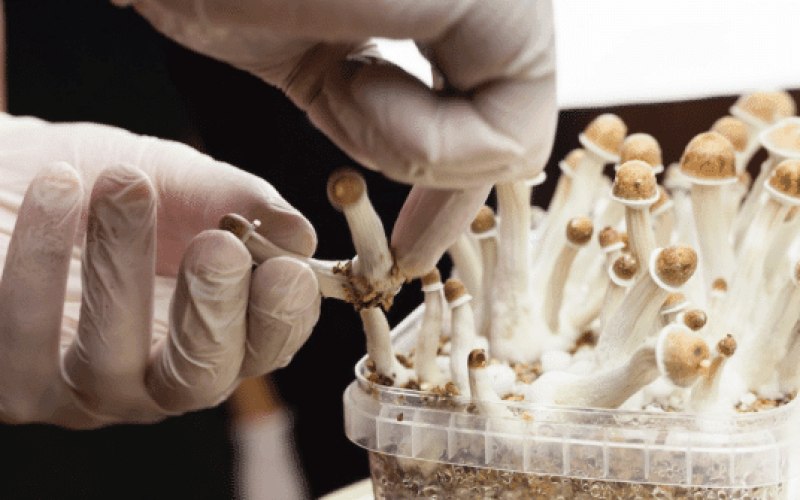
Psilocybin and psilocin extraction yields are shaped mainly by mushroom species, particle size, solvent polarity, solvent-to-biomass ratio, temperature, and extraction technique, with ultrasonic-assisted extraction using acidified methanol identified as the most effective combination in peer-reviewed research.
This guide covers what moves yield for each factor, with the data behind it, and how psilocybin and psilocin need different handling to extract efficiently.
Sections
ToggleKey Takeaways
- Species selection sets the ceiling on extraction yield; a systematic review found psilocybin content ranging up to 4.13% of dry weight depending on species, with psilocin consistently lower, at or below 1.77%.
- Acidified polar solvents (methanol or ethanol) at a solvent ratio of at least 1:100 (m/v) are the research-supported starting point for both compounds.
- Temperature control matters more for psilocin than psilocybin; holding extraction at 20-25°C is the most commonly recommended range to prevent psilocin-specific degradation.
- Ultrasonic-assisted extraction was identified as the most effective technique across a 25-study systematic review, and multiple extraction cycles improve total recovery beyond what a single pass achieves.
- Reported yield figures vary by measurement basis (percent of dry mushroom vs. percent of extract) and by species and study design, so specific numbers should be treated as benchmarks rather than universal constants.
Yield Factors at a Glance
Yield Factor | Effect on Yield | Practical Lever |
Mushroom species/strain | Psilocybin content varies from well under 1% up to a reported 4.13% of dry weight depending on species | Select high-yielding species/strains as starting material |
Particle size | Finer pulverization increases surface area and solvent contact | Grind dried material before extraction rather than using whole or roughly broken material |
Solvent polarity | Polar solvents (acidified methanol/ethanol) solubilize both compounds effectively | Use acidified methanol or ethanol rather than non-polar solvents |
Solvent-to-biomass ratio | Higher ratios improve recovery up to a point; one review recommends at least 1:100 (m/v) | Don’t under-solvent the extraction; use generous solvent volume per gram of biomass |
Temperature | Psilocin degrades faster at elevated temperatures; psilocybin is comparatively more stable | Hold extraction temperature around 20-25°C unless a specific protocol justifies otherwise |
Extraction technique | Ultrasonic-assisted extraction (UAE) is identified as the most effective technique in a systematic review of 25 studies | Favor UAE or multi-cycle extraction over single-pass maceration where equipment allows |
What Affects Psilocybin and Psilocin Extraction Yields
Six variables account for most of the yield variation reported across the extraction literature. Species and particle size set the ceiling on what’s available to extract in the first place; solvent, ratio, temperature, and technique determine how much of that ceiling is actually recovered.
Mushroom Species and Strain
Species selection sets the upper bound on yield before any extraction variable comes into play. A systematic review covering 25 studies reported the following, worth reading as two separate bases rather than one continuous scale:
- Psilocybin content: reported as high as 4.13% of dry mushroom weight in the highest-yielding species tested
- Psilocin content: stayed at or below 1.77% of dry weight across the same body of research, consistently lower than psilocybin
- Consistently higher-yielding species identified: Psilocybe cyanescens, Panaeolus subbalteatus, and Psilocybe semilanceata
A separate peer-reviewed factorial-design optimization study working specifically with Psilocybe cubensis reported a maximum yield of 50.03 mg of psilocybin per gram of extract, roughly 1% by that measure, under its optimized conditions. That figure isn’t directly comparable to the dry-weight percentages above, it’s measuring concentration within the finished extract rather than content in the raw mushroom, which is exactly the kind of basis mismatch worth checking before treating two numbers as contradictory.
Particle Size and Pulverization
Grinding dried mushroom material into a fine powder increases the surface area exposed to solvent, which improves both extraction speed and completeness. The effect is consistent across the literature, though it’s generally reported as a secondary factor relative to species selection and solvent conditions, worth doing but not a substitute for getting the bigger variables right.
Solvent Choice and Polarity
Both psilocybin and psilocin are effectively solubilized by polar solvents, which is why methanol and ethanol, particularly acidified with a small amount of acetic or hydrochloric acid, dominate the research on this topic rather than non-polar alternatives. Acidification serves a specific purpose: it helps stabilize the compounds in solution and improves solubility, particularly for psilocybin’s phosphate group.
Solvent-to-Biomass Ratio
More solvent per gram of biomass generally recovers more compound, up to a point of diminishing returns. The systematic review referenced above recommends a minimum ratio of 1:100 (solvent volume to biomass mass), noting that higher ratios improve recovery further. A separate patent filing describing a commercial-scale extraction process illustrates the tradeoff between ratio and extraction cycles directly:
- 20-30 L/kg ratio: achieved over 90% alkaloid yield, but required three extraction passes
- 40-50 L/kg ratio: achieved the same over 90% yield in only two extraction passes
Ratio and cycle count aren’t independent variables, more solvent per pass can substitute for an additional pass, and the right balance depends on which is more expensive for a given facility: solvent volume and recovery time, or the labor and equipment time of an extra cycle.
Temperature and Psilocin’s Thermal Sensitivity
Temperature control matters more for psilocin than psilocybin. The systematic review recommends holding extraction temperature between 20 and 25°C specifically to prevent thermal degradation of psilocin while still allowing adequate diffusion. Interestingly, the factorial-design study on Psilocybe cubensis found that temperature (comparing 25°C against 75°C) was not a statistically significant variable in their specific model, a useful reminder that optimal parameters can vary by species and extraction system, and that a single study’s findings shouldn’t be generalized as universal without checking whether the underlying conditions match.
Extraction Technique and Number of Cycles
Technique choice showed measurable differences in both effectiveness and speed across the reviewed studies:
- Ultrasonic-assisted extraction (UAE): identified as the most effective technique in the systematic review, attributed to cavitation effects that disrupt cell walls more efficiently than passive maceration
- Microwave-assisted extraction (MAE): Extraction Magazine reported a study reaching optimal conditions in as little as 5 minutes at 50°C using a 60% methanol solvent, competitive with UAE on speed specifically
- Passive maceration: the slowest of the three, typically requiring the longest hold times to reach comparable recovery
Independent of which technique is used, running multiple extraction cycles on the same biomass rather than a single pass consistently improves total recovery across the studies reviewed, though each additional cycle adds processing time and solvent volume that has to be weighed against the incremental yield gained.
Psilocybin vs. Psilocin: Key Differences That Affect Yield
Psilocybin and psilocin aren’t interchangeable for extraction planning purposes, they behave differently enough that treating them as a single target compound leads to avoidable yield loss. Psilocybin is the more stable, phosphorylated prodrug form that the body converts to psilocin after ingestion; psilocin is the active, less stable form. The table below summarizes the practical differences that matter during extraction.
Property | Psilocybin | Psilocin |
Chemical form | Phosphorylated prodrug (contains a phosphate group) | Dephosphorylated active form; psilocybin converts to psilocin in the body |
Relative stability | Comparatively stable in properly dried, stored biomass and during extraction | Less stable; degrades more readily with heat, oxygen, and light exposure |
Reported yield range (species-dependent, % dry weight) | Reported as high as 4.13% in some species | Reported at or below 1.77%, consistently lower than psilocybin across studied species |
Solvent behavior | Highly polar; solubilizes well in acidified polar solvents | Somewhat less polar than psilocybin but still effectively extracted by the same acidified polar solvent systems |
Temperature sensitivity during extraction | More tolerant of moderate heat, though excess heat still reduces yield over time | Requires tighter control, generally 20-25°C, to avoid measurable degradation during extraction |
How to Improve Yields in Practice
Translating the research into an actual protocol means stacking the factors above rather than optimizing any single one in isolation:
- Start with a known high-yielding species: species selection sets the ceiling; no downstream optimization recovers yield the starting material doesn’t contain
- Dry and finely grind material before extraction: maximizes surface area contact with solvent
- Use acidified methanol or ethanol at a generous solvent ratio: at least 1:100 (m/v) per the systematic review’s recommendation, more if equipment and cost allow
- Hold temperature at 20-25°C: protects psilocin specifically without meaningfully sacrificing psilocybin recovery
- Use ultrasonic-assisted extraction where available: the highest-performing technique identified across the reviewed literature
- Run multiple extraction cycles rather than a single pass: meaningfully improves total recovery, particularly at lower solvent ratios
Our psilocybin extraction 101 guide covers the equipment and step-by-step methodology behind these parameters in more detail; the levers above are what the research shows actually moves the yield number once a method is already chosen. Verifying whether any of these changes actually improved yield requires in-house potency testing between batches rather than assuming a protocol change worked based on process theory alone.
Conclusion
Extraction yield for psilocybin and psilocin isn’t one number to optimize, it’s the combined result of species selection, particle size, solvent chemistry, ratio, temperature, and technique, with psilocin specifically requiring tighter thermal control than psilocybin throughout.
The research is consistent enough on the major levers, acidified polar solvent, generous solvent ratio, moderate temperature, ultrasonic assistance, multiple cycles, to build a defensible protocol from, but the specific numbers reported vary by species and study design enough that they’re better treated as a starting benchmark than a guarantee.
FAQs
1. Why do reported psilocybin yield percentages vary so widely between sources?
Largely because studies report yield on different bases (percentage of dry mushroom weight versus concentration within crude extract) and because psilocybin content itself varies significantly by species, growing conditions, and even which part of the mushroom is analyzed. A 4% figure and a 1% figure aren’t necessarily contradictory if they’re measuring different things or different species.
2. Does the drying method affect psilocybin and psilocin content before extraction even begins?
Yes. Psilocybin is reported as relatively stable in properly dried and stored material, but psilocin degrades more readily with heat, light, and oxygen exposure, which means aggressive or high-heat drying methods can reduce psilocin content before extraction even starts, independent of anything done during the extraction itself.
3. Is there a point where increasing solvent ratio stops improving yield?
Yes, though the exact point varies by study and biomass. The research generally shows diminishing returns above a certain ratio, where additional solvent adds processing and evaporation cost without meaningfully increasing recovery, which is why matching ratio to extraction cycle count, rather than maximizing ratio alone, tends to be the more efficient approach at scale.
4. Do psilocybin and psilocin extract at the same rate during a single extraction run?
Not necessarily. Because they have somewhat different polarity and stability profiles, extraction kinetics can differ slightly between the two compounds within the same run, which is part of why potency testing reports the two as separate values rather than a combined total, and why a protocol optimized purely for psilocybin recovery may not be extracting psilocin as efficiently.
5. Can extraction technique alone compensate for a lower-yielding mushroom species?
Only to a limited extent. Technique and process optimization improve how much of the available compound is recovered, but they can’t create alkaloid content the biomass doesn’t have. A well-optimized extraction of a low-yielding species will still generally underperform a poorly optimized extraction of a high-yielding one.