

Evaluate a cannabis equipment supplier’s reliability by checking their manufacturing track record and install base, verifying safety certifications directly with the issuing body, assessing their service and support infrastructure, confirming spare parts availability and lead times, and checking the supplier’s own financial stability, not just the equipment’s specs.
This guide covers how to verify each factor, where reputation actually shows up beyond a company’s own website, and the red flags that predict future problems.
Sections
ToggleKey Takeaways
- Reliability is a property of the supplier, not just the equipment; the same machine from a well-supported manufacturer and a poorly-supported one carries very different long-term risk.
- Safety certifications should be verified directly against the issuing body’s database, not taken on the supplier’s word, since certification claims are easy to state and harder to check.
- Service infrastructure and spare parts lead time matter more over the equipment’s lifetime than almost any other factor, since downtime cost compounds every time support is slow.
- A supplier’s own financial stability and ownership structure affect long-term reliability; recent acquisitions in particular are worth investigating for whether service commitments actually carried over.
- Independent verification, references, review of public records, direct contact with the certifying body, is more reliable than testimonials curated on the supplier’s own site.
Reliability Factors at a Glance
Reliability Factor | How to Verify It | Red Flag |
Manufacturing track record | Years in operation, number of units in the field, named customer references | Vague or unverifiable claims about experience or install base |
Safety certifications | UL 1389 listing or equivalent, ASME stamps on pressure vessels, documentation provided in writing | No certification, or certifications that can’t be verified against the issuing body |
Service and support infrastructure | Response time commitments, whether support is in-house or outsourced, technician availability | Support routed through a general inbox with no defined response time |
Spare parts availability | Stocked parts vs. built-to-order, typical lead time, whether parts are proprietary or standard | Long or undefined lead times for common wear parts |
Financial stability of the supplier | Business credit report, length of operation, ownership structure and recent M&A activity | Recent acquisition with no clarity on whether service commitments carried over |
Five factors account for most of the difference between a supplier relationship that holds up over years of operation and one that becomes a liability the first time something breaks. Each one needs to be verified independently rather than taken on the supplier’s own claims.
Check Manufacturing Track Record and Tenure
How long a manufacturer has been building equipment, and how many units are actually running in the field, is a meaningfully better signal than how polished their marketing is. Ask directly for the number of units installed, how long the current product line has been in production, and whether the company designs and manufactures the equipment itself or resells equipment built by someone else under its own name.
A manufacturer with a decade of hydrocarbon extraction equipment or ethanol extraction equipment in continuous production, with a large installed base of operating systems, has had far more opportunity to identify and fix design flaws than a company on its first or second product generation.
Verify Safety Certifications and Compliance History
Cannabis extraction equipment is subject to ANSI/CAN/UL/ULC 1389, the UL standard covering extractors, preparatory equipment, and post-processing equipment for both unclassified and hazardous (classified) installation locations. A supplier claiming UL certification should be able to provide documentation you can verify directly through UL’s own product database, not just a logo on a spec sheet.
The same applies to ASME pressure vessel stamps on any pressurized component. Certification claims that can’t be independently verified against the issuing body’s records should be treated as unconfirmed until they are.
Assess Service and Support Infrastructure
Extraction equipment breaks, and when it does, how fast a supplier responds directly determines how much production time is lost. Ask specifically whether technical support is provided in-house or outsourced to a third party, what response time is actually committed to (not just promised informally), and whether phone or on-site support is available or if everything routes through email.
This isn’t a hypothetical concern: MJBizDaily reported on a lawsuit filed by cannabis testing labs against an equipment manufacturer alleging that after a private equity acquisition, the company refused parts and service to labs, directly contributing to failed testing results.
Ownership changes and acquisitions are exactly the kind of event that can quietly degrade support quality without ever showing up in a spec sheet, which is why service infrastructure needs to be evaluated as its own factor, not assumed to come bundled with a good product.
Confirm Spare Parts Availability and Lead Times
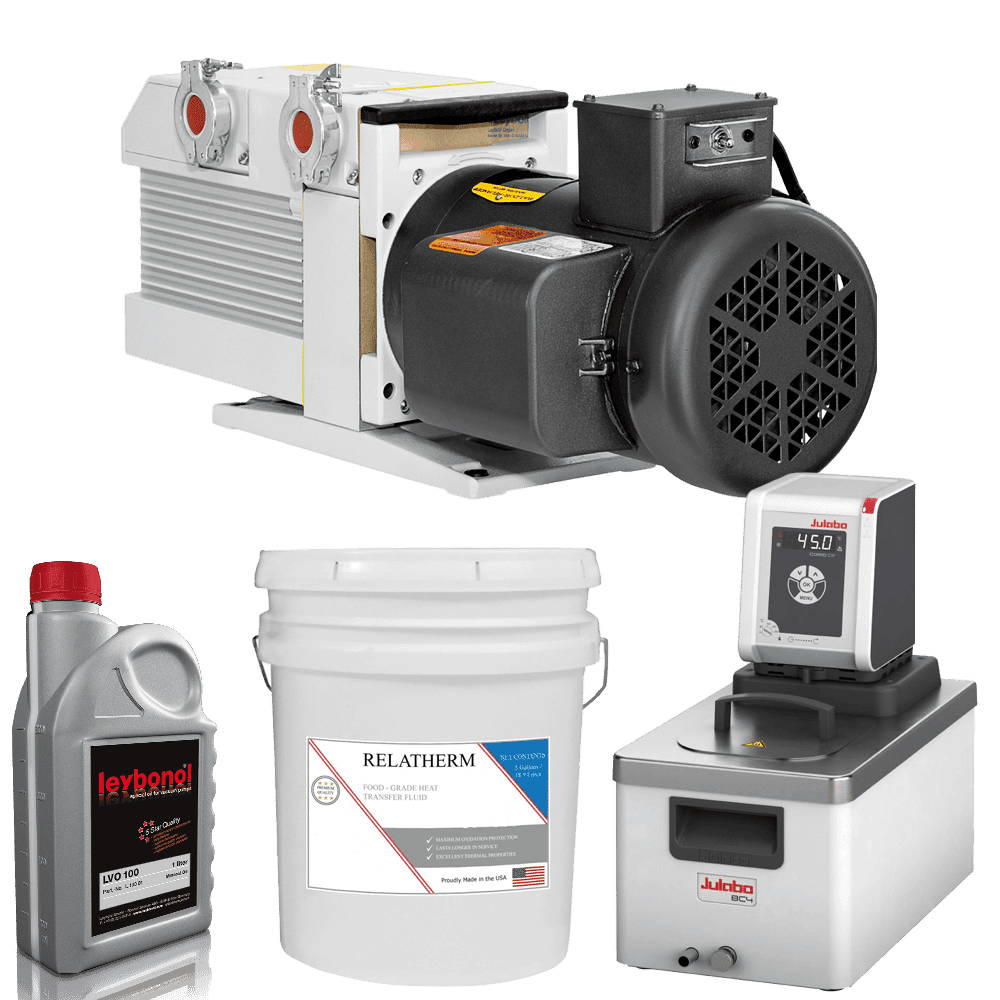
A machine that’s otherwise excellent becomes a liability if a common wear part takes weeks to arrive. Ask specifically which parts are stocked domestically versus built to order, what the typical lead time is for the parts most likely to need replacement (seals, gaskets, sensors, pumps), and whether parts are proprietary to that manufacturer or based on standard industrial components available from multiple sources.
Standard components generally mean faster sourcing options if the original supplier is slow or unresponsive; fully proprietary parts mean you’re dependent on that one relationship holding up indefinitely.
Evaluate Financial Stability of the Supplier Itself
A financially unstable supplier is a service and warranty risk even if their current equipment is good. Dun & Bradstreet’s supplier stability methodology evaluates exactly this kind of risk using factors like trade payment history, length of operation, and recent merger or acquisition activity, since these are the indicators that predict whether a business will experience serious financial or operational instability.
A business credit report, length of time in operation, and public records on ownership changes are worth checking before a major equipment purchase, particularly given how much of a facility’s uptime depends on that supplier remaining a going concern with intact service commitments.
Reputation Verification: Where to Actually Look
A supplier’s own website testimonials are curated by definition, and shouldn’t be the primary basis for a reliability assessment. More reliable channels exist:
- Direct reference calls: ask for customers running the same model at a similar scale, and ask specifically about support responsiveness and parts experience, not just initial performance
- Independent review and forum communities: operator communities and industry forums often surface support and reliability issues faster than formal review sites, since operators tend to be candid with peers
- Trade show presence and industry standing: consistent presence at major industry events over multiple years signals a business investing in long-term relationships rather than a short-term sales push
- Public records and litigation history: court records and regulatory filings are public and worth a basic search, particularly for a major capital purchase
Our 10 Best Cannabis Extraction Machines on the Market roundup is a useful starting point for identifying which established manufacturers are worth putting through this verification process in the first place.
Red Flags That Predict Future Problems
A handful of warning signs show up consistently before a supplier relationship becomes a liability, often well before the equipment itself causes a problem:
- Reluctance to provide references or facility access: a confident supplier with satisfied customers generally doesn’t hesitate to connect a serious buyer with them
- Certifications that can’t be independently verified: a claim that only exists on the supplier’s own marketing material, with nothing to check it against
- Vague or shifting answers about lead times: a supplier that can’t give a consistent parts or service timeline across multiple conversations is signaling that the timeline itself isn’t reliable
- Recent acquisition with no continuity plan communicated: a supplier that’s changed ownership recently should be able to explain clearly whether service commitments and staffing carried over
- Pressure to close quickly without time for reference checks: urgency tactics on a purchase of this size are worth treating as a signal in themselves
Conclusion
Evaluating a supplier’s reliability takes more effort than comparing spec sheets, but it’s the factor that determines how much that equipment actually costs to own over its full lifetime, not just to purchase. Manufacturing track record, verifiable safety certification, service infrastructure, spare parts access, and the supplier’s own financial footing all compound over years of operation in a way a single demo or sales conversation won’t reveal.
Verifying these factors independently, rather than taking them on the supplier’s word, is what separates a purchase decision made on complete information from one made on marketing material alone.
FAQs
1. Does a longer warranty period automatically indicate a more reliable supplier?
Not necessarily. A longer warranty is worth having, but it’s only as good as the supplier’s ability to honor it, which depends on the same financial stability and service infrastructure factors covered above. A financially unstable supplier offering an unusually long warranty is a combination worth extra scrutiny, not extra confidence.
2. Is it reasonable to ask a supplier for their business credit report or financial information directly?
Most suppliers won’t share internal financials directly, but publicly available business credit reports and registration records don’t require their cooperation to access. For a purchase of significant size, requesting basic transparency about ownership structure and how long the current entity has operated is a reasonable ask, and a supplier’s response to that request is itself informative.
3. How much weight should trade show presence actually carry in a reliability assessment?
It’s a useful supporting signal, not a primary one. Consistent, multi-year presence suggests ongoing investment in the industry and accessibility for support, but it doesn’t substitute for verifying certifications, checking references, and confirming parts lead times directly. Treat it as one data point among several rather than a standalone indicator.
4. Should a newer manufacturer with less track record be avoided entirely?
Not necessarily, but the burden of verification is higher. A newer manufacturer can still be a reasonable choice if the individuals behind it have relevant industry experience elsewhere, the equipment itself is properly certified, and references, even from a smaller install base, check out. The absence of a long track record just means each of the other verification steps matters more, not that the supplier should be ruled out automatically.
5. Does buying directly from the manufacturer versus through a distributor change how reliability should be evaluated?
It adds a layer worth clarifying: confirm whether service, warranty claims, and parts orders are handled by the distributor or routed back to the manufacturer, since response time and accountability can differ significantly between the two models. Neither structure is inherently more or less reliable, but the buyer needs to know which one they’re actually dealing with before a problem arises, not after.