
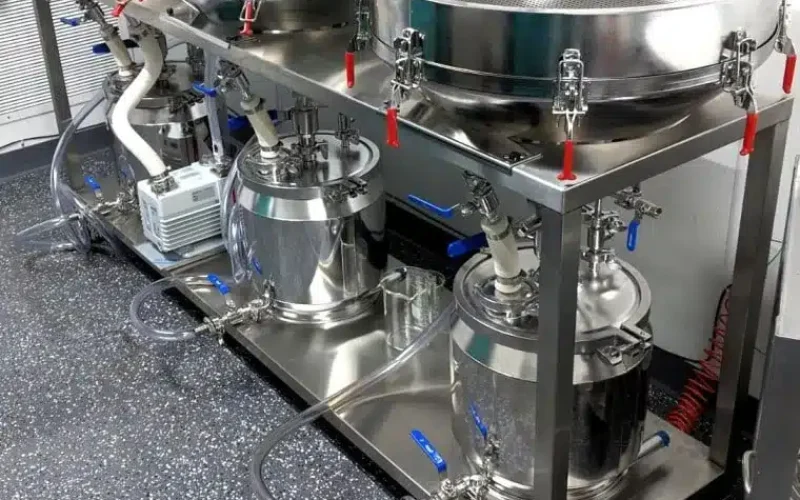
Winterization matters more for medical cannabis than adult-use product because incomplete wax and lipid removal directly affects dosing accuracy and residual solvent levels, both of which sit under specific regulatory limits, ICH Q3C for pharmaceutical-grade solvent thresholds and EU-GMP for facilities supplying medical cannabis into pharmacy channels like Germany’s.
This guide covers why those stakes are higher for medical product, what the relevant compliance standards actually require, and how winterization needs to be run and documented differently for medical versus recreational output.
Sections
ToggleKey Takeaways
- Winterization quality directly affects medical cannabis dosing accuracy, not just cosmetic clarity, since inconsistent wax and lipid removal produces batch-to-batch cannabinoid concentration variability patients and prescribers rely on being predictable.
- ICH Q3C is the pharmaceutical-grade global benchmark for residual solvent limits, ethanol is classified as a low-risk Class 3 solvent, but it applies specifically to pharmaceutical-grade products, not automatically to every US state medical cannabis program.
- EU-GMP certification, specifically Annex 7 for herbal medicinal products, is a non-negotiable requirement for medical cannabis entering pharmacy channels in Germany and similar EU markets, and it governs extraction and winterization directly.
- US state medical cannabis programs set their own residual solvent and potency limits independently, which can be less stringent than pharmaceutical-grade standards and vary meaningfully state to state.
- Medical-grade winterization generally requires more rigorous documentation, batch records, validated parameters, and QC checkpoints, than the same physical process run for adult-use products.
Compliance Standards at a Glance
Standard | What It Governs | Who It Applies To |
ICH Q3C | Residual solvent classification and Permitted Daily Exposure limits | Pharmaceutical-grade products; ethanol falls in the lowest-risk Class 3 |
EU-GMP (Annex 7) | Manufacturing, extraction, and quality control for herbal medicinal products | Producers supplying medical cannabis into EU pharmacy channels, especially Germany |
GACP | Cultivation and post-harvest handling standards | The cultivation stage feeding into EU-GMP manufacturing |
State medical program limits (US) | State-specific residual solvent and potency testing thresholds | US medical cannabis operators, varies significantly by state |
Why Are Winterization Stakes Higher for Medical Cannabis?
For adult-use concentrate, incomplete winterization mostly shows up as a cosmetic and sensory problem, cloudy color, harsh flavor, inconsistent texture. For medical products, the same incomplete process creates a compliance and clinical problem: variable lipid content changes the effective cannabinoid concentration per dose, which undermines the batch-to-batch consistency medical patients and prescribers depend on for predictable therapeutic effect.
A patient titrating a specific milligram dose needs that dose to mean the same thing batch after batch, which makes winterization less a quality-polish step and more a direct input into dosing reliability.
Residual Solvent Compliance and ICH Q3C
Ethanol used in winterization has to be recovered down to an acceptable residual level before the extract is considered finished, and the pharmaceutical industry’s global benchmark for this is ICH Q3C, which classifies solvents by risk and sets Permitted Daily Exposure limits.
Ethanol falls into Class 3, the lowest-risk category, with a threshold around 5,000 ppm (0.5%) generally accepted without additional justification. It’s worth being precise about scope here: ICH Q3C is a pharmaceutical-grade standard, directly binding on products seeking pharmaceutical status or EU-GMP certification, but most individual US state medical cannabis programs set their own residual solvent limits independently rather than adopting ICH Q3C wholesale, and those state limits can be more permissive.
A facility supplying both a state medical program and pursuing pharmaceutical-grade export should track both standards separately rather than assuming one substitutes for the other.
EU-GMP Requirements for Medical Cannabis Winterization
For facilities supplying medical cannabis into EU pharmacy channels, particularly Germany’s, EU-GMP certification isn’t optional. Annex 7 of the EU GMP Guidelines specifically governs herbal medicinal products, which includes the extraction and post-processing steps winterization falls under. In practice, this means winterization for EU-GMP-bound product needs:
- Validated, documented process parameters: temperature, hold time, and solvent ratio fixed and recorded, not left to operator discretion batch to batch
- Batch records tied to each production run: a documented paper trail an inspector can trace from raw material through winterized output
- Qualified personnel oversight: the process run under documented training and competency standards, not just general operator experience
Facilities without this documentation in place, even if the physical winterization process itself is technically sound, generally cannot pass an EU-GMP inspection on process quality alone. Building this documentation and validation framework from the start, rather than retrofitting it once a facility is already operating, is generally faster than trying to reconstruct records retroactively for an inspection, which is where facility design and business planning services oriented around compliance from day one tend to save the most time.
Batch-to-Batch Consistency for Reliable Dosing
- Consistency across batches is where winterization’s medical relevance becomes most concrete. A few specific practices support this beyond running the process correctly once:
- Fixed cold-soak duration and temperature: variability here is one of the most common sources of inconsistent lipid removal between otherwise identical batches
- In-process potency verification: checking cannabinoid concentration before and after winterization catches drift before it reaches finished product
- Documented deviation handling: a defined process for what happens when a batch falls outside expected parameters, rather than an ad hoc judgment call each time
Where Winterization Fits in a Medical-Grade Production Line?
The physical mechanics of winterization, dissolving crude in chilled ethanol, filtering out solidified waxes and lipids, don’t change for medical products; what changes is the documentation and consistency standard applied to the same steps.
Our cannabis winterization process guide covers those mechanics in full. Facilities looking to reduce process variability at the source, rather than relying entirely on downstream QC to catch it, often move toward cryogenic ethanol extraction equipment that limits wax and lipid co-extraction upfront, reducing how much the winterization step itself has to correct for and, by extension, how much batch-to-batch variability that step can introduce.
Conclusion
Winterization for medical cannabis carries the same underlying chemistry as any other extraction line, but the stakes attached to getting it consistently right are different: dosing reliability for patients, residual solvent limits under ICH Q3C for pharmaceutical-grade product, and EU-GMP documentation requirements for anything entering European pharmacy channels.
Treating winterization as a compliance and consistency system, with fixed parameters, batch records, and in-process verification, rather than a quality-polish step run the same way every time by feel, is what actually meets the bar medical-grade product is held to.
FAQs
Does a US state medical cannabis license automatically require ICH Q3C or EU-GMP compliance?
No. US state medical cannabis programs set their own residual solvent and potency testing standards independently, and most do not require ICH Q3C or EU-GMP compliance specifically. Those pharmaceutical-grade standards become directly relevant when a facility is pursuing EU export, FDA drug approval pathways, or a partnership with a pharmaceutical company, not as a baseline requirement of holding a state medical license.
Can a facility be EU-GMP certified for winterization specifically, or does certification cover the whole production line?
EU-GMP certification is granted at the facility and process level, not to a single production step in isolation. Winterization has to meet Annex 7 documentation and validation standards as part of the full extraction and manufacturing process the facility is certified for, rather than being independently certifiable on its own.
How often do state medical cannabis residual solvent limits get revised, and how should a facility track changes?
This varies by state and isn’t on a fixed schedule; some states have adjusted limits multiple times as programs matured. Facilities operating under state medical licensing should treat this as an ongoing compliance task, checking directly with the state regulator’s current published limits rather than assuming a limit confirmed at licensing remains unchanged indefinitely.
Does cold or cryogenic ethanol extraction eliminate the need for the same rigorous winterization documentation medical-grade product requires?
It reduces the wax and lipid load winterization has to correct for, which can shorten or simplify the winterization step itself, but it doesn’t eliminate the documentation requirement. EU-GMP and similar frameworks require validated, documented process parameters for whatever post-extraction purification steps are actually used, regardless of how much upstream extraction technology has already reduced the burden on that step.
Is potency variability from winterization inconsistency something patients or prescribers would actually notice?
For patients titrating to a specific effective dose, yes, meaningfully inconsistent cannabinoid concentration between batches of the same labeled product can produce noticeably different effects at the same nominal dose. This is part of why batch-to-batch consistency is treated as a clinical and regulatory issue in medical cannabis contexts, not simply a quality preference.