
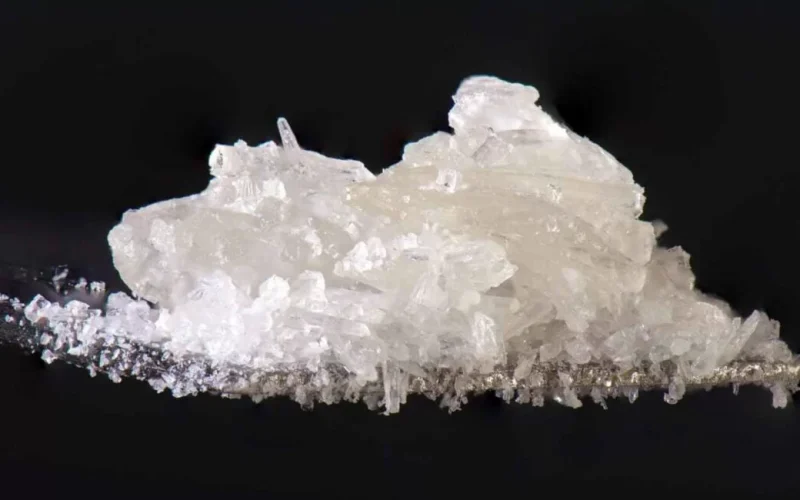
For teams already familiar with the basic THCA crystallization process, the variables that actually separate a consistent, high-purity batch from an inconsistent one come down to three engineering decisions: which solvent the process runs on, how the reactor itself is specified, and how tightly nucleation is controlled once cooling begins.
This guide focuses on those three, with the process parameters and equipment considerations behind each.
Sections
ToggleKey Takeaways
- Solvent choice affects more than yield; it changes facility classification requirements, how easily residual solvent strips off post-crystallization, and how tightly temperature needs to be controlled during cooling.
- A properly specified reactor, jacketed vessel, controlled agitation, integrated filtration, and inert gas purging, is what turns crystallization from a technique into a repeatable process.
- Crystal size and clarity are governed by the metastable zone: how far a solution is pushed into supersaturation before nucleation actually begins.
- Seeding gives operators direct control over nucleation timing instead of leaving it to chance, and cannabinoid crystallization patent literature already documents seeding as an established technique.
- Scaling from benchtop to commercial volume changes heat transfer and mixing dynamics, not just vessel size, so scale-up needs its own validation step rather than a simple volume multiplier.
Choosing a Solvent: Pentane, Hexane, and Heptane Compared
Non-polar hydrocarbon solvents are the standard choice for THCA crystallization, and the three most commonly used, pentane, hexane, and heptane, differ enough in volatility and flammability that the choice affects facility design, not just process chemistry.
Solvent | Boiling Point | Flash Point | NFPA Flammability | Practical Note |
Pentane | 97°F (36°C) | -57°F (-49°C) | 4 (highest) | Fastest to strip post-crystallization; lowest flash point means the tightest ignition-source control |
Hexane | 156°F (69°C) | -9.4°F (-23°C) | 3 | Middle ground on volatility; still requires classified electrical and ventilation design |
Heptane | 209°F (98°C) | 25°F (-4°C) | 3 | Slower to strip due to higher boiling point; a narrower gap between flash point and typical ambient temperature than pentane |
Flash point and flammability data per NOAA’s CAMEO Chemicals database. Pentane’s low boiling point makes it attractive for fast post-crystallization solvent removal, but its NFPA 4 flammability rating, the highest on the scale, demands the strictest ignition-source and ventilation controls of the three.
Heptane sits at the other end: slower to strip due to its higher boiling point, but with a narrower margin between flash point and typical room temperature than pentane, which changes how a facility needs to manage ambient conditions around the vessel. Hexane falls in between on both volatility and flammability, which is part of why it remains a common middle-ground choice.
- Faster-stripping solvents reduce residual solvent testing risk but raise the bar on facility classification and crew training.
- Whichever solvent is chosen, the vessel, seals, and electrical rating around it need to be specified for that solvent’s flash point, not a generic hydrocarbon rating.
Reactor and Vessel Setup for Controlled Crystallization
Commercial-scale crystallization depends on a reactor built to hold precise conditions for days at a time, not a temperature-controlled room with a jar in it. Four elements of the setup do most of the work.
Jacketed Vessel and Temperature Control
- A jacketed vessel circulates a heat-transfer fluid around the crystallization chamber, allowing programmable cooling rates rather than relying on ambient temperature drift.
- Wall temperature needs to track closely with the target solution temperature; a jacket that overshoots cold spots at the vessel wall can trigger localized nucleation ahead of the rest of the batch.
Agitation
- Gentle, controlled agitation keeps temperature and concentration uniform through the vessel, preventing the localized supersaturation pockets that cause uneven crystal formation.
- Agitation that’s too aggressive can shear developing crystals or trigger unwanted secondary nucleation, so speed needs to be tuned to the vessel and batch size, not set once and left alone.
Filtration and Separation Integration
Purpose-built cannabis isolation and crystallization equipment typically integrates filtration and separation directly into the vessel train, so crystals move from formation to separation without an open transfer step that introduces contamination risk or product loss.
Inert Gas Purging
- Nitrogen or argon purging displaces oxygen from the vessel headspace, addressing the THCA-to-THC degradation risk that comes with days-long exposure during slow cooling.
- Purge integrity matters most during vessel opening and sampling, when outside air has the most opportunity to reach the solution.
Understanding Nucleation: The Metastable Zone
Crystal size and clarity trace back to a single concept: the metastable zone, the region where a solution is supersaturated with dissolved THCA but hasn’t yet begun forming crystals spontaneously. Per Mettler Toledo’s technical guidance on metastable zone width, slow cooling allows gradual, controlled nucleation, so fewer nuclei form and the crystals around them have room to grow larger and clearer.
Fast cooling pushes the solution further into the metastable zone before nucleation happens at all, triggering many nuclei at once and producing smaller, often cloudier crystals.
- The width of the metastable zone isn’t fixed; it depends on cooling rate, agitation, and how much residual impurity is in the starting solution.
- Operating consistently within a defined, narrower band of the metastable zone, rather than letting temperature drift, is what makes batch-to-batch crystal size repeatable.
Seeding as a Nucleation Control Technique
Rather than waiting for spontaneous nucleation to occur somewhere inside the metastable zone, seeding introduces a small quantity of existing crystalline material into the solution at a controlled point, giving nucleation a defined starting time and location instead of leaving it to chance.
Seeding is not a theoretical concept in cannabinoid processing; it already appears in patent literature covering cannabinoid crystallization methods. U.S. Patent 9,815,810 describes adding micronized crystalline compound at a defined point in the process, specifically the midway point and at peak temperature, to seed crystal formation rather than relying on it occurring spontaneously.
The specific process conditions in that patent differ from a pentane or heptane THCA diamond run, but the underlying principle, that introducing seed material at a controlled point produces more predictable nucleation than an unseeded batch, applies broadly across cannabinoid crystallization methods.
- Seed timing matters: adding seed material too early, before the solution reaches sufficient supersaturation, can cause the seed itself to redissolve.
- Seed quantity and particle size affect how many growth sites are created, which in turn affects final crystal size distribution.
- Using crystals from a prior well-characterized batch as seed material is common practice, provided that batch’s purity is confirmed before it’s reintroduced.
Feedstock Considerations Before Crystallization Begins
Reactor design and nucleation control can’t compensate for a poorly prepared starting material. Crude that hasn’t been through adequate winterization carries residual waxes and lipids into the crystallization vessel, where they interfere with clean nucleation regardless of how precisely temperature and seeding are managed. This guide assumes that groundwork is already handled; it focuses specifically on what happens inside the crystallization reactor itself.
Scaling from Benchtop to Commercial Reactors
A process that works reliably in a one-liter benchtop vessel doesn’t automatically scale by simply running a larger version of the same recipe. Heat transfer and mixing behavior both change with vessel geometry, and both directly affect nucleation.
- Larger vessels have a lower surface-area-to-volume ratio, so the jacket has to work harder to achieve the same cooling rate at the vessel wall that a benchtop unit achieves easily.
- Mixing time increases with vessel size, which can widen the temperature and concentration gradients across the batch if agitation isn’t re-tuned for the larger volume.
- Run a scale-up in defined intermediate steps, benchtop to pilot to full commercial volume, validating crystal size and purity at each step rather than jumping directly from bench scale to a production reactor.
Solvent recovery also becomes a bigger factor at commercial volume. Pairing crystallization capacity with solvent recovery equipment sized to the crystallization stage’s actual solvent volume keeps recovery from becoming the bottleneck once batch sizes grow past what benchtop recovery methods can handle.
Common Technical Pitfalls at the Reactor Level
Most reactor-level crystallization problems trace back to a handful of recurring technical causes.
- Jacket temperature lag: a heat-transfer fluid system that can’t respond quickly enough to setpoint changes creates cold spots at the vessel wall that trigger premature, localized nucleation.
- Under-mixed batches: insufficient or uneven agitation lets concentration gradients build up, producing inconsistent crystal size within the same batch.
- Seed quality drift: reusing seed material from a batch that wasn’t independently verified for purity can carry impurities into an otherwise well-run crystallization run.
- Purge failures during sampling: brief oxygen exposure during routine sampling adds up over a multi-day cooling window and is an easy point to overlook in an otherwise tight SOP.
Conclusion
Getting consistent, high-purity THCA diamonds at commercial scale comes down to treating crystallization as a controlled engineering process rather than a patient waiting game. Solvent selection sets the facility and safety requirements around the reactor. Reactor design determines how precisely temperature, agitation, and atmosphere can actually be held.
And nucleation control, through the metastable zone and seeding, is what determines whether a batch produces large, clear diamonds or a small, cloudy powder from the same starting material.
Frequently Asked Questions
What’s the difference between primary and secondary nucleation?
Primary nucleation happens spontaneously within a supersaturated solution with no existing crystal surfaces present to trigger it. Secondary nucleation happens in the presence of existing crystals, including seed crystals, and generally requires less supersaturation to occur. Seeding deliberately favors secondary nucleation because it’s more predictable and controllable than waiting for primary nucleation to occur on its own.
Can seed crystals from a previous batch be reused safely?
Yes, provided the seed batch’s purity has been independently verified before reuse. Reusing unverified crystalline material as seed risks carrying forward impurities or off-spec cannabinoid content into an otherwise well-controlled run, which is why seed material is typically treated as its own quality checkpoint rather than assumed clean because it came from an earlier crystallization.
Does solvent choice affect the terpene profile retained in the sauce fraction?
Solvent polarity and evaporation behavior both influence how much terpene content stays in solution versus evaporating off during solvent removal. A solvent with a higher boiling point generally requires more aggressive stripping conditions to fully remove, which carries a higher risk of driving off volatile terpenes along with it compared to a faster-stripping solvent.
How do I confirm a reactor is properly rated for the solvent I’m running?
Check that the vessel’s electrical classification, seal materials, and ventilation design are specified against that specific solvent’s flash point and NFPA flammability rating, not a generic hydrocarbon rating. A reactor rated for heptane isn’t automatically adequate for pentane, given pentane’s significantly lower flash point and higher flammability classification.
What does a realistic scale-up validation step look like before running a full commercial batch?
A pilot-scale run at an intermediate volume between benchtop and full commercial capacity, with crystal size distribution and purity measured against the benchtop baseline, is the standard checkpoint. If clarity, size, or purity shift meaningfully at pilot scale, that’s the point to adjust cooling rate or agitation settings, before committing a full commercial batch to an unvalidated process.