
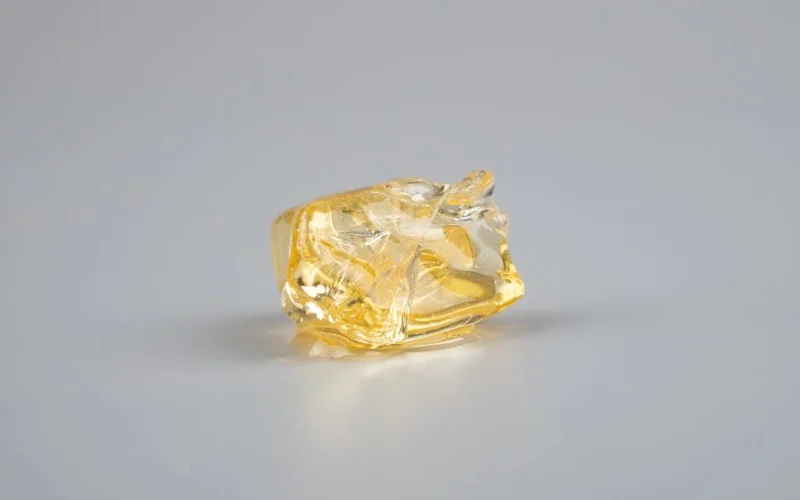
THCA diamonds are made by dissolving high-purity, non-decarboxylated crude extract in a non-polar solvent at a controlled ratio, then cooling the solution slowly under oxygen-limited conditions so THCA molecules precipitate into crystalline form while terpenes remain in the surrounding liquid.
This guide covers the process step by step, the equipment that makes it repeatable at commercial scale, and the most common reasons a crystallization run fails to produce clean, high-purity diamonds.
Key Takeaways
- Crystal purity is capped by starting material purity; crystallization refines what’s already in the crude extract; it doesn’t compensate for a poorly extracted or under-purified starting product.
- Solvent-to-cannabinoid ratio and cooling rate are the two variables that most directly determine crystal size, clarity, and yield.
- Oxygen exposure during the slow-cooling crystallization window risks converting THCA to THC, which is why inert-gas or oxygen-limited environments matter more here than in faster processing steps.
- Commercial-scale diamond production depends on temperature-controlled, jacketed crystallization vessels rather than the jar-based methods used at small batch scale.
- Most failed or inconsistent crystallization runs trace back to starting material purity, solvent ratio, or temperature control, not a single dramatic process error.
Process Stages at a Glance
Process Stage | Key Parameters | What It Determines |
Crude preparation | High-starting-purity extract, THCA-rich (not decarboxylated) | Sets the ceiling on final crystal purity and yield |
Solvent selection and ratio | Non-polar solvent, typically 1:2 to 5:1 cannabinoid-to-solvent by weight | Controls how readily THCA precipitates versus stays in solution |
Controlled cooling | Slow temperature reduction, often over days to weeks; oxygen excluded | Crystal size, clarity, and how much THCA degrades to THC during formation |
Separation | Centrifugation or decanting to split crystals from terpene-rich sauce | Final diamond purity versus how much terpene-rich liquid is retained separately |
Purity verification | HPLC or equivalent lab analysis | Confirms actual cannabinoid purity against the target specification |
Five stages take a starting extract to finished, verified diamonds. Getting the sequence and parameters right at each one determines both yield and how consistent one batch is against the next.
Stage 1: Starting Material and Crude Preparation
Crystallization refines an already-purified extract, it doesn’t compensate for a poorly prepared starting material. Before crystallization begins, the feedstock needs to meet several conditions:
- THCA-rich and non-decarboxylated: crystallization depends specifically on THCA’s acidic form, not THC, so any premature decarboxylation upstream works against the process
- Properly winterized: waxes and lipids removed, since they interfere with clean crystal formation just as they interfere with filtration elsewhere in the process
- Low chlorophyll content: residual plant pigment carries through into visibly cloudy or discolored crystals rather than clear diamonds
- Minimal residual solvent from earlier extraction steps: carried-over solvent from the original extraction can interfere with how cleanly THCA precipitates during cooling
Crude extract that hasn’t been through adequate winterization and filtration tends to produce cloudy, lower-purity crystals regardless of how well the crystallization step itself is run, since impurities carried into the crystallization vessel don’t simply disappear during cooling.
Stage 2: Solvent Selection and Ratio
Non-polar solvents, commonly pentane, hexane, heptane, or butane, are used to dissolve the crude extract before cooling. Patent literature on cannabinoid crystallization methods describes solvent-to-cannabinoid ratios typically in the range of roughly 1:2 to 5:1 by weight. Getting this ratio right matters in both directions:
- Too little solvent: leaves the extract too concentrated for THCA to precipitate cleanly, producing poorly separated or lower-purity crystals
- Too much solvent: slows the crystallization process and can reduce overall yield per batch, since more THCA stays dissolved in a larger volume of liquid
- Solvent purity: residual moisture or contamination in the solvent itself can interfere with clean crystal formation, independent of the ratio used
Stage 3: Controlled Cooling and Crystal Formation
This is the slowest and most sensitive stage, and the variables that need active control are worth tracking as a checklist rather than a single “cool it down” step:
- Cooling duration: gradual reduction over a period that can run days to weeks, not a rapid chill; rushing this compresses crystal formation time and produces smaller, less well-formed crystals
- Temperature range: held low enough for THCA to precipitate but not so aggressively cold that it forms poorly structured, low-purity crystals
- Oxygen exposure: prolonged air contact during the extended cooling period can promote THCA’s conversion to THC, a specific and controllable risk given how long the solution sits during this stage
- Inert gas purging: commercial processes increasingly use nitrogen or argon to displace oxygen from the vessel during the slow-cool period, rather than leaving the solution exposed to ambient air for days at a time
Stage 4: Separating Diamonds from Terpene Sauce
Once crystals have formed, they’re separated from the surrounding terpene-rich liquid, and how this step is run determines the value split between the two resulting products:
- Separation method: commonly centrifugation for faster, higher-throughput batches, or careful decanting for smaller runs where mechanical disturbance to crystal structure is a bigger concern
- Diamond fraction: the collected crystals, sold or processed further as the high-purity THCA product
- Sauce fraction: the remaining terpene-rich liquid, either sold separately or recombined with the diamonds for a flavor-enhanced finished product
- Separation quality: directly affects both final diamond purity and how much value is retained in the sauce fraction rather than lost during the split
Stage 5: Purity Verification
Finished crystals should be verified against a target purity specification using HPLC-UV analysis, described in a recent peer-reviewed review as the gold standard technique for cannabinoid quantification, rather than judged on appearance alone.
Visual clarity is a reasonable initial indicator, but it doesn’t confirm cannabinoid purity or rule out residual solvent levels that visual inspection can’t detect. This is also the point where a batch that looks clean but tests below target purity gets caught before it’s packaged and labeled against a specification it doesn’t actually meet.
Equipment Needed for Diamond Mining at Scale
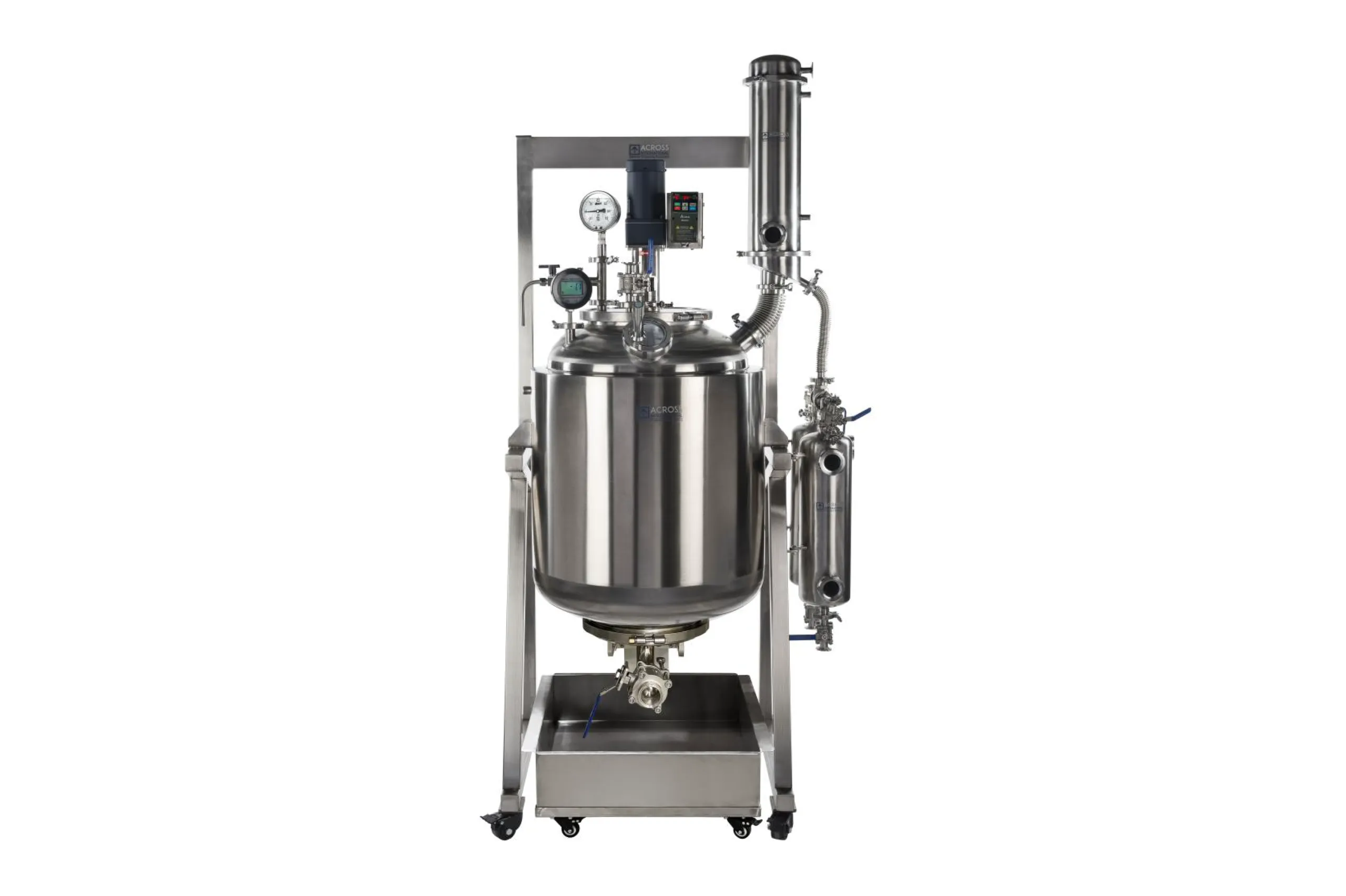
Small-batch crystallization is often done in simple glass jars held in a temperature-controlled space, a method sometimes called “diamond mining” for the slow, patient nature of the process. At commercial scale, this approach doesn’t hold up: batch-to-batch consistency, throughput, and contamination control all require purpose-built equipment.
Cannabis isolation and crystallization equipment built for this process typically integrates a few capabilities that jar-based methods can’t reliably replicate:
- Jacketed, temperature-controlled vessels: precise, programmable cooling rates rather than relying on ambient room temperature or a household freezer
- Inert gas purging capability: controlled oxygen exclusion during the extended cooling window, addressing the THCA-to-THC degradation risk directly
- Integrated filtration and separation: built-in capability to separate crystals from sauce without transferring the batch between multiple pieces of equipment
- Batch-to-batch repeatability: consistent, documented process parameters that produce comparable purity and yield run after run, rather than variable results tied to ambient conditions
Common Crystallization Problems and Their Causes
Most inconsistent or failed crystallization runs trace back to a small set of recurring causes rather than a single dramatic mistake:
- Cloudy or low-purity crystals: usually points back to inadequately purified starting material, not a flaw in the crystallization step itself
- Low yield: often caused by an incorrect solvent ratio, either too concentrated for clean crystal formation or too dilute for efficient recovery
- Small, poorly formed crystals: frequently the result of cooling too quickly rather than allowing the slow, gradual temperature reduction the process depends on
- Unexpected THC content in a THCA-labeled product: typically traced to oxygen exposure or excess heat during the extended crystallization window, converting some THCA to THC before the batch is even finished
Conclusion
Making THCA diamonds well comes down to controlling the same few variables deliberately: starting material purity, solvent ratio, a slow and oxygen-controlled cooling process, clean separation, and lab-verified purity before release. None of these steps compensate for a shortfall in another, poor starting material still produces cloudy crystals no matter how carefully the cooling is managed, and rushed cooling still produces poor crystal structure even from excellent starting material.
Equipment built specifically for temperature control and oxygen management is what turns this from a slow, variable jar-based technique into a repeatable commercial process.
FAQs
How long does a full crystallization run typically take from dissolved extract to finished diamonds?
This varies by batch size and target crystal size, but the slow-cooling stage alone commonly runs anywhere from several days to a few weeks. Rushing this window to shorten production time is one of the most common ways operators end up with smaller, less well-formed crystals than the process is capable of producing.
Can THCA diamonds be made from CO2 or ethanol-extracted crude, or does the process require hydrocarbon extraction specifically?
Crystallization itself isn’t tied to a specific extraction method; what matters is the starting crude’s purity and THCA content, not which solvent originally extracted it. That said, crude from different extraction methods may need different degrees of pre-crystallization purification (winterization, filtration) to reach a comparable starting purity before crystallization begins.
Is it possible to recover and reuse the solvent from a crystallization run, similar to solvent recovery in primary extraction?
Yes, and commercial-scale operations typically do recover crystallization solvent rather than treating it as a single-use input, both for cost reasons and consistency. This generally requires the same kind of solvent recovery capability used elsewhere in the extraction line, sized to the crystallization stage’s specific solvent volume.
Does the terpene sauce byproduct need separate testing before it can be sold or recombined with the diamonds?
Yes. The sauce fraction has its own cannabinoid and terpene profile distinct from the crystallized diamonds, and if it’s being sold as a standalone product or recombined into a finished diamond-and-sauce product, it needs its own potency and residual solvent verification rather than being assumed to share the same test results as the crystals.
What causes batch-to-batch inconsistency in crystal size even when the same starting material and solvent ratio are used?
Temperature control during the cooling phase is the most common culprit; even small fluctuations in cooling rate or ambient temperature stability across different batches can change crystal formation meaningfully. This is a large part of why purpose-built, temperature-controlled crystallization equipment produces more consistent results than jar-based methods left in a less precisely controlled environment.