

Cannabinoids do not naturally mix with water. That creates a major challenge for cannabis beverages, fast-acting edibles, tinctures, sprays, and other products where consistency matters.
Nanoemulsification helps solve that problem. By breaking cannabis oil into extremely small droplets and stabilizing them with an emulsifier, manufacturers can create formulas that disperse more evenly, absorb more efficiently, and deliver a more predictable consumer experience.
For cannabis processors and product developers, nanoemulsification is not just a formulation trend. It is one of the key technologies behind nano THC, CBD beverages, water-compatible cannabis ingredients, and modern infused product development.
The global cannabis beverages market is projected to grow from roughly $1.92 billion in 2026 to more than $7.6 billion by 2035, a trajectory market analysts attribute in large part to advances in nano-emulsification and infusion technology.
This guide explains how nanoemulsification works, what nanoemulsified cannabinoids are, why emulsifier selection matters, and what producers should consider before scaling a nanoemulsified cannabis product.
Sections
ToggleWhat Is Nanoemulsification?
Nanoemulsification is a formulation process that reduces cannabis oil into very small droplets and disperses those droplets into a liquid system.
Because cannabinoids such as THC and CBD are oil-soluble, they do not mix evenly with water on their own. If cannabis oil is added directly to a beverage or water-based product, it can separate, float, stick to packaging, or create uneven dosing.
Nanoemulsification uses mechanical energy and emulsifiers to keep the oil droplets suspended more evenly. The result is not truly water-soluble THC or CBD, but a water-compatible cannabis ingredient that performs better in many finished products.
What Are Nanoemulsified Cannabinoids?
Nanoemulsified cannabinoids are cannabinoids that have been processed into tiny oil droplets and stabilized in an emulsion.
These cannabinoids may include THC, CBD, minor cannabinoids, or a blend of active compounds from cannabis extract. Once emulsified, they can be used in product formats where standard cannabis oil would be difficult to formulate.
As demand grows for fast-acting cannabis products, nanoemulsified cannabinoids are becoming more important for beverages, edibles, tinctures, and other infused formats.
Common applications include:
- Cannabis beverages
- Fast-acting edibles
- Tinctures
- Sublingual sprays
- Drink enhancers
- Capsules and softgels
- Functional cannabis products
The main goal is to improve dispersion, consistency, and absorption compared to traditional oil-based formats.
Why Cannabis Products Need Emulsification?
Cannabinoids are lipophilic, which means they work well with fats and oils but not with water. This creates three major problems for cannabis product manufacturers.
First, oil and water separate. This can cause visible product issues in beverages and inconsistent potency across servings.
Second, traditional cannabis edibles can have slow onset times because cannabinoids are processed through digestion before effects are felt.
Third, inconsistent dispersion can make dosing less reliable, especially in liquid products.
Nanoemulsification helps address these issues by creating smaller, more uniform droplets that remain suspended more effectively in the finished product.
How Nanoemulsification Works?
The process usually starts with a refined cannabis extract such as distillate, isolate, or another oil-based cannabinoid input.
That oil phase is combined with water or another carrier system, along with a nanoemulsifier. Then mechanical energy is applied to reduce droplet size and create a stable dispersion.
Common processing methods include:
- High-shear mixing
- Ultrasonic processing
- High-pressure homogenization
- Microfluidization
- Self-emulsifying delivery systems
Each method has advantages depending on the desired droplet size, product type, production volume, and stability requirements.
What Is a Nanoemulsifier?
A nanoemulsifier is an ingredient or nanoemulsifier system that helps keep tiny oil droplets evenly dispersed in a liquid formula.
Without an emulsifier, the oil droplets would eventually come back together and separate from the water phase. The emulsifier helps stabilize the emulsion and improve consistency.
A good nanoemulsifier should support:
- Small droplet size
- Long-term stability
- Clean taste
- Compatibility with cannabinoids and terpenes
- Compatibility with pH, flavors, sweeteners, and preservatives
- Compliance with food, beverage, or cannabis regulations
The best emulsifier depends on the final product. A formula designed for a cannabis beverage may need a different emulsifier system than a tincture, gummy, capsule, or topical product.
Nanoemulsification and Fast-Acting Cannabis Products
One reason cannabis brands use nanoemulsification is to support faster onset.
Traditional edibles often take longer to produce effects because the cannabinoids must pass through digestion. Nanoemulsified cannabinoids are designed to disperse more efficiently, which may support quicker absorption depending on the product format and formulation. This is why many fast-acting cannabis beverages, gummies, and tinctures use nanoemulsified THC or CBD.
A 2025 crossover study published in the Journal of Cannabis Research found that a self-nanoemulsifying THC/CBD powder formulation produced significantly higher peak blood plasma concentrations than a standard oil-based formulation in the same volunteers, where direct clinical evidence behind the bioavailability claims formulators make about nanoemulsification.
However, nanoemulsification should not be treated as a magic shortcut. Product performance still depends on droplet size, formulation quality, cannabinoid concentration, emulsifier selection, testing, packaging, and storage conditions.
Nanoemulsified vs Water-Soluble THC
Many cannabis brands use the term water-soluble THC, but the phrase is not technically accurate.
THC is not naturally water-soluble. It is oil-soluble.
Nanoemulsification does not change THC into a water-soluble molecule. Instead, it creates tiny THC-containing oil droplets that can disperse more evenly in a water-based formula.
For marketing, consumers may understand the phrase water-soluble THC. For technical accuracy, nanoemulsified THC or nanoemulsified cannabis extract is more precise.
Benefits of Nanoemulsification for Cannabis Manufacturers
- Better Dispersion in Beverages and Liquid Products: Nanoemulsification helps cannabinoids disperse more evenly in water-compatible products. This reduces issues like oil separation, floating, or uneven distribution in beverages and tinctures.
- More Consistent Dosing: When cannabinoids are evenly distributed throughout the formula, each serving is more likely to contain the intended amount of THC, CBD, or other active compounds.
- Potential for Faster Onset: Nanoemulsified cannabinoids may absorb more efficiently than traditional oil-based formats. This can support faster-acting cannabis beverages, edibles, and tinctures.
- Improved Product Flexibility:
Nanoemulsification allows manufacturers to create products that are difficult to make with standard cannabis oil, including infused drinks, sprays, shots, and functional cannabis products. - Better Consumer Experience:
A stable nanoemulsion can improve texture, taste, onset, and dosing consistency. This helps consumers get a more predictable experience from the product. - Scalable Production: With the right equipment and process controls, nanoemulsification can be scaled from formulation trials to commercial production while maintaining consistency.
Challenges to Consider Before Scaling
- Emulsion Stability: A nanoemulsion must remain stable throughout its shelf life. Poor stability can lead to separation, cloudiness, sediment, or inconsistent potency.
- Taste and Mouthfeel: Cannabis extracts and emulsifiers can affect the flavor and texture of the final product. This is especially important in beverages, where bitterness or oiliness is easier to notice.
- Particle Size Consistency: Droplet size must be controlled carefully. If the particle size is too large or inconsistent, the product may not perform as expected.
- Potency Accuracy:
Every batch should be tested to confirm cannabinoid content. Even small variations can affect compliance, labeling, and consumer trust. - Ingredient Compatibility:
pH, preservatives, sweeteners, carbonation, terpenes, and flavors can all affect how stable the emulsion remains over time. - Scaling from Lab to Production:
A formula that works in a small test batch may not perform the same way at commercial scale. Equipment selection and process control are important for repeatable results.
This is why equipment selection, formulation development, and analytical testing are critical.
Equipment Used for Cannabis Nanoemulsification
Commercial nanoemulsification requires equipment capable of producing consistent droplet size and repeatable results.
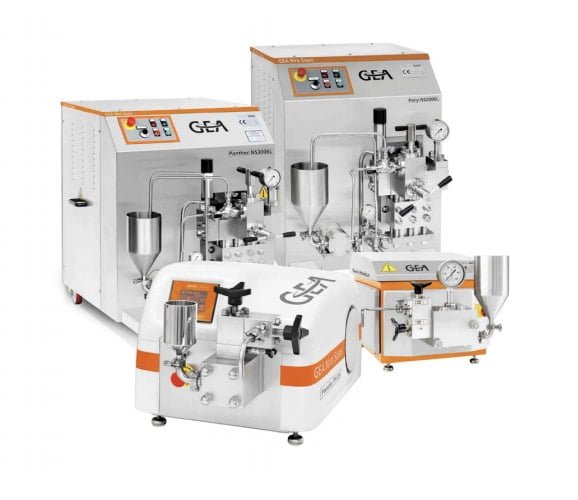
Depending on the process, manufacturers may use high-shear mixers, ultrasonic processors, high-pressure homogenizers, or microfluidization systems. For commercial production, reliable nanoemulsification equipment is important for supporting consistent droplet size, repeatable processing, and scalable output.
When comparing equipment, cannabis processors should consider:
- Target droplet size
- Batch size
- Throughput
- Repeatability
- Cleaning requirements
- Compatibility with cannabis extracts
- Ability to scale
- Process control
- Maintenance requirements
- Total cost of ownership
The goal is not only to create a nanoemulsified product in the lab. The goal is to produce it consistently at commercial scale.
Why Extraction Quality Still Matters
Nanoemulsification cannot fix a poor-quality extract.
The quality of the starting material affects the quality of the final formulation. A clean, consistent extract gives formulators a better foundation for building stable nanoemulsified cannabinoids.
Before emulsification, producers should pay attention to extraction, refinement, filtration, distillation, and testing. This makes the right cannabis extraction methods important before the formulation stage.
The quality of the final emulsion also depends heavily on the quality of the starting cannabis extracts, including distillate, isolate, or other refined cannabinoid inputs.
Residual solvents, waxes, lipids, impurities, and unstable terpene profiles can all affect emulsion quality.
For producers, nanoemulsification should be viewed as part of a larger cannabis processing workflow, not a standalone step.
Frequently Asked Questions
What is nanoemulsification in cannabis?
Nanoemulsification is the process of breaking cannabis oil into extremely small droplets and stabilizing those droplets in a water-compatible formula.
What are nanoemulsified cannabinoids?
Nanoemulsified cannabinoids are cannabinoids such as THC or CBD that have been dispersed into tiny oil droplets and stabilized with an emulsifier.
Is nanoemulsified THC water soluble?
Not technically. THC remains oil-soluble. Nanoemulsification makes THC more water-compatible by suspending it in small, stable droplets.
Why do cannabis companies use nanoemulsification?
Cannabis companies use nanoemulsification to improve dispersion, consistency, onset time, and product flexibility, especially in beverages and fast-acting edibles.
What is a nanoemulsifier?
A nanoemulsifier is an ingredient or system that stabilizes small oil droplets and helps prevent separation in a liquid formula.
Does nanoemulsification make cannabis stronger?
It does not increase the amount of THC or CBD in a product. However, it may improve absorption and onset, which can make the product feel more efficient depending on the formulation.
Conclusion
Nanoemulsification helps cannabis manufacturers solve one of the industry’s biggest formulation challenges: making oil-based cannabinoids work in water-compatible products.
For beverages, fast-acting edibles, tinctures, sprays, and other modern formats, nanoemulsified cannabinoids can improve dispersion, consistency, and consumer experience.
The best results depend on more than the keyword nanoemulsified. They depend on clean input material, the right nanoemulsifier, suitable processing equipment, formulation expertise, and proper testing.
As cannabis products become more sophisticated, nanoemulsification will continue to play an important role in how brands develop reliable, scalable, and fast-acting products.
Need to scale nanoemulsified cannabis products? Root Sciences supports cannabis processors with extraction, refinement, and post-processing solutions built for commercial production.