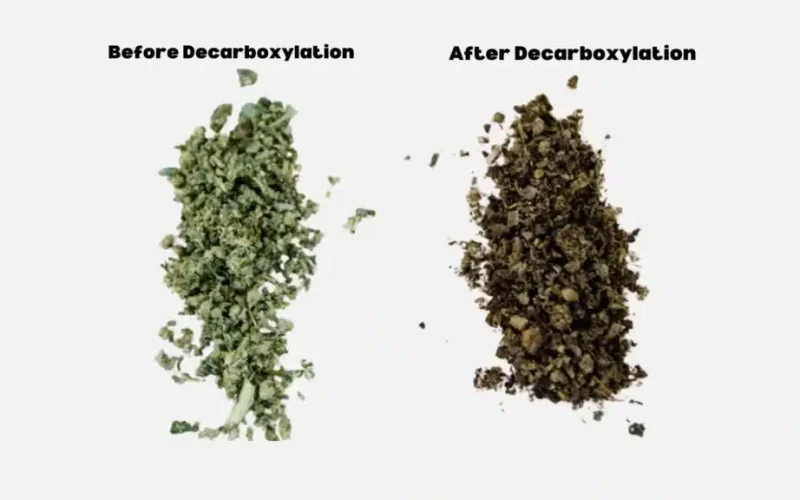
To decarboxylate cannabis, heat it at 220–240°F for 30–45 minutes to convert THCA into psychoactive THC.
Decarboxylation (or “decarbing”) is the process of using controlled heat and time to activate the cannabinoids in raw cannabis. This chemical reaction converts THCA into THC and activates other compounds like CBD. Without proper decarboxylation, raw cannabis used in edibles or tinctures will not produce a noticeable high because the body cannot efficiently absorb cannabinoids in their acidic form.
Below, you will learn exactly how to decarboxylate cannabis step by step, including preparation, baking time, storage, and how different temperatures affect results.
Sections
ToggleWhat You'll Need to Decarboxylate Cannabis

Before you begin the decarb process, gather the proper tools. Preparation improves consistency and ensures proper decarboxylation.
1. Cannabis Flowers
High quality, properly cured cannabis flowers produce the best results during decarb. Avoid overly dry or moldy buds.
Break the cannabis into small, evenly sized pieces before you decarboxylate. Uniform pieces allow even heat exposure and consistent decarboxylation.
2. Oven
An oven is the most reliable way to decarb cannabis at home. Accurate cannabis decarboxylation temperature control is critical. Many ovens fluctuate, so an oven thermometer helps maintain stable heat.
The ideal cannabis decarboxylation temperature range for THC activation is 220 to 240 degrees Fahrenheit.
3. Cannabis Grinder (Optional)
A grinder helps create evenly sized pieces for efficient decarboxylation. Light grinding increases surface area and improves decarb effectiveness. Avoid grinding too finely, as smaller particles can overheat.
4. Kitchen Tools
You will need:
- Baking tray
- Parchment paper
- Aluminum foil
- Oven mitts
- Airtight storage container
These simple tools help you decarboxylate cannabis safely and evenly.
How to Decarboxylate Cannabis
Below is the complete step by step process for proper decarb.
The Standard Oven Method
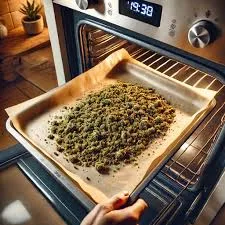
The oven is the most accessible way to decarb at home, though it produces a strong odor.
- Preheat: Set your oven to 240°F (115°C). Using an external oven thermometer is highly recommended for accuracy, as home ovens often fluctuate.
- Prepare: Lightly break up the buds by hand or with a coarse grind (aim for pea-sized pieces). Avoid grinding into a fine powder, as it can burn easily.
- Arrange: Line a baking sheet with parchment paper or aluminum foil and spread the cannabis in a thin, even layer.
- Bake: Heat for 30–40 minutes. Gently stir the cannabis halfway through to ensure even heating.
- Cool: Let the cannabis cool completely (about 30 minutes) before using it. It should look lightly toasted and golden-brown.
Low-Odor Alternatives
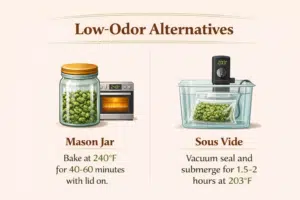
- Mason Jar: Place cannabis in a mason jar, screw the lid on “finger-tight,” and bake at 240°F for 40–60 minutes. This significantly reduces the smell.
- Sous Vide: Vacuum-seal your cannabis and submerge it in a water bath at 203°F ((95–96°C) for 1.5–2 hours for an odorless, precise process.
Key Tips for Success
- Avoid Microwaves: They heat unevenly and can easily burn off valuable cannabinoids and terpenes.
- Temperature Control: Do not exceed 300°F (149°C), as this will destroy the active compounds and ruin the potency.
- Cannabinoid Differences: CBD typically requires slightly higher temperatures or longer times (about 45–60 minutes at 240°F) to fully activate compared to THC.
- Storage: Store finished decarbed weed in an airtight glass container in a cool, dark place to maintain its potency.
How to Decarboxylate Cannabis for Different Effects
Different cannabinoids respond differently to heat. Adjusting cannabis decarboxylation temperature can influence the final effects.
- THC activation
220 to 240 degrees Fahrenheit for 30 to 45 minutes - CBD activation
230 to 250 degrees Fahrenheit for 40 to 60 minutes - CBN formation
Extended heating at 240°F for 60+ minutes gradually increases CBN formation as THC oxidizes.
Lower temperature decarb preserves more terpenes and produces a balanced cannabinoid profile. Higher temperature decarboxylation increases CBN formation, which may enhance sedative qualities. Understanding cannabis decarboxylation allows you to tailor potency based on your desired outcome.
Terpene Boiling Points
Terpenes are aromatic compounds that contribute to flavor and therapeutic effects. While decarb temperatures are generally below terpene boiling points, prolonged exposure can still reduce terpene content.
Terpene | Boiling Point | Potential Effects |
Myrcene | 332°F | Relaxation, sedative qualities |
Limonene | 349°F | Mood elevation, stress relief |
Linalool | 388°F | Calming support |
Pinene | 311°F | Alertness and memory support |
Caryophyllene | 320°F | Anti inflammatory properties |
Maintaining a controlled cannabis decarboxylation temperature between 220 and 240 degrees Fahrenheit helps protect both cannabinoids and terpenes.
Conclusion
Decarboxylating cannabis is an essential step to activate cannabinoids and unlock the full potency of your cannabis. By heating cannabis between 220°F and 240°F for 30 to 45 minutes, inactive THCA converts into psychoactive THC, making it effective for edibles, tinctures, oils, and other infused products.
The oven method is the most reliable way to decarboxylate cannabis because it provides consistent temperature control and predictable results. Proper preparation, evenly sized pieces, and stable heat help ensure successful cannabis decarboxylation. Methods like the mason jar or sous vide technique can also reduce odor while still producing effective results.
Understanding how temperature and time affect cannabinoids and terpenes allows you to adjust potency and preserve flavor. With the right temperature and careful timing, you can decarboxylate cannabis efficiently while maintaining its strength and quality.
FAQs
Microwaves heat unevenly and are not recommended for reliable decarb. Oven based decarboxylation provides consistent cannabis decarboxylation temperature control.
Loosely covering the tray with foil or using a sealed oven safe container can reduce odor during decarb. Proper ventilation also helps.
Store decarbed cannabis in an airtight container in a cool, dark location. Proper storage maintains potency after decarboxylation.
True decarboxylation requires heat. Natural aging causes slow conversion, but controlled decarb produces predictable results.
The oven method is the most reliable way to decarboxylate cannabis because it allows precise cannabis decarboxylation temperature control and consistent timing.
The process involves applying controlled heat to remove a carboxyl group from cannabinoid acids. This reaction converts THCA into THC and activates other cannabinoids during decarb.
The cannabis will appear light brown, dry, and slightly toasted in aroma. These visual changes indicate successful decarboxylation.
Trace vapors may contain cannabinoids during decarb, but proper consumption after decarboxylation is required to experience noticeable psychoactive effects.

