Root Sciences

How to Cure Bubble Hash the Right Way (Without Losing Terpenes or Growing Mold)?

Bubble Hash

Curing bubble hash means aging fully dried hash in a sealed, airtight container under controlled temperature and humidity, typically for one to four weeks, to let residual moisture equalize and flavor develop before it becomes brittle or moldy. 

This article covers the actual curing step (jarring, burping, environment targets, and how to know when it’s done), not the drying step that comes before it.

  • Curing bubble hash is a controlled aging step distinct from drying, done in sealed containers under specific temperature and humidity conditions.
  • Water activity (0.55 to 0.65 aw per ASTM D8197) is a more reliable curing endpoint than fixed time or feel-based judgment.
  • Cold curing favors terpene retention for premium and full-melt grades; room-temperature curing is faster and more common at commercial scale.
  • Mold risk during curing is a real commercial liability, reflected in recurring state-level cannabis recalls tied to mold and yeast contamination.
  • Consistent curing-room environment control, more than the containers themselves, is usually what separates commercial-scale batch consistency from inconsistent results.

How to Cure Bubble Hash?

bubble hash

Curing only works if the hash is genuinely dry going in. Sealing damp hash in a jar just traps the moisture that was supposed to leave during drying, and that trapped moisture is what turns a cure into a mold problem instead of a flavor improvement. Hash that comes off a well-designed ice water extraction setup tends to be cleaner and more evenly processed going into the dry, which gives the cure that follows a more predictable starting point. From there, the process comes down to five things done deliberately: container choice, environment, burping, monitoring, and knowing when to stop.

1. Transfer to Airtight Containers

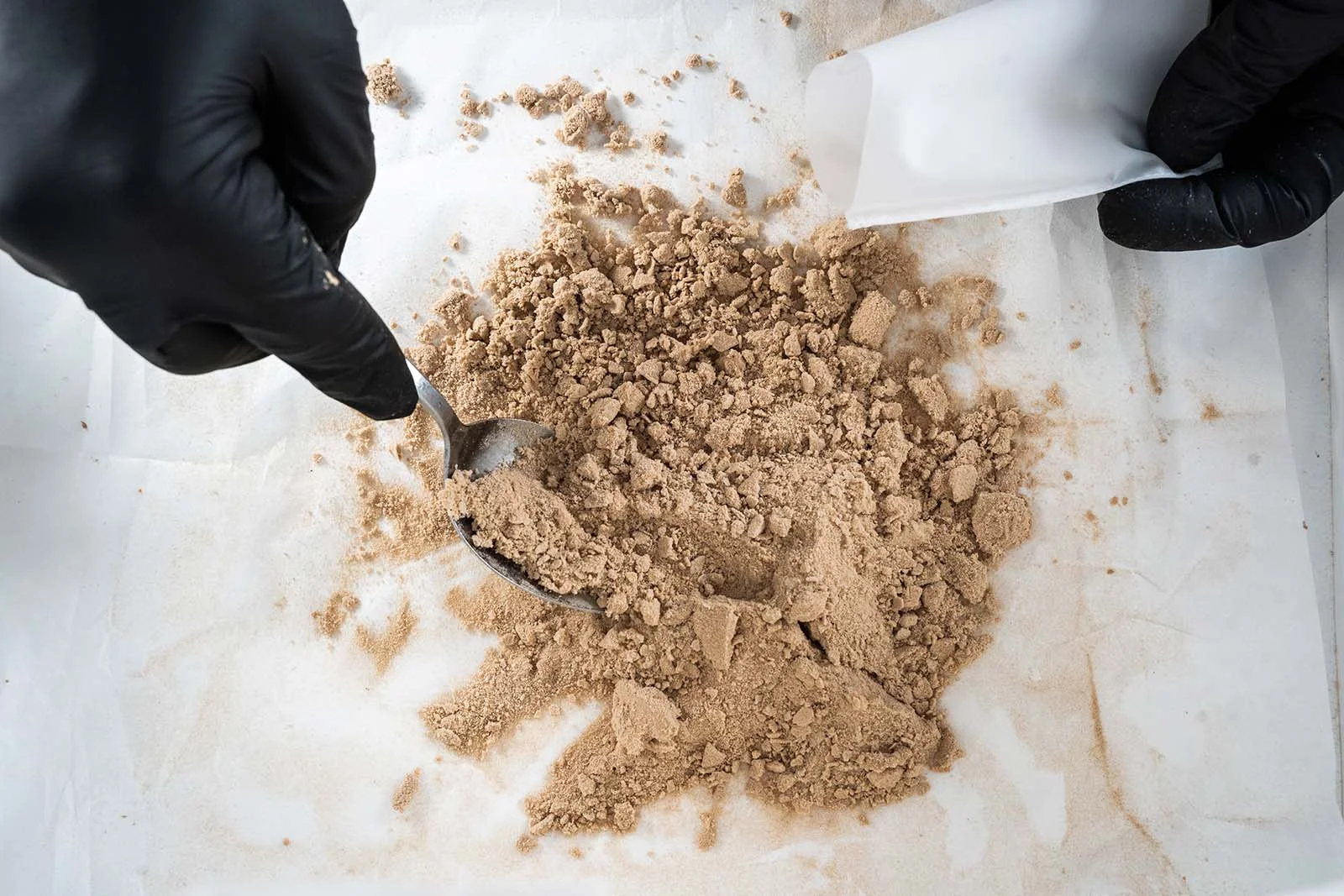
Hash that snaps cleanly rather than bending, and feels sandy rather than tacky, is ready to jar. Use food-grade glass or stainless steel, filled loosely enough that air can still move around the hash rather than packed in tight.

2. Choose a Cure Environment

Decide upfront whether this batch is going cold cure or room-temperature cure (compared in detail below), since the two call for different temperature and humidity setups and switching partway through just resets the clock. 

Whichever you pick, consistency across the batch matters more than hitting an exact number: a curing space that drifts by several degrees or swings in humidity day to day will produce a less even result than one held steady a few degrees off the ideal.

3. Burp the Jars

Open each jar briefly once or twice a day for the first week to let trapped moisture and gas escape, then taper down to every few days as the hash stabilizes. This is also the easiest point to catch a problem early: an off smell or visible condensation on the lid during burping is worth acting on immediately rather than waiting out the full cure schedule.

4. Track Water Activity, Not Just Time

A water activity meter tells you where the hash actually stands, which a calendar or a guess by feel can’t. Aim for the 0.55 to 0.65 aw range covered in the standards section below, and treat that reading, not the number of days it’s been jarred, as the real signal for when the cure is progressing normally or needs more time.

5. Reassess Before Packaging

Once the target water activity is reached, check texture and melt quality before moving to final packaging or pressing. This is also a natural point to separate out any jars that aren’t tracking with the rest of the batch rather than blending them back in, since an inconsistent jar usually means it started from slightly different moisture or was stored somewhere with a different microclimate.

Cure Methods at a Glance

Cure Method

Environment Specs

Best Use Case

Cold cure

34-40°F, sealed jars, minimal burping

Premium/full-melt grade where terpene retention matters most

Room-temperature cure

60-70°F, 55-65% RH, daily burping in week one

Faster aging and flavor development; more common at commercial scale

No additional cure

N/A, packaged and sold right after drying

Fast turnaround or lower-grade batches where cure time isn’t cost-effective

Cold Cure vs. Room-Temperature Cure

Cold curing, done at 34-40°F, slows down the aging process considerably but reduces terpene volatilization, which is why it’s generally preferred for premium and full-melt grades where flavor and meltability are the main value drivers. 

Room-temperature curing, done around 60-70°F with 55-65% relative humidity, ages the hash faster and is more practical for commercial batches that need to move through curing and into packaging on a predictable schedule. Neither method is strictly better; the choice comes down to whether the batch is being positioned as a premium product or run through standard commercial turnaround.

How Long to Cure Bubble Hash?

Cure time typically runs one to four weeks, but the actual endpoint should be water activity, not a calendar date. Two batches dried to visually similar states can still land at different starting water activity levels, which means they’ll reach the 0.55 to 0.65 aw target at different times. 

Room-temperature cures tend to reach a stable water activity faster (often within one to two weeks), while cold cures can take closer to three to four weeks for the same stabilization. Cutting a cure short based on a target date rather than a measured reading is one of the more common ways commercial batches end up with inconsistent shelf stability across the same production run.

Monitoring for Mold During the Cure

The cure stage is also the highest-risk window for mold, since the hash is sealed in a container with residual moisture for an extended period. According to Cannabis Science and Technology, common spoilage yeasts and molds stop growing at or below roughly 0.70 water activity, which is why hitting the 0.55 to 0.65 aw range isn’t just a quality target, it’s the margin that keeps a batch below that growth threshold. 

This isn’t a theoretical risk: state cannabis regulators have issued repeated mold-related recalls in recent months, including a Colorado recall expansion tied to batches exceeding acceptable yeast, mold, and aspergillus limits. Daily burping during the first week and periodic water activity checks throughout the cure are what catch a moisture problem before it becomes a contamination problem.

Common Curing Mistakes at Commercial Scale

  • Inconsistent curing-room environment: temperature or humidity drift across a batch run produces uneven results even when every jar started from the same dry hash
  • Overpacking containers: tightly packed jars restrict the airflow the cure depends on and slow moisture equalization unevenly
  • Skipping water activity testing: relying on touch or smell alone misses the difference between a cure that’s actually stable and one that only looks dry on the surface
  • Using non-food-grade containers: some plastics can impart odor or interact with terpenes over a multi-week cure, affecting flavor
  • Mixing grades or micron batches: combining different quality grades in one curing container, the same distinction that separates dry sift from bubble hash in the first place, makes it harder to track which portion is actually at target water activity

Water Activity Standards and Quality Control

The 0.55 to 0.65 aw target referenced throughout this piece isn’t an arbitrary industry rule of thumb. It’s formalized in ASTM D8197, the standard specification for maintaining acceptable water activity range in dried cannabis material. Processors running consistent water activity testing as part of their curing QC are essentially aligning with the same benchmark regulators and testing labs use to evaluate finished products. Root Sciences’ analytical and testing equipment line includes the instrumentation processors use to bring this kind of testing in-house rather than relying solely on third-party labs to catch a curing issue after the fact.

Conclusion

Curing bubble hash well comes down to controlling the same few variables deliberately: container choice, burping cadence, temperature and humidity, and using water activity rather than time or feel to know when it’s actually done. Getting those right is what separates a batch that’s merely dry from one that’s genuinely stable, flavorful, and ready to sell.

FAQs

1. Does cold curing bubble hash reduce potency compared to room-temperature curing?

Not meaningfully. Cure temperature primarily affects the rate of terpene volatilization and aging speed, not cannabinoid content. Cold curing tends to preserve more of the terpene profile precisely because it slows that volatilization down, but it doesn’t measurably change potency.

2. Can bubble hash be over-cured, and what does that look like?

Yes. Once water activity drops well below the 0.55 aw range, the hash becomes overly brittle and starts losing terpenes through continued off-gassing, which shows up as a duller aroma and a drier, more crumbly texture than the grade should have. This is another reason to track water activity directly rather than curing for a fixed number of weeks regardless of what the readings show.

3. How does cure duration differ between fresh-frozen (live) bubble hash and dried-flower bubble hash?

Live (fresh-frozen) bubble hash generally starts with a different moisture and terpene profile than hash made from dried-and-cured flower, and processors often favor cold curing for live hash specifically to protect that terpene load. In practice this can mean a longer cure window for live hash to reach the same water activity target that dried-flower hash reaches faster at room temperature.

4. Is a water activity meter necessary at small batch sizes, or only for commercial operations?

It’s more valuable at commercial scale simply because batch-to-batch consistency matters more when you’re producing repeatedly and shipping to multiple retail accounts, but the underlying risk, curing past or short of the mold-safe range, applies at any volume. A meter is a relatively small cost against the risk of losing an entire batch to mold.

5. Does curing bubble hash before pressing into rosin change the rosin yield or quality?

Properly cured hash presses more predictably than under-dried or under-cured hash, since excess residual moisture in the starting material can affect how cleanly the rosin separates during pressing. Over-cured, overly brittle hash can also press less efficiently. The practical takeaway is that hitting the right water activity window before pressing tends to produce more consistent rosin yield than pressing hash straight off the dry.

Related Articles

Wiped film distillation purifies crude cannabis oil by spreading it into a thin, continuously moving film across a...

DISTILLATES IN THE CANNABIS MARKET A scientist peers deeply into the eyes of a cannabis connoisseur and whispers,...

Extremely proud of our presence this year at mjbizcon2019. Check out our recap video of the show at...

Scroll to Top

Planning an Extraction or Processing Lab?

Talk to our engineers — get a custom equipment recommendation and lab plan, free of charge.