Root Sciences

The Complete Cannabis Processing Equipment Line Explained

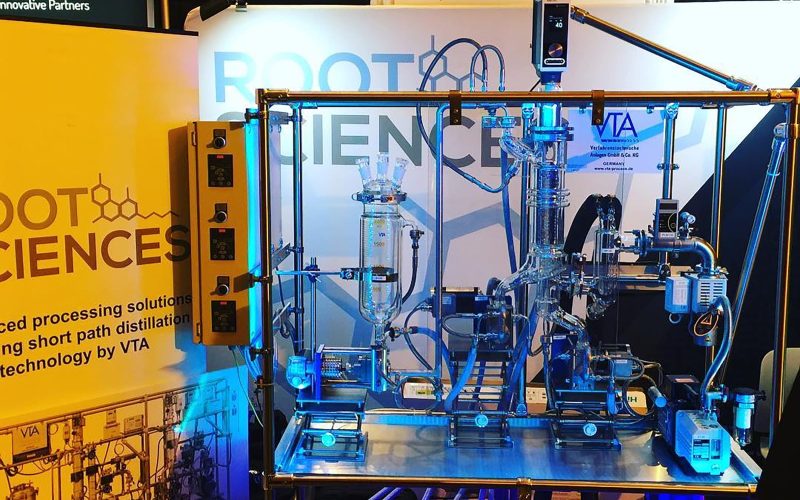
VKL cannabis distillation equipment AT TRADE SHOW

A complete cannabis processing equipment line covers seven stages: extraction, winterization and filtration, solvent recovery and decarboxylation, distillation, remediation, formulation, and analytical testing, each converting the material one step closer to a finished, sellable product. 

This guide walks through what each category of equipment actually does, how the choice made at one stage shapes what’s needed at the next, and how the full line fits together as a single workflow rather than a list of unrelated machines.

  • A processing line has seven connected stages, not just extraction; most of the equipment that determines final product quality and compliance sits downstream of the extraction step.
  • The extraction method chosen at step one, hydrocarbon, ethanol, CO2, or solventless, determines which downstream equipment is actually needed and how much post-processing burden the line carries.
  • Winterization, solvent recovery, and decarboxylation are frequently treated as an afterthought relative to extraction, despite directly determining crude quality going into distillation.
  • Remediation and formulation equipment exist to serve specific product lines (compliant CBD isolate, infused beverages) rather than every operation; not every facility needs every category.
  • Analytical testing equipment isn’t a final checkpoint bolted onto the end of the line, it belongs at every stage where a batch decision gets made.

Equipment Categories at a Glance

Equipment Category

What It Does

Where It Sits in the Process

Extraction

Pulls cannabinoids and terpenes out of raw biomass into crude oil

Step 1: the starting point every other category depends on

Winterization & filtration

Removes waxes, lipids, and fine particulate from crude oil

Step 2 for most solvent-based methods, before distillation

Solvent recovery & decarboxylation

Reclaims solvent for reuse and converts cannabinoids to their active form

Runs alongside or just after extraction

Distillation

Purifies crude into high-potency, refined distillate

Step 3: turns cleaned crude into a sellable intermediate product

Remediation

Reduces THC or isolates specific cannabinoids

Optional step for compliant CBD isolate or broad-spectrum product lines

Formulation

Converts oil-based extract into water-compatible nanoemulsion

Final step before infusion into beverages, edibles, or topicals

Analytical & testing

Verifies potency and quality

Runs in parallel with every other stage, not just at the end

Extraction Equipment: Where Every Processing Line Starts

Extraction is the first and most consequential decision in the entire line, since the method chosen here determines the facility classification required, the post-processing burden carried downstream, and the product types the finished line can realistically produce.

Hydrocarbon Extraction Equipment
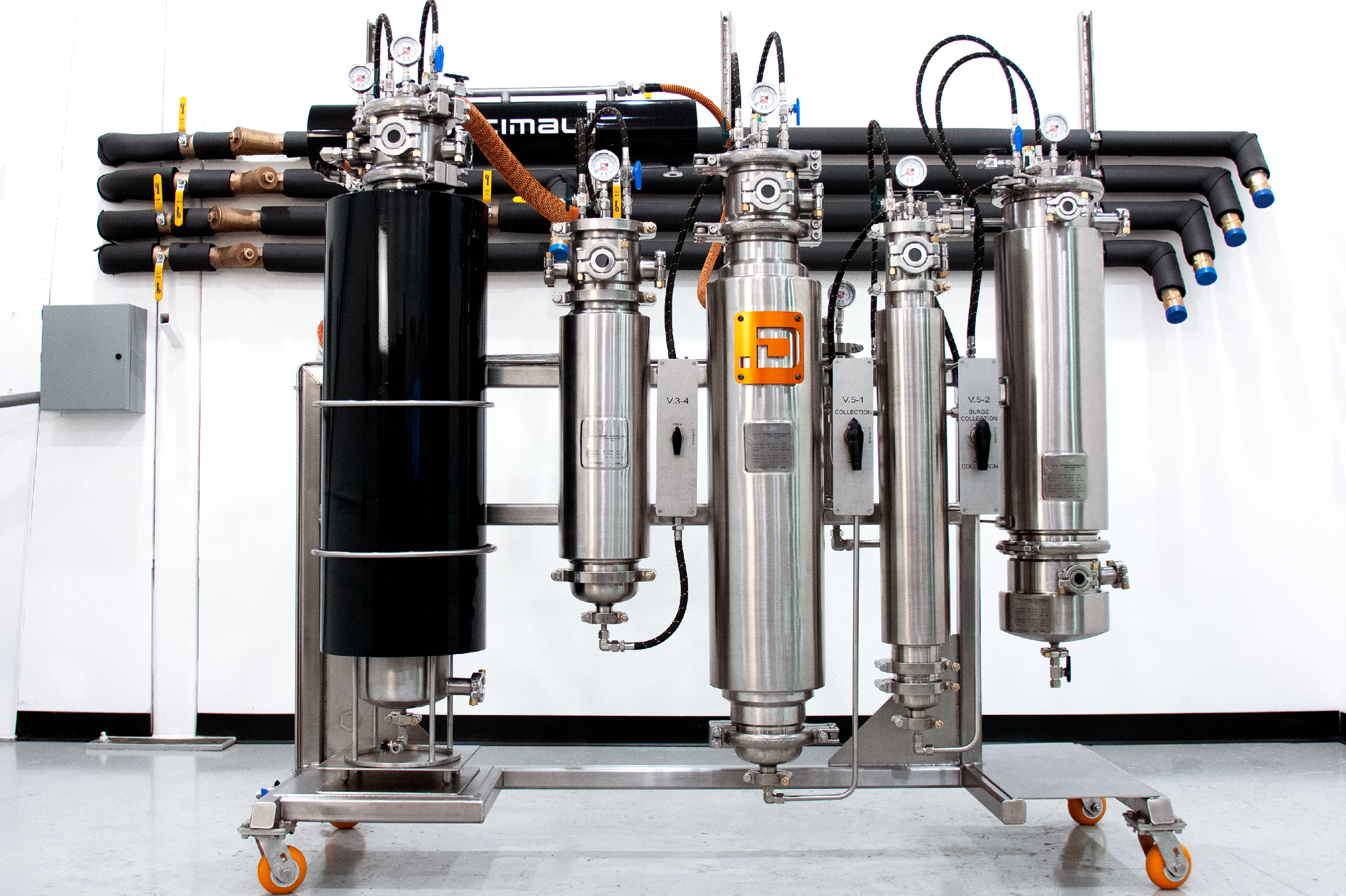
5. HX Hydrocarbon Extraction Equipment

Closed-loop hydrocarbon extraction equipment uses butane or propane to selectively dissolve cannabinoids and terpenes while leaving behind most chlorophyll and plant waxes, which is why it’s the standard choice for terpene-rich concentrates like live resin, shatter, and badder. This method requires a Class 1 Division 1 (C1D1) rated facility, the most stringent hazardous-location classification defined under OSHA’s flammable liquids and hazardous location standards, given the solvent’s flammability.

Ethanol Extraction Equipment
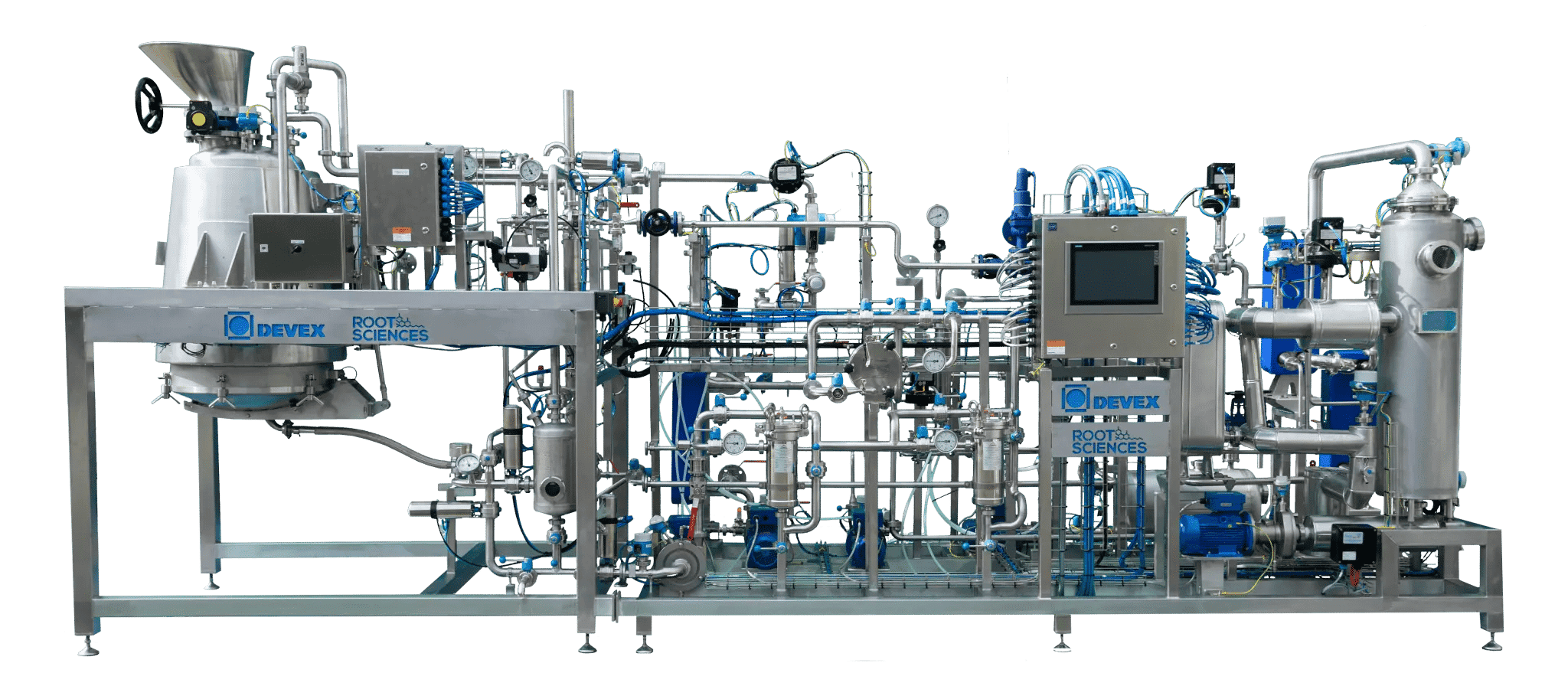
CryoEXS 400 equipment

Ethanol is polar and pulls a broader range of compounds than hydrocarbon solvents, including more chlorophyll and lipids, which generally means a heavier winterization burden downstream but faster processing and higher throughput. Ethanol extraction equipment requires only C1D2 facility classification, a meaningfully lower build-out cost than hydrocarbon. All-in-one systems like the CryoEXS 800 combine cryogenic extraction with solvent recovery and decarboxylation in a single skid, reducing co-extracted wax and cutting the winterization step from days down to hours.

CO2 Extraction Equipment
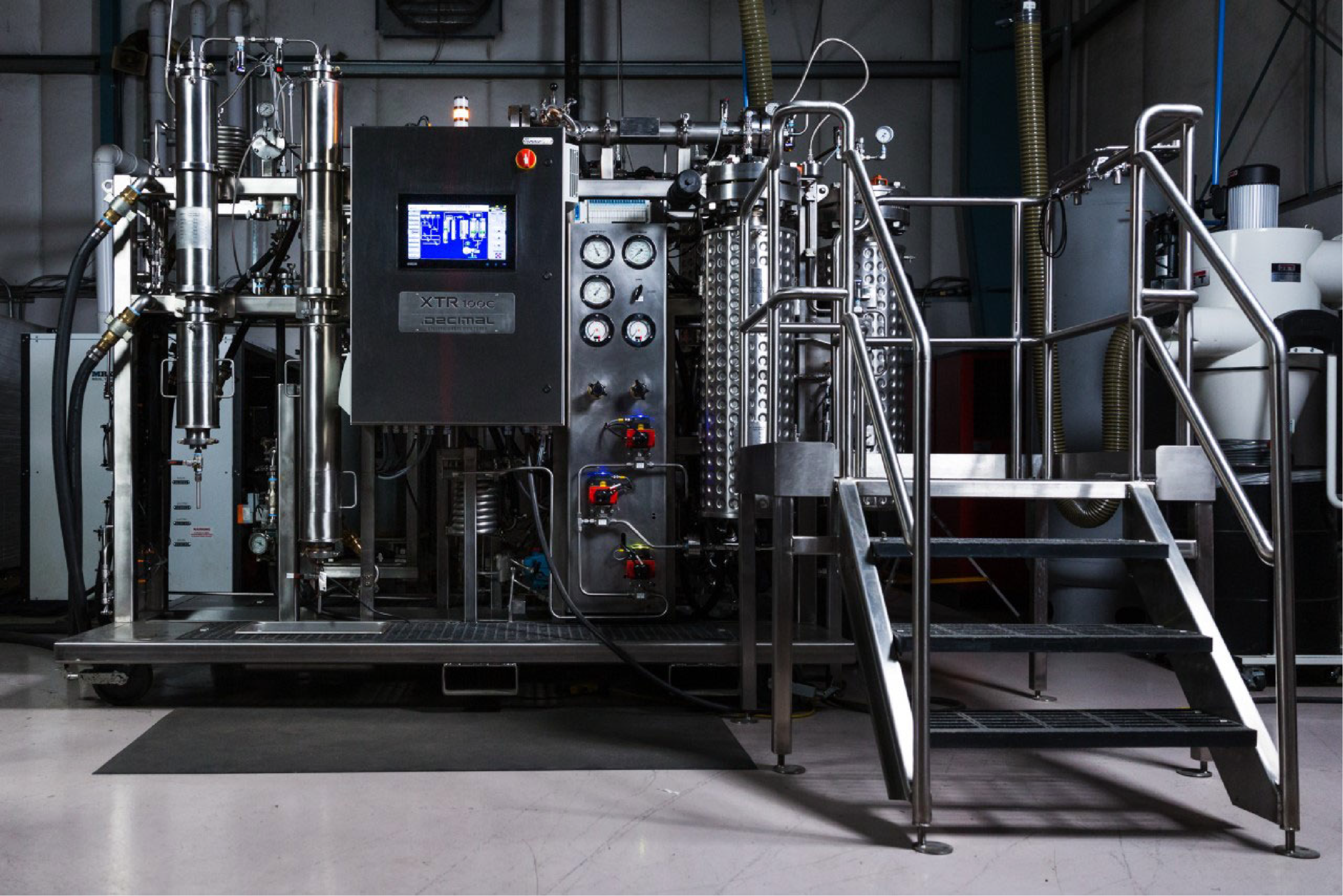
CO2 extraction equipment

Supercritical CO2 extraction equipment uses pressurized carbon dioxide, which behaves like a solvent under high pressure and temperature without being a traditional chemical solvent. It requires minimal post-processing since it leaves most chlorophyll and waxes behind, and the CO2 itself is recyclable within the closed-loop system. The tradeoff is generally longer cycle times and a higher initial equipment cost than hydrocarbon or ethanol systems at comparable throughput.

Solventless Extraction Equipment
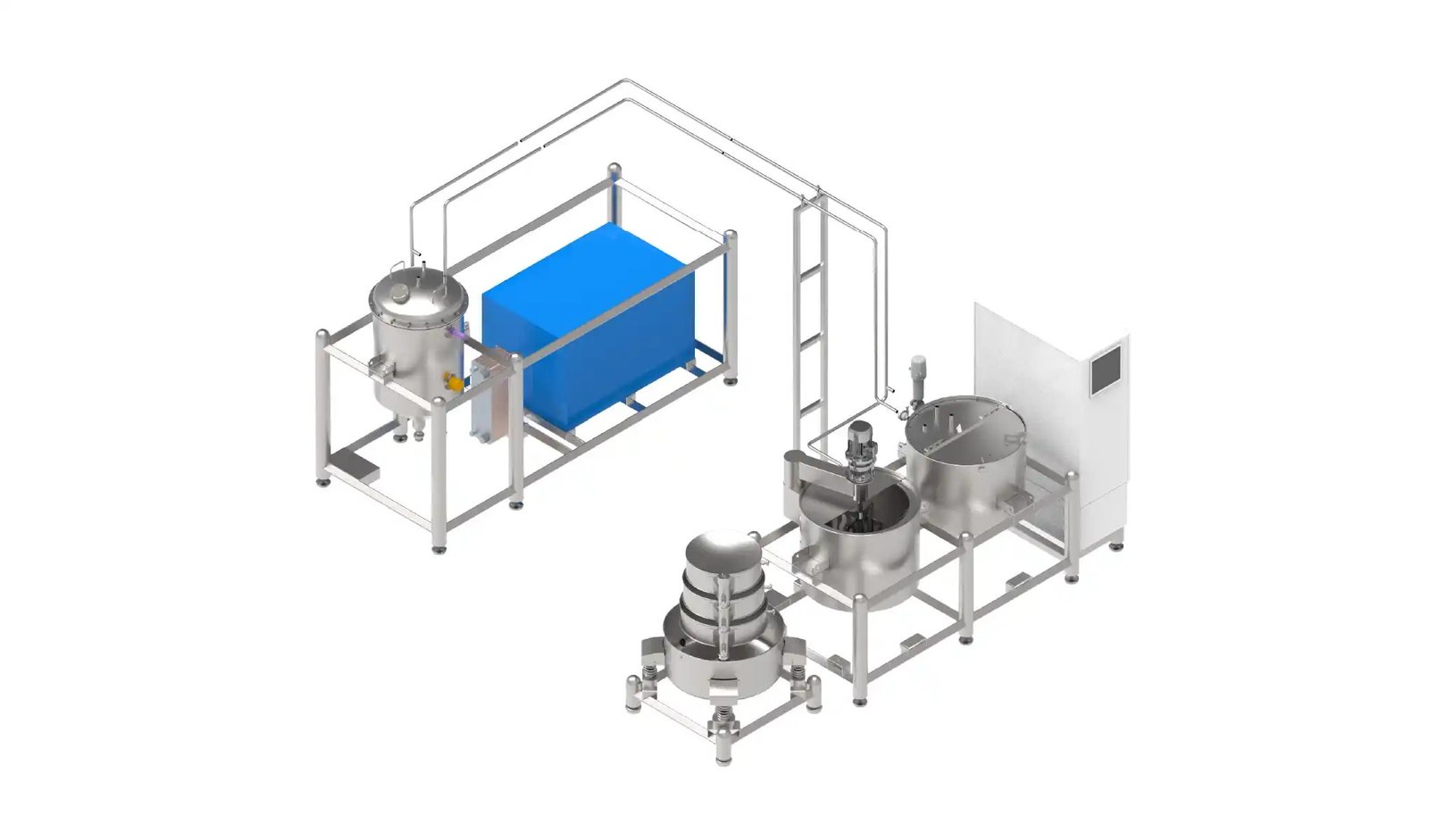
cold water extraction, solventless extraction

For operations avoiding chemical solvents entirely, solventless extraction equipment and rosin presses use ice water and mechanical heat/pressure to separate trichomes without any facility classification requirement at all. This meaningfully lowers build-out cost and compliance burden, at the cost of lower yield per batch compared to solvent-based methods.
Winterization and Filtration Equipment

Winterization Equipment

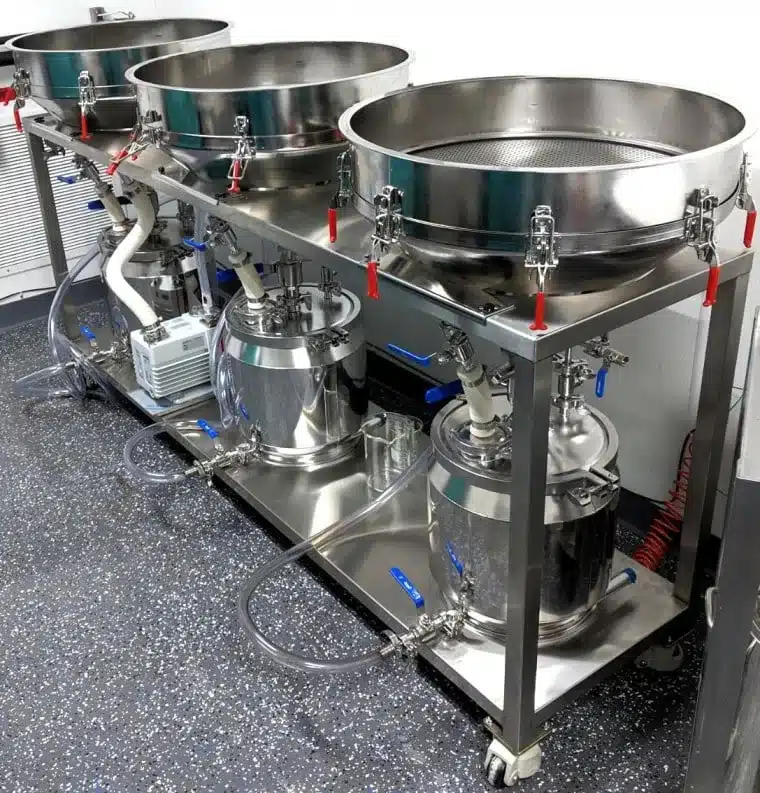
This stage removes fats, waxes, and lipids that either co-extracted with the cannabinoids (heavily in ethanol crude, lightly in hydrocarbon or CO2 crude) or need to be cleared before distillation regardless of method.

  • Winterization: chills crude oil, typically dissolved in ethanol, to sub-zero temperatures so waxes and lipids precipitate out and can be separated from the cannabinoid-rich solution
  • Filtration: removes the precipitated solids, usually staged from coarse to fine media so the expensive polishing filters aren’t carrying the full particulate load

Root Sciences’ winterization equipment line, including the Infinity Filter Table, scales from small-batch bench work up to hundreds of gallons per hour, and this stage is frequently the least visible but most consequential bottleneck in an otherwise well-equipped extraction line, since crude quality entering distillation directly determines how many distillation passes are needed to hit target purity.
Solvent Recovery and Decarboxylation Equipment

Solvent Recovery & Decarb

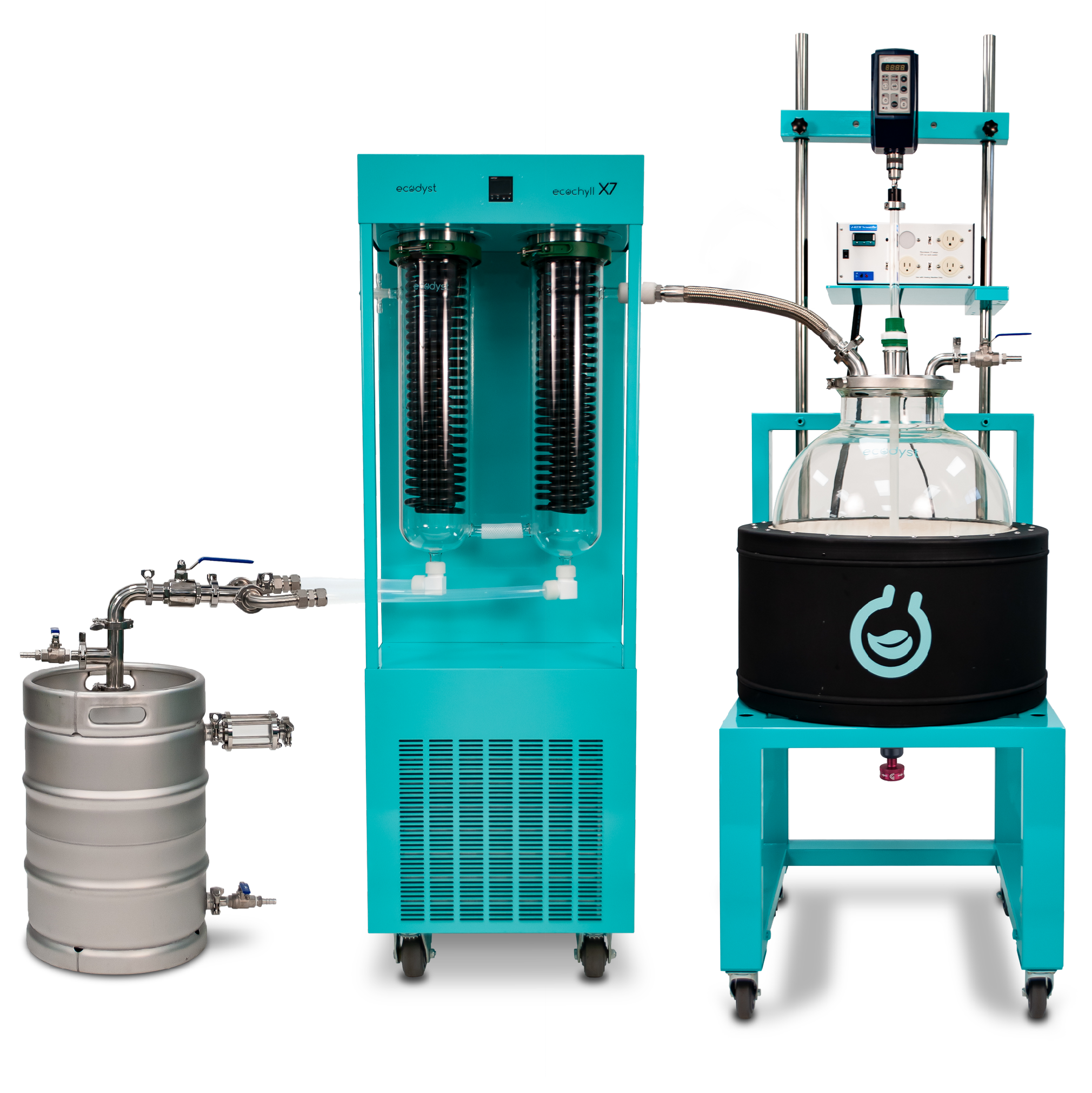
Two related but distinct functions live in this category. Solvent recovery reclaims the extraction solvent (butane, propane, ethanol, or CO2) for reuse rather than losing it each run, directly affecting both operating cost and how quickly the extraction vessel can be reloaded for the next batch. 

Decarboxylation applies controlled heat to convert cannabinoids from their raw acidic form (THCA, CBDA) into their active form (THC, CBD), a step required before most finished products can be sold as such. Root Sciences’ solvent recovery and decarboxylation equipment sizes this stage to match extraction throughput specifically, since undersized recovery capacity here caps how many runs a facility can actually complete in a day, independent of how fast the extraction step itself runs.
Distillation Equipment

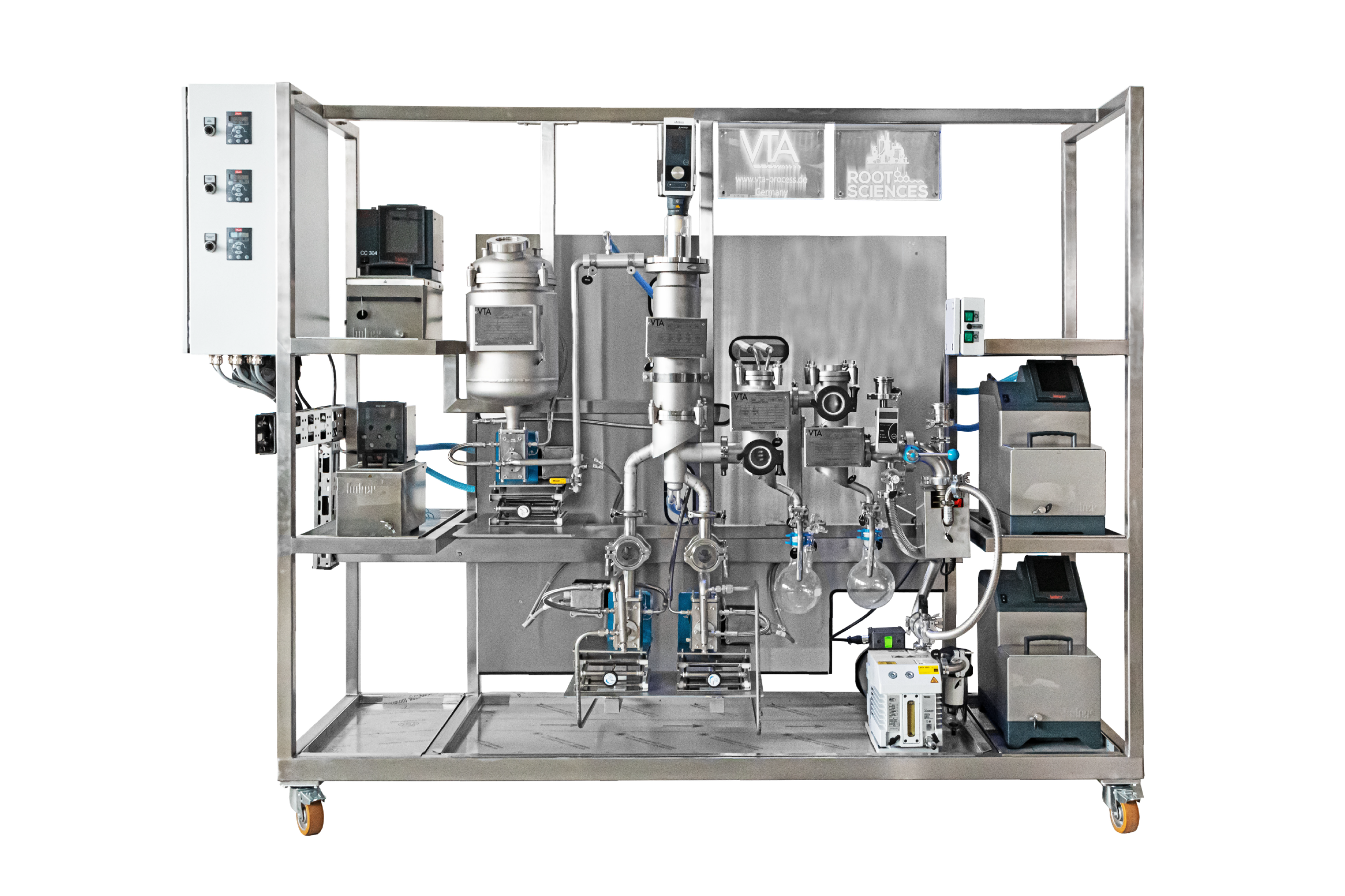
VKS 95 cannabis distillation equipment

Distillation takes cleaned, decarboxylated crude and purifies it into a high-potency, refined distillate by separating cannabinoids from residual plant material under heat and vacuum. Root Sciences’ distillation equipment line spans two German-engineered product families, the UIC line for entry-to-mid-scale operations prioritizing cost-conscious, straightforward operation, and the VTA line for facilities investing in higher throughput and more advanced automation. 

This is generally the highest-value single piece of equipment in the line, since distillate quality and consistency directly determine what finished product categories, vape cartridges, edibles, tinctures, a facility can actually sell into.
Remediation Equipment

Remediation equipment reduces or removes THC and isolates specific cannabinoids using crystallization and chromatography techniques, serving product lines that need to meet legal THC limits or isolate a specific cannabinoid like CBD. 

This matters directly for hemp-derived product compliance: under the federal hemp definition established in Public Law 119-37, finished consumable hemp products must stay within specific total THC thresholds, which THC remediation equipment exists specifically to help processors hit. Capacity here ranges from a few kilograms to hundreds of kilograms per shift, and this category is only necessary for operations producing compliant broad-spectrum, CBD isolate, or low-THC formulated products, not every processing line needs it.

Formulation Equipment

Formulation equipment, primarily nanoemulsification systems, converts oil-based cannabinoid extract into a water-compatible nanoemulsion suitable for beverages, edibles, and topicals. This isn’t a cosmetic processing step: a 2025 crossover clinical study published in the Journal of Cannabis Research found that a self-nanoemulsifying cannabinoid formulation produced substantially higher peak plasma THC concentration (32.79 ng/mL) than a standard oil-based formulation (10.17 ng/mL) in the same volunteers, directly demonstrating the bioavailability improvement nanoemulsification is designed to deliver.

 Root Sciences’ nanoemulsification equipment line, including the Panther, Pony, and XStream systems, scales from roughly 10 to 100 liters per hour depending on model, serving processors building infused beverage and edible product lines specifically.

Analytical and Testing Equipment

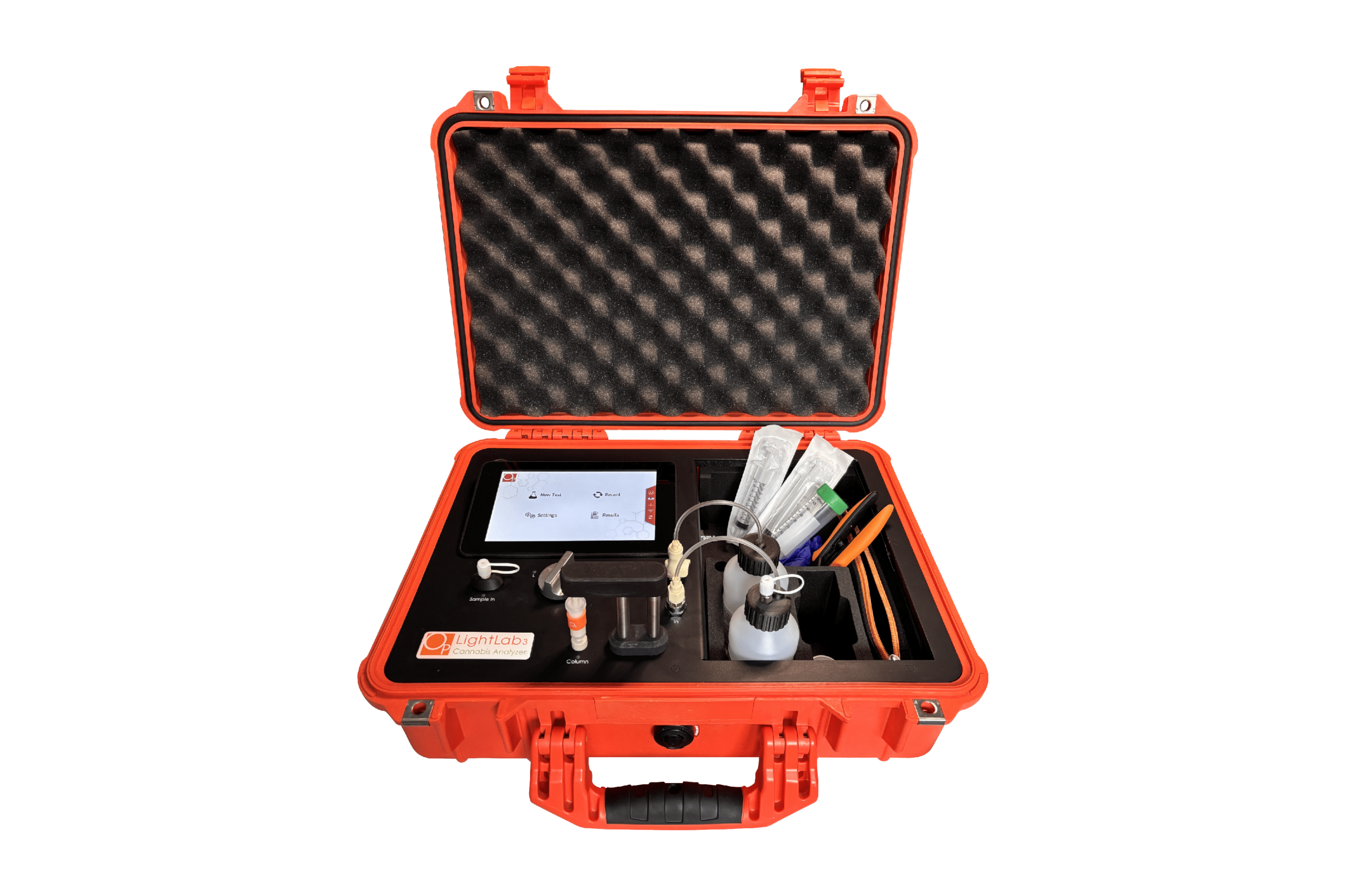
Orange Photonics LightLab 3 portable cannabis analyzer for in-house cannabinoid potency testing In-house potency and quality testing equipment belongs at multiple points in the line, not just as a final release check. Verifying potency after extraction, after distillation, and again after remediation or formulation catches problems close to where they occur rather than after a batch has already moved through several more expensive processing steps. 

Analytical testing equipment that brings this testing in-house, rather than relying solely on third-party lab turnaround time, lets a facility catch and correct a process issue within the same production day instead of days later.

How the Line Fits Together as a Workflow

Treating these seven categories as a connected system, rather than a shopping list of individually optimized machines, is what actually determines whether a facility’s finished output matches its extraction capacity. A few integration points matter more than they initially appear to:

  • Extraction method dictates downstream burden: choosing ethanol without accounting for the winterization capacity it requires is a common planning gap, not an equipment failure
  • Each stage needs throughput matched to its neighbors: a fast extraction system feeding undersized winterization or distillation capacity doesn’t increase finished output, it just relocates the bottleneck
  • Not every facility needs every category: a concentrate-focused operation may never need remediation or formulation equipment, while a beverage-focused operation needs both alongside standard extraction and distillation

Root Sciences’ facility design and business planning services exist specifically to plan this full line as one coordinated system rather than a series of separate equipment purchases made stage by stage as bottlenecks appear.

Conclusion

A complete processing line is genuinely seven interdependent categories of equipment, and the extraction step, while the most visible and most discussed, is only the first of them. Winterization, solvent recovery, distillation, remediation, formulation, and testing each shape what the line can actually produce and sell, and planning them as one connected system rather than a sequence of separate purchases is what turns a collection of machines into a facility that reliably converts biomass into finished product.

FAQs

1. Does every cannabis processing facility need all seven equipment categories?

No. Extraction, and typically some form of post-processing and testing, are close to universal, but remediation and formulation equipment serve specific product lines. A facility focused purely on concentrate production may never need nanoemulsification equipment, while a beverage-focused operation needs it as a core part of the line, not an optional add-on.

2. Can equipment from different categories be sourced from different manufacturers, or does it need to come from one vendor?

Mixed sourcing is common and not inherently a problem, but it shifts more integration responsibility onto the facility, since compatibility between stages (throughput matching, workflow fit, service coordination across multiple vendors) isn’t handled by a single supplier. Working with one vendor across multiple categories, or with a consultant who plans the full line, generally reduces that coordination burden.

3. Which equipment category typically requires the largest capital investment?

Distillation equipment generally represents the single largest line item for facilities producing refined distillate, since it directly determines finished product quality and the price point the output can command. That said, total facility cost is usually driven more by the combination of extraction plus its required facility classification than by any single downstream category.

4. How does adding a new product line (for example, moving into infused beverages) change the equipment line needed?

It typically adds formulation equipment (nanoemulsification) and may add remediation equipment if the beverage line targets a specific THC or cannabinoid profile, on top of whatever extraction and distillation capacity already exists. The upstream stages don’t necessarily need to change, but downstream capacity needs to be added and matched to the new product line’s specific throughput requirements.

5. Is it possible to start with a partial line and add categories later as the business grows?

Yes, and this is a common and often financially sensible approach, starting with extraction, basic post-processing, and distillation, then adding remediation or formulation equipment once a specific product line is validated. The key planning consideration is leaving facility space, utility capacity, and workflow room for that later addition rather than designing the initial layout as if no further stages will ever be added.

Related Articles

Cannabis businesses typically need 9 main types of insurance: general liability, product liability, commercial property, workers’ compensation, crime,...

Marijuana. Cannabis. Weed. Bud. Whatever you want to call it, legal cannabis is the fastest growing industry in...

Extremely proud of our presence this year at mjbizcon2019. Check out our recap video of the show at...

Scroll to Top

Planning an Extraction or Processing Lab?

Talk to our engineers — get a custom equipment recommendation and lab plan, free of charge.