
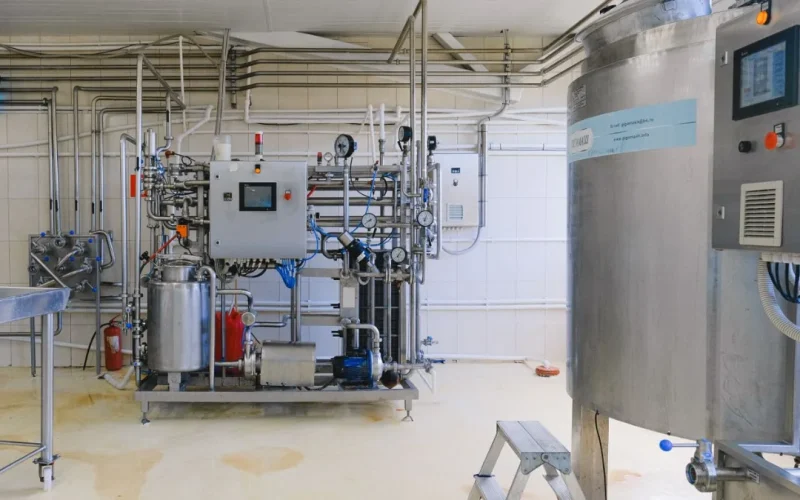
Organic solvent nanofiltration (OSN) is a pressure-driven membrane process that separates dissolved compounds from organic solvents such as ethanol. In cannabis processing, its main uses are recovering ethanol and concentrating extract; specially selected membranes may also help remove waxes or pigments. OSN is a post-extraction separation step, not a method of extracting cannabinoids directly from plant biomass.
How Does OSN Work?
After ethanol extraction, the liquid mixture (often called miscella) contains solvent, cannabinoids and other plant compounds. A pump pushes this mixture across a solvent-resistant membrane. Two streams leave the system:
- Permeate: liquid passing through the membrane—ideally ethanol-rich during solvent recovery.
- Retentate: liquid held back by the membrane—ideally enriched in cannabinoids during solvent recovery.
The membrane does not act like a simple sieve: selectivity also depends on solvent chemistry, membrane material and operating conditions. A major peer-reviewed review of OSN describes concentration, purification and solvent exchange as core applications.
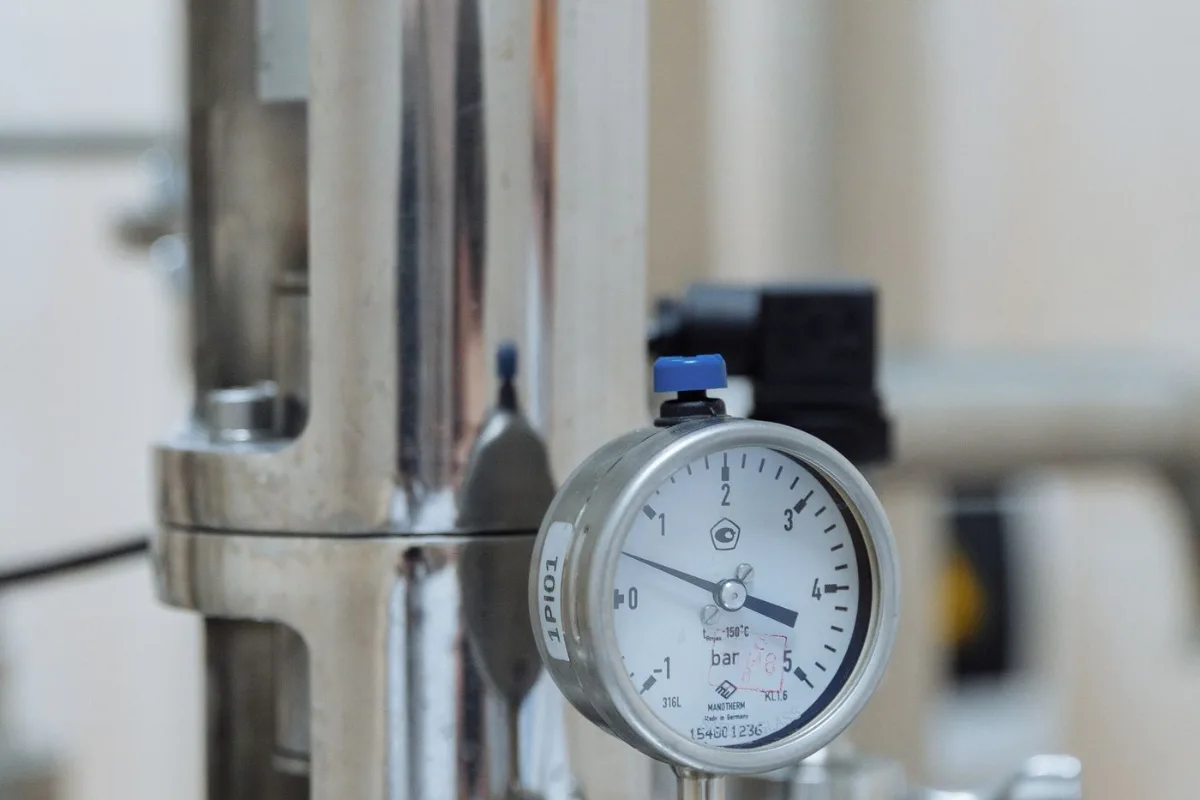
Where Is OSN Used in the Cannabis Workflow?
A typical sequence runs in five steps, though exact sequencing varies by product and plant design.
- Ethanol extraction
- Removal of suspended solids
- OSN solvent recovery or refinement
- Final solvent removal (if needed)
- Downstream processing such as decarboxylation or distillation
The most practical applications are:
- Bulk ethanol recovery without boiling the solvent
- Concentration of cannabinoid-bearing extracts
- Selective wax or color reduction with application-specific membranes
These are distinct membrane duties: a membrane optimized to retain cannabinoids during solvent recovery is not necessarily suitable for dewaxing.
OSN vs. Falling-Film Evaporation
| Question | OSN | Falling-film evaporation |
|---|---|---|
| How is solvent separated? | Pressure and a membrane | Heating, vaporization and condensation |
| Main advantage | Less bulk solvent vaporization; lower thermal exposure | Established, versatile solvent recovery |
| Main constraint | Membrane selectivity, fouling and declining flux | Heating/cooling duty and heat-transfer constraints |
| Can it finish solvent removal? | Often needs a finishing step | May still need final vacuum finishing |
OSN may reduce the load on an evaporator, but a hybrid process can make more sense than replacing all thermal recovery. Claims of lower energy costs require a comparison at the facility’s actual feed concentration and throughput.
Can OSN Replace Winterization or Separate CBD From THC?
It may reduce conventional winterization where a validated membrane removes the target waxes and lipids. It should not be assumed to remove every impurity, pesticide or residual solvent.
Standard OSN is not a reliable CBD-versus-THC separation method: those cannabinoids are structurally similar and require a demonstrated selective process.
What Are the Main Limitations of OSN?
- Fouling: solids and extract components can reduce flow.
- Solvent compatibility: membrane compatibility changes with solvent composition.
- Viscosity: concentration increases viscosity.
- Product loss: cannabinoid losses can occur in permeate, residues or cleaning streams.
Membranes also need cleaning and eventual replacement.
“Low temperature” does not mean zero energy use or zero product loss.
What Should an Equipment Buyer Ask?
- What solvent, feed composition and temperature were used to establish the stated throughput?
- What are the measured ethanol recovery, cannabinoid mass balance and solvent purity?
- What happens to flux and cleaning frequency over a full production shift?
- What are membrane replacement costs, utility needs and any finishing-stage requirements?
A useful vendor trial tests representative miscella and reports mass balance, membrane performance over time and total cost per liter of solvent recovered—not just a maximum gallons-per-hour rating.
OSN Equipment and Membrane Technologies
OSN membranes are used beyond cannabis, including specialty chemicals and pharmaceuticals. Commercial suppliers include Evonik, BORSIG, SolSep and AMS. A 2025 ChemSusChem comparison of commercial OSN membranes found that separation performance changed with the solvent and that greater solvent flow could come at the expense of solute rejection. The study did not establish cannabis-specific cannabinoid recovery.
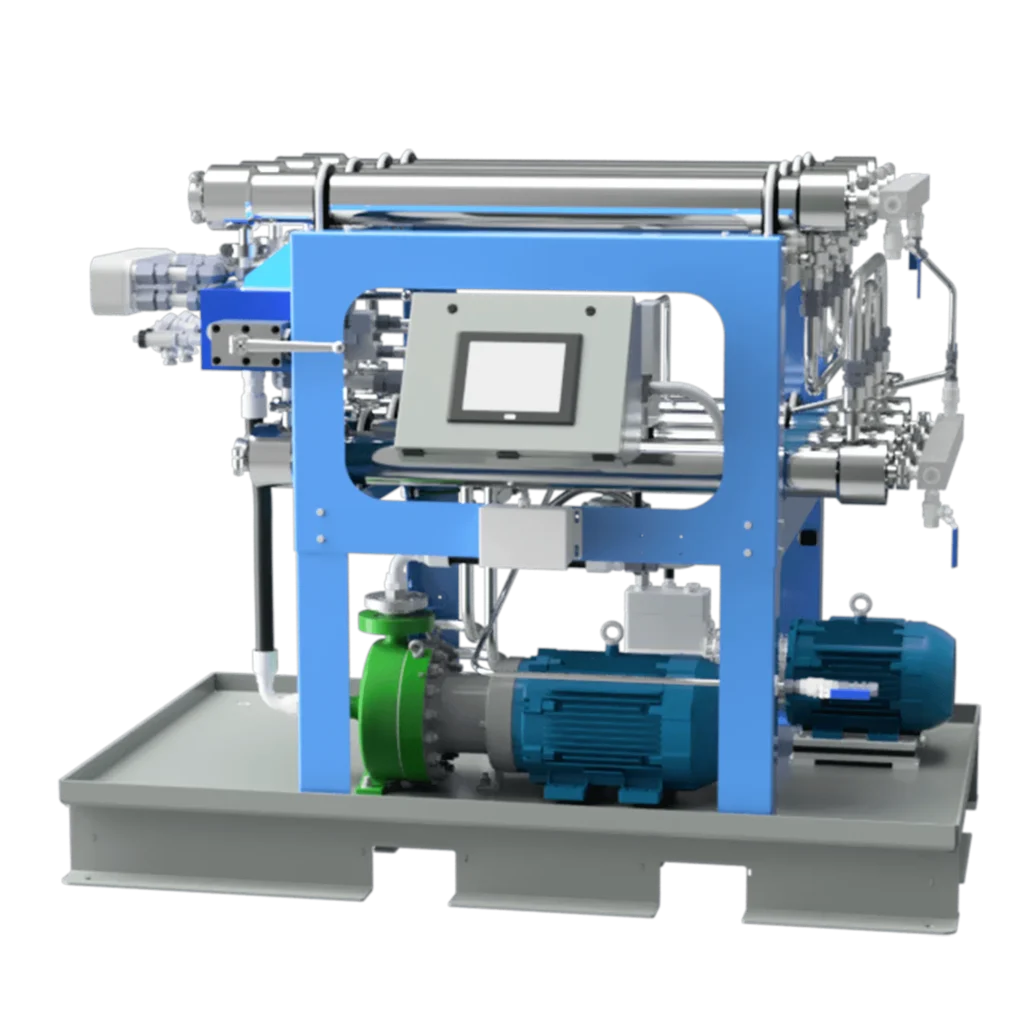
For cannabis and hemp facilities, Root Sciences offers X-Spiral membrane nanofiltration systems for solvent recovery and other configurable separation duties. Compare integrated systems on verified feed-specific performance, serviceability and total operating cost—not manufacturer claims alone.
Considering membrane nanofiltration for solvent recovery? Talk to the Root Sciences team about your feed and throughput.
Frequently Asked Questions
Is OSN the same as reverse osmosis?
No. Both use pressure and membranes, but OSN is designed for separations in organic solvents rather than conventional water treatment.
Does OSN preserve terpenes?
Lower-temperature processing can reduce thermal exposure, but terpene retention must be measured: some compounds may travel with the permeate.
Is OSN worth it for a small extractor?
Not automatically. Economics depend on solvent volume, existing recovery equipment, membrane life and the value of reduced thermal processing.