
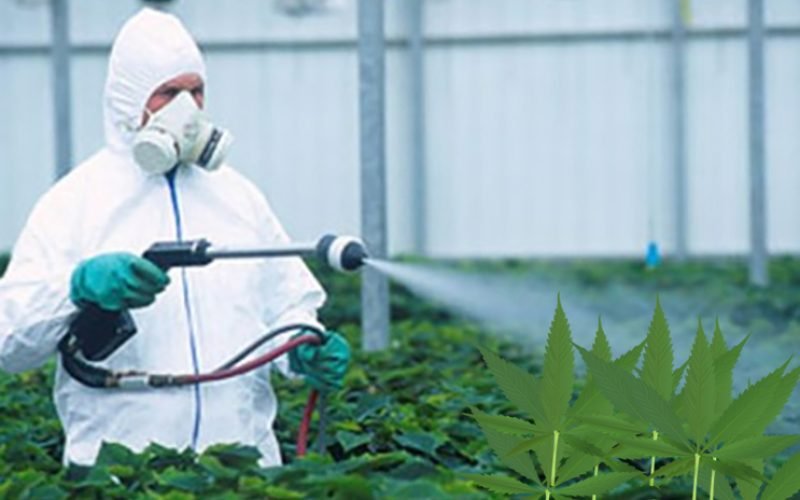
In principle, yes: pesticides and cannabinoids can be separated, but the published evidence on how much cannabinoid is lost along the way is limited, so processors have to measure it themselves. In a 2023 chromatography study across six cannabis matrices, one method separated 25 of 26 cannabinoids from the pesticides tested. The same study also showed that several pesticides overlap with cannabinoids and need extra steps.
This blog explains what counts as a loss, what the research shows, why claims of no loss need evidence, and how to check recovery on your own batches.
Sections
ToggleKey Takeaways
This blog covers what the research shows about separating pesticides from cannabinoids and how processors can verify recovery.
- Separation is possible in principle. In a 2023 study, one chromatography method separated 25 of 26 cannabinoids from the pesticides it tested.
- Some pesticides overlap with cannabinoids. Pyrethrins, permethrin, and piperonyl butoxide overlapped, and boscalid eluted close to the cannabinoid 7-OH-CBD.
- Claims of removal without cannabinoid loss are common, but a credible claim names the recovery, the potency before and after, and the method.
- A loss can take several forms: lower cannabinoid yield, lower potency per gram, and changes to terpene content.
- The reliable answer is measurement. Testing potency, terpenes, and pesticides before and after remediation shows what a given method costs.
The table lists the losses a processor should track and how each can be checked.
What could be lost | How it can happen | How to check |
Cannabinoid yield | Cannabinoids travel with pesticides or bind to media | Weigh and test input and output to build a mass balance |
Potency per gram | Compounds are removed or retained unevenly | Potency testing before and after |
Terpene content | Not covered by the studies reviewed, so it must be measured | Terpene testing before and after |
Specific cannabinoids | A cannabinoid that elutes near a pesticide can be affected | Test the individual cannabinoids on the panel, such as 7-OH-CBD |
What Counts as Sacrificing Cannabinoids?
Sacrificing cannabinoids does not mean one thing. A method can leave the potency per gram unchanged while reducing the total amount of oil recovered, or it can recover most of the oil while shifting the cannabinoid ratios. Treating loss as a single number hides these differences.
The losses that matter to a processor fall into a few groups.
- Yield: The total mass of cannabinoids recovered compared with what went in.
- Potency: The percentage of cannabinoids in the remediated oil, which can change even when yield looks acceptable.
- Profile: The balance of individual cannabinoids and terpenes, which affects how the product behaves and how it is labeled.
Defining which of these a product must protect is the first step, because a method that is acceptable for a bulk input may not be acceptable for a finished, labeled product.
Separating Pesticides From Cannabinoids
The clearest peer-reviewed evidence comes from a 2023 study in the Journal of Cannabis Research that compared the retention times of pesticides with those of 26 cannabinoids in six matrices, including raw flower, crude extracts, distillate, and distillation byproducts. The method separated 7 of 11 pesticides and 25 of 26 cannabinoids.
The detail is more useful than the headline. Clothianidin, imidacloprid, carbaryl, diuron, spinosyn A, and myclobutanil came off the column within the first 3.6 minutes, ahead of nearly all the cannabinoids. Boscalid eluted at 3.55 minutes, close to the cannabinoid 7-OH-CBD at 3.44 minutes. Pyrethrins, permethrin, and piperonyl butoxide overlapped with cannabinoids and needed further purification. The authors described eluent fractionation as a highly attractive industrial solution, with the caveat that some pesticides need extra steps.
This was a benchtop study, and its published summary focuses on separation. It does not give yield or potency figures after processing, so it shows that separation is possible and not how much cannabinoid a production run would lose.
Why Chromatography and Adsorbents Behave Differently
Chromatography separates compounds by how they move through a column, so each pesticide and cannabinoid has its own retention time. When the times are far apart, the pesticide can be collected away from the cannabinoids. When they are close, the fractions overlap and cannabinoids can be lost or contaminants can be carried through.
Adsorbent-based methods work differently. The extract passes over solid media that binds contaminants to its surface. The selectivity depends on the media and on the compounds present, and a medium that binds a pesticide may also bind cannabinoids.
For adsorbents, the sources I could verify gave no published figures for cannabinoid loss. That is a gap in the evidence, not proof of no loss, and it is the reason to measure recovery on each method and each extract type.
Why Claims of No Cannabinoid Loss Need Evidence
Statements that a method removes pesticides without significant cannabinoid loss are easy to find on product and service pages. Most give no numbers, no method, and no study. A claim without data cannot be checked, compared, or defended to a regulator or a buyer.
A credible claim states specific things.
- The pesticide or pesticides tested, and the starting and ending levels.
- The extract type, since distillate, crude extract, and byproducts behave differently.
- Cannabinoid recovery, by compound where possible.
- Potency before and after, measured by the same lab and method.
- The scale, since a benchtop result may not hold in production.
If a supplier cannot provide these, the claim is a marketing statement, and the processor should plan to generate the data.
How to Measure Cannabinoid Loss on Your Own Batches?
Measuring loss does not require anything exotic. It requires consistent testing before and after remediation, using the same lab and method for both. The guides to cannabis potency testing and in-house testing in processing labs cover how potency testing works and how processing labs set it up.
A simple approach covers the following.
- Weigh the input and output, and record both.
- Test potency on the input and on the remediated oil with the same method.
- Run a terpene panel on both if the terpene profile matters to the product.
- Retest pesticides on the remediated oil to confirm the result.
- Calculate cannabinoid recovery from the weights and potencies, and record it with the batch.
Repeating this across a few batches shows whether a method’s loss is steady or varies with the input, which is more informative than a single result.
The Trade-Off Between Pesticide Removal and Cannabinoid Recovery
Removing more pesticide is not free. The same Terpenes and Testing reporting notes that a reduction of over 99 percent can still leave a pesticide above a jurisdiction’s limit, so a method that looks effective may still need another pass. Overlapping pesticides need extra purification, as the 2023 study showed, and each extra step is another chance to lose cannabinoids.
Regulators expect this to be thought through. California’s remediation plan form asks for scientific support that the process addresses the specific adulterant, a list of materials, solvents, reagents, and equipment, and a hazard analysis. It does not set a recovery target, so the processor decides what loss is acceptable and records the basis.
The practical position is to set an acceptable recovery before remediating, measure against it, and stop adding passes when the pesticide result is acceptable and the recovery is within range.
Questions to Ask a Supplier or Lab
The table lists questions that turn a general claim into something checkable. Reading the results correctly also matters, and the guide to lab testing of high-quality distillates explains what a good panel looks like.
Question to ask | Why it matters |
Which pesticides were tested, and from what starting level? | Methods work pesticide by pesticide |
What was the cannabinoid recovery, by compound? | A single total can hide losses of individual cannabinoids |
What was the potency before and after, and which lab measured it? | Same lab and method make the comparison valid |
Was terpene content measured? | The studies reviewed did not cover it |
What extract type and scale was the method validated on? | Distillate, crude extract, and byproducts differ, and benchtop may not scale |
Is the validation data available for a regulator? | Plans typically need scientific support for the specific pesticide |
The common thread is evidence. A method that comes with recovery data is easier to trust, and one that does not is a reason to test before committing a batch.
Conclusion
Pesticides can be separated from cannabinoids, and the research shows it can work for many of them. It also shows that some pesticides overlap with cannabinoids, that benchtop results are not production results, and that published figures for cannabinoid loss are scarce.
The answer for a processor is to treat the loss as something to measure. Set an acceptable recovery, test before and after, record the result, and ask suppliers for data. A method that protects cannabinoids on paper has to prove it on the batch in front of you.
Frequently Asked Questions
Does remediation change terpene content?
The studies reviewed for this blog did not measure terpenes, so there is no published figure to cite. Terpenes are separate compounds from cannabinoids and do not necessarily behave the same way in a separation. If the terpene profile matters to the product, run a terpene panel on the oil before and after remediation. Recording the result with the batch shows whether the method changes the profile.
Which pesticides are hardest to remove without affecting cannabinoids?
In the 2023 study, pyrethrins, permethrin, and piperonyl butoxide overlapped with cannabinoids and needed further purification. Boscalid eluted close to the cannabinoid 7-OH-CBD, so separating them calls for care. Pesticides that came off earlier, such as myclobutanil and imidacloprid, separated cleanly in that test. The result applies to that method, so a different method may rank them differently.
Is a 99% pesticide reduction enough?
It depends on the starting level and the limit. Trade reporting notes that a reduction of over 99 percent can still leave a pesticide above a jurisdiction’s limit when the starting concentration is high. The target is the limit, not a percentage, so the result should be judged by retesting against it. A strong percentage on a lightly contaminated batch and a weak one on a heavily contaminated batch can end in the same place.
Can the same method work on flower extract, distillate, and byproducts?
Not automatically. The 2023 study used six matrices because each behaves differently in a separation. A method validated on one extract type may not carry over to another with a different composition. Validation should name both the pesticide and the extract type, and a new matrix should be treated as a new test.
What should a validation record show about cannabinoid recovery?
California’s plan form is a useful model for structure, asking for each step, the scientific support for the specific adulterant, the materials and equipment, and a hazard analysis. Recovery should be added on top of that, with the weights, the potency before and after, and the lab and method used. Because no recovery target is set by the form, the record should also state the target the processor chose and why. Together this gives a regulator or buyer something concrete to review.