
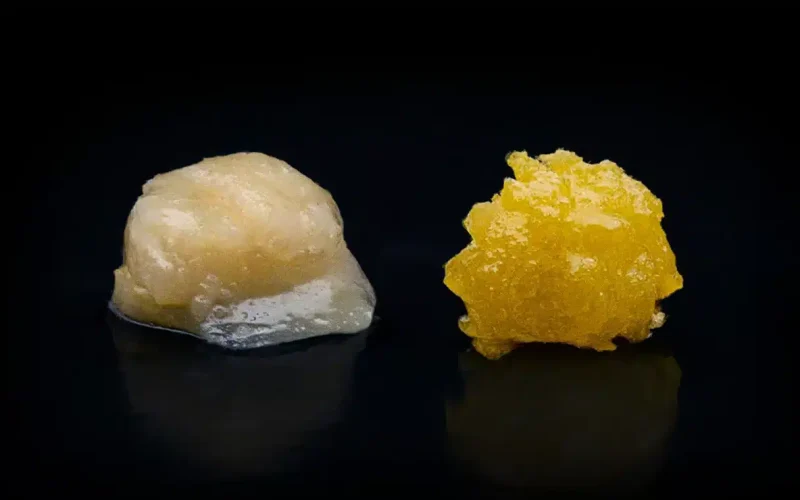
Premium cannabis extracts that enthusiasts and connoisseurs choose for a flavorful experience – hash rosin and live resin, have a lot in common. However, there are fundamental differences in production costs, extraction methods, and final product characteristics.
That’s why we will explore the difference between live resin and hash rosin to help you choose the best fit your needs.
Sections
ToggleWhat is Hash Rosin?
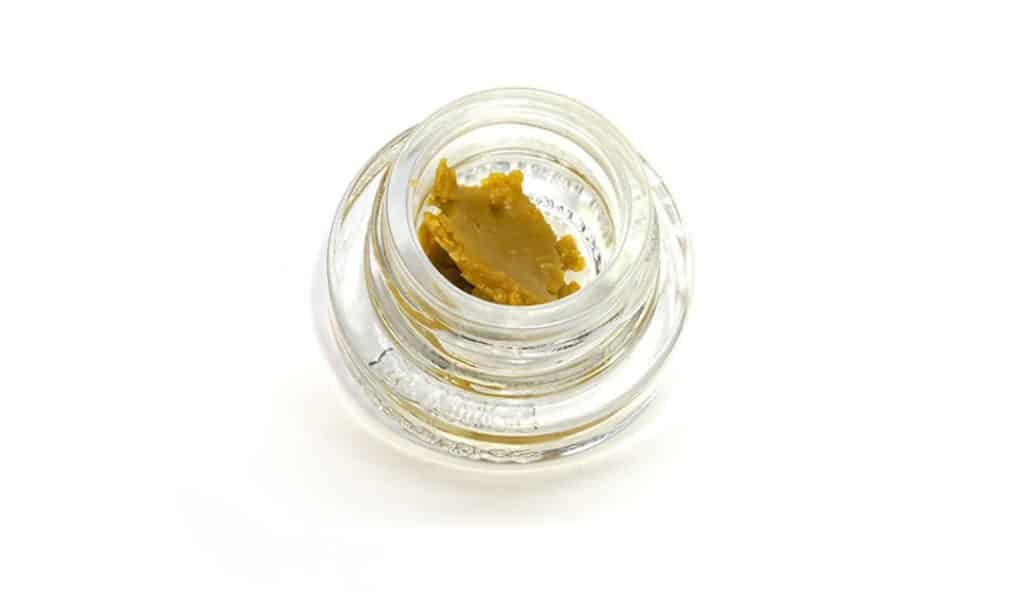
A solventless cannabis concentrate, hash rosin is a premium extract created by applying heat and pressure to bubble hash or dry sift. Solvents are not used, and only physical extraction techniques are used to isolate trichomes from plant material. The process is simple enough to be carried out using a hairdryer at home for recreational purposes. Hash rosin is a clean, pure concentrate with rich natural cannabinoid and terpene profiles.
What is Live Resin?
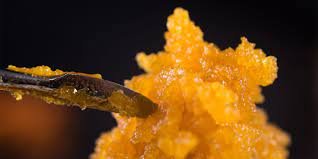
Live resin is another premium cannabis concentrate that is extracted from fresh-frozen cannabis plants. Frozen cannabis materials preserve terpenes and cannabinoids and are extracted using hydrocarbon solvents like butane or propane. Due to the flash-freezing process, terpene degradation is prevented, resulting in concentrates with exceptional flavor profiles and aromatic complexity.
Key Differences Between Hash Rosin and Live Resin
Feature | Hash Rosin | Live Resin |
Extraction Method | Physical method using heat and pressure (solventless process) | Solvent extraction methods using hydrocarbons such as butane and propane |
Starting Material | Dried flower or bubble hash | Fresh-frozen cannabis plants |
Terpene Preservation | High (natural preservation) | Extremely high (flash-frozen) |
Potency | 70-85% THC | 80-95% THC |
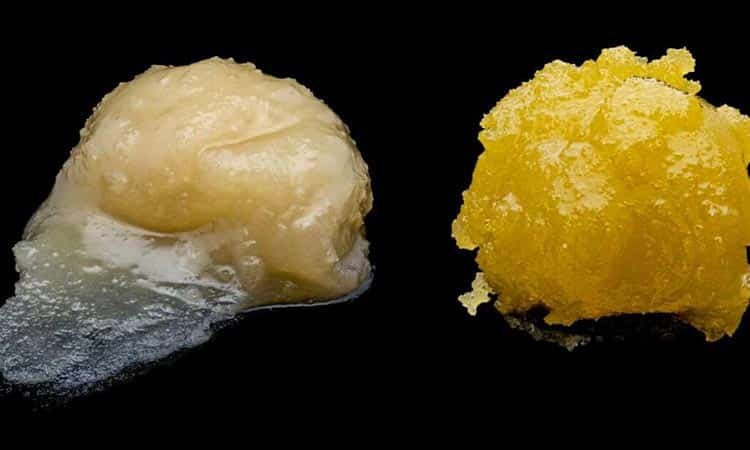
Texture | Butter to jam-like consistency | Sauce-like with crystals |
Price | Premium, expensive than most cannabis extracts | Moderate to high depending on the purity and potency |
Consumption Methods | Dabbing, vaporizing | Dabbing, vaporizing, cartridges |
Pros and Cons of Hash Rosin vs Live Resin
To comprehend the hash rosin vs live resin difference, it is essential to understand their pros and cons.
Hash Rosin:
Pros:
- Solventless and clean: No risk of any chemical residues or solvents remaining in the final extract.
- Full-spectrum effects: Simple extraction method preserves complete cannabinoid and terpene profiles, giving users an authentic experience.
- Premium quality: Hand-crafted production method results in small-batch, premium products.
Cons:
- Higher cost: At commercial scale, the production is labor-intensive and yields lower than solvent extraction, resulting in higher prices per gram.
- Limited availability: Not mass-produced due to technical expertise and equipment requirements.
- Lower potency: Generally, hash rosin contains less THC than solvent-based extracts.
Live Resin:
Pros:
- Superior terpene profiles: Flash-freezing cannabis plant material captures volatile compounds that would otherwise be lost during drying.
- Higher potency: Solvent-based extraction results in higher cannabinoid concentrations, resulting in higher THC levels.
- Wide availability: Solvent-based live resin extraction makes it readily available due to established extraction infrastructure and techniques.
Cons:
- Solvent residues: Risk of trace amounts of extraction solvents despite purging processes.
- Processing complexity: Needs specialized equipment and safety protocols for handling flammable solvents.
- Less natural: Chemical extraction methods can alter the extract’s original molecular composition.
Which One Should You Choose?
Factor | Hash Rosin | Live Resin |
Cost | Premium pricing for solventless purity and limited availability | Moderate pricing with good value, widely available |
Flavor | Natural, authentic strain flavors closely matching original plant profile | Enhanced, concentrated terpene profiles, can be further refined |
Purity | Completely solventless and natural | High purity with minimal solvent residue |
Potency | Moderate to high THC levels, depending on extraction technique | Very high THC concentrations due to processing |
Availability | Limited, artisanal products | Widely available from many producers |
How They're Made
Next, we must understand their extraction in the live resin vs. hash rosin comparison. Let’s take a closer look at how they are made.
Hash Rosin
Step 1: Bubble hash is created by putting cannabis plant material in ice water to separate trichomes from the plant material.
Step 2: Freeze-dry the bubble hash to remove all moisture content completely for more efficient extraction.
Step 3: Dried hash is placed between parchment paper and controlled heat (160-220°F), and pressure is applied using a rosin press.
Step 4: Golden, honey-like rosin starts producing when hash is squeezed and heat is applied.
Step 5: Temperature control allows the rosin to develop the desired consistency and terpene profile.
Live Resin
Step 1: Fresh cannabis plants are extracted at peak ripeness and immediately flash-frozen to preserve terpenes.
Step 2: Frozen cannabis material is fed into a closed-loop extraction system.
Step 3: Hydrocarbon solvents are introduced in the system and passed through frozen cannabis to dissolve cannabinoids and terpenes.
Step 4: The solvent and extract solution are separated from the plant material, and the solvents are purged using a vacuum and controlled heat.
Step 5: Filtered extract is whipped and agitated during purging to achieve the desired sauce-like consistency with crystalline formations.
Conclusion
Understanding the hash rosin vs live resin difference allows you to better satisfy your personal preferences regarding purity, potency, flavor, and budget considerations. While hash rosin is appealing for its solventless extraction, purity, and natural extraction, live resin is preferred for its affordability and higher THC levels. The difference between live resin and hash rosin is more than experience; to make informed decisions, cannabis purity, production method, and affordability are essential to consider.