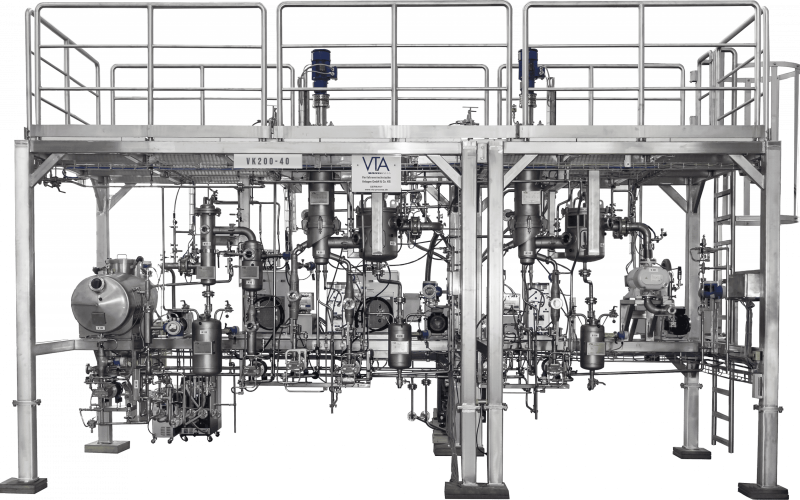
Choosing cannabis extraction equipment for a commercial facility comes down to matching the machine to your product goals, sizing it to real throughput needs, confirming your facility can support the required safety classification, and pricing the total cost of ownership rather than the sticker price alone.
This guide walks through that full decision process, from product goals through vendor vetting, plus the scalability, integration, and compliance factors that get overlooked until after equipment is already purchased.
Sections
ToggleKey Takeaways
- Product goals should drive equipment selection, not the other way around; defining what you’re producing narrows the extraction method, throughput, and facility classification almost automatically.
- Facility classification (C1D1 for hydrocarbon vs. C1D2 for ethanol) is frequently the real constraint on equipment choice, more so than the equipment’s price or capability.
- Total cost of ownership, including facility build-out, financing, consumables, and maintenance, gives a more accurate comparison between options than sticker price alone.
- Extraction equipment should be sized alongside the post-processing line it feeds; outpacing downstream capacity doesn’t increase finished output, it just creates a crude oil backlog.
- Used and certified pre-owned equipment are legitimate options for lowering startup capital, but new equipment remains the safer default for hydrocarbon systems specifically, given the documentation required for facility classification.
How to Choose Cannabis Extraction Equipment?
Most equipment selection mistakes happen because a facility buys a machine before answering these questions, rather than after. Working through them in order avoids the most expensive version of this mistake: purchasing equipment that doesn’t match the building, the product line, or the budget it actually needs to operate within.
Define Your Product Goals First
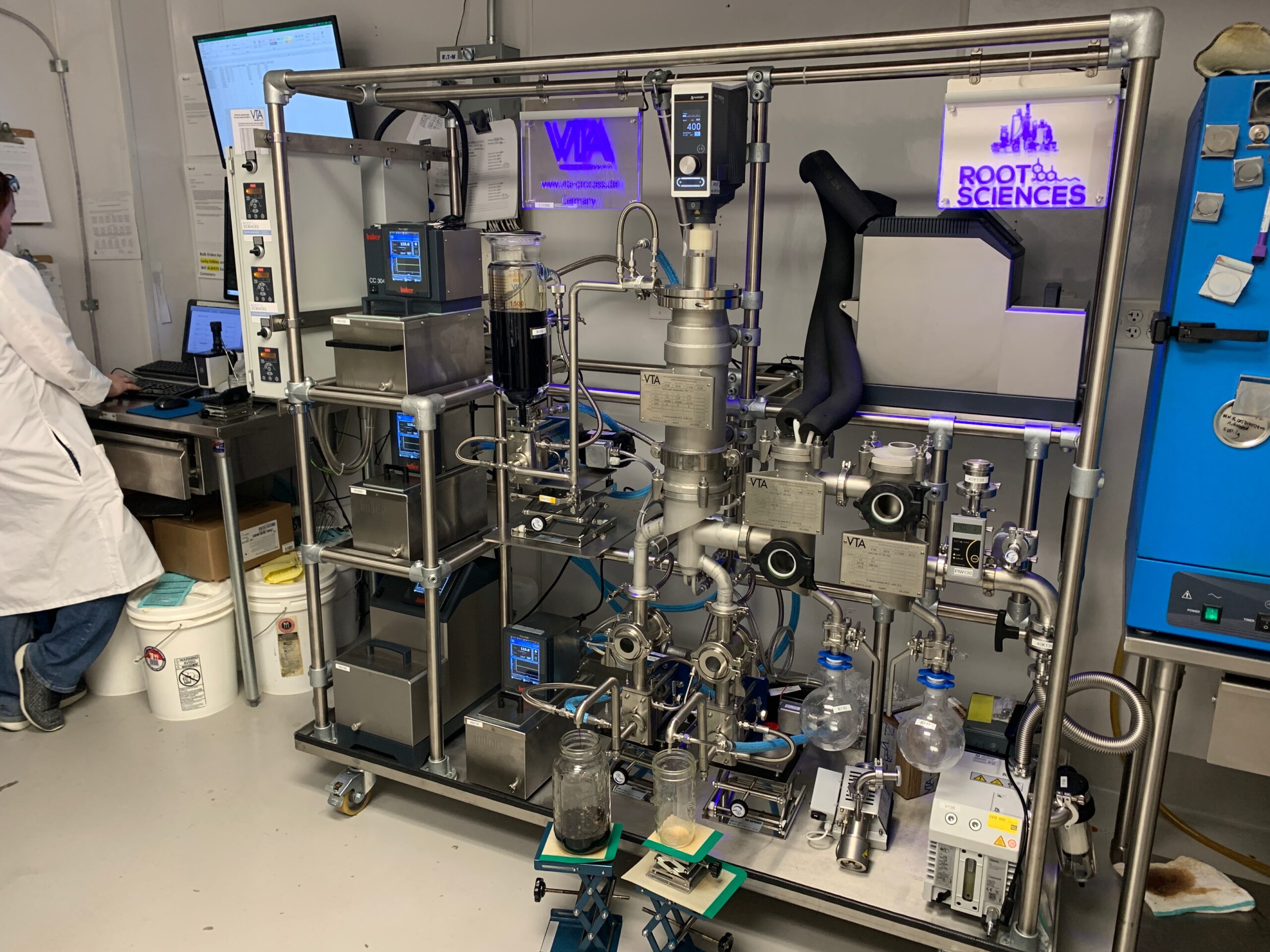
What you’re actually selling determines almost every equipment decision that follows. A facility built around premium, terpene-rich concentrates (live resin, shatter, badder) needs different equipment than one built around bulk distillate for edibles and vape cartridges, and a facility planning to do both needs equipment and facility classifications for both.
Defining this before evaluating any specific machine keeps the rest of the decision process anchored to something concrete instead of a vendor’s feature list.
Choose the Extraction Method That Fits Those Goals
Once the product goals are clear, the extraction method mostly selects itself. Hydrocarbon extraction equipment is generally the right starting point for terpene-focused concentrate production, while ethanol extraction equipment tends to fit high-volume distillate and full-spectrum product lines better.
Each method carries its own facility classification, cost structure, and throughput ceiling, so this decision and the next few sections aren’t really separate choices, they’re one decision viewed from different angles.
Size Equipment to Actual Throughput Needs
Throughput should be sized to realistic production volume, not nameplate capacity or a projected best-case scenario. A machine rated for 100 lbs/day rarely runs at that rate consistently once loading, cleaning, maintenance windows, and staffing realities are factored in. Facilities that oversize early to “plan for growth” often end up with idle capital sitting in a room that’s expensive to run at partial load, while facilities that undersize hit a throughput ceiling faster than expected and need to retrofit sooner than planned.
Match Equipment to a Facility Classification You Can Support
Hydrocarbon systems require a Class 1 Division 1 (C1D1) rated room, the most stringent hazardous-location classification, with explosion-proof electrical systems and continuous gas monitoring. Ethanol generally only requires C1D2, a meaningfully less expensive classification to build and insure.
Cannabis Science and Technology has flagged this as one of the most common and costly sequencing errors in the industry: engineers brought in after equipment has already been purchased, only to find the building can’t support the classification that equipment requires. This is frequently the constraint that actually decides equipment selection, since a building or lease that can’t support C1D1 rules out hydrocarbon systems regardless of how well they’d otherwise fit the product goals.
Calculate Total Cost of Ownership, Not Just Sticker Price
Equipment price is only one line item. Facility build-out, financing or lease terms, consumables, energy and utility draw, scheduled maintenance, and staff training all add to the real cost of running a piece of equipment for its useful life.
The breakdown of cannabis extraction equipment cost factors goes deeper into how manufacturing quality and component grade affect this number specifically; the short version is that comparing two machines on sticker price alone is comparing an incomplete picture.
Vet Vendor Support, Training, and Compliance Track Record
Installation timelines, operator training, ongoing maintenance support, and how a vendor handles a breakdown all affect uptime more than most buyers expect going in. A facility evaluating multiple vendors should ask for references from operators running the same equipment at similar scale, not just a product demo.
Root Sciences’ extraction lab consulting work exists specifically because equipment selection done in isolation, without someone accountable for how it performs after installation, is one of the more common ways facilities end up with a mismatch between what they bought and what they needed.
Selection Factors at a Glance
Selection Factor | What It Determines | Why It Matters |
Product goals | Which extraction method and equipment class fits | Determines nearly everything downstream, from solvent to facility class |
Daily throughput | Machine size and batch vs. continuous format | Under-sizing bottlenecks production; over-sizing wastes capital |
Facility classification | C1D1 vs. C1D2 vs. general electrical | Sets build-out cost and what equipment can legally run on-site |
Automation level | Labor cost and batch-to-batch consistency | Affects both operating cost and product quality repeatability |
Total cost of ownership | True cost beyond the sticker price | Financing, maintenance, consumables, and energy compound over time |
Vendor support | Installation, training, and service response | Determines uptime and how fast problems actually get resolved |
Automation Level and Batch vs. Continuous-Flow Systems
Automation affects labor cost, consistency, and how much operator expertise a facility needs to run equipment reliably. Manual and semi-automated batch systems cost less upfront but depend more heavily on operator skill for consistent results batch to batch.
Continuous-flow and fully automated systems cost more but reduce labor hours per gram processed and tend to produce more consistent output, since programmable controls remove some of the variability that comes from manual timing and temperature adjustments. The right level of automation generally tracks with throughput: a facility running small, varied batches for craft SKUs often doesn’t recover the cost of full automation, while a high-volume distillate operation usually does.
Planning for Scalability and Future Expansion
Equipment that fits current production volume doesn’t always leave room to grow into it. Modular systems, where additional columns, tanks, or processing units can be added to an existing setup, let a facility scale throughput without replacing the entire system.
This matters most for facilities expecting volume growth within a few years of initial buildout, since replacing an entire extraction line is a materially larger capital event than adding capacity to an existing modular one. It’s worth asking any vendor directly whether a given system has a defined expansion path or whether scaling means starting over.
New vs. Used Equipment: What's Actually Worth the Risk
Used equipment can meaningfully lower startup capital, and the secondary market has matured enough that it’s a legitimate option, not just a workaround for underfunded operators. The main risks with used equipment are missing certifications, undocumented maintenance history, and lack of warranty; a live demonstration and a maintenance record request before purchase address most of that risk.
New equipment remains the safer default for hydrocarbon systems specifically, given how much the safety certification and facility classification depend on documented equipment condition.
Integrating Extraction Equipment with Post-Processing Systems
Extraction is one step in a longer production chain, and equipment chosen without considering what happens next often creates a bottleneck somewhere downstream. Crude extract typically needs winterization, filtration, decarboxylation, and often distillation before it becomes a finished product, and each of those steps has its own throughput ceiling.
A hydrocarbon or ethanol system that outproduces the post-processing equipment behind it doesn’t actually increase finished output, it just creates a backlog of crude sitting in storage. Evaluating extraction equipment alongside the post-processing line it feeds, rather than as an isolated purchase, avoids building a bottleneck into the facility from day one.
Safety Certifications and Regulatory Compliance to Verify
Beyond facility classification, a growing number of states are formalizing Good Manufacturing Practices (GMP) expectations for cannabis processors even where it isn’t federally mandated. New York’s processor licensing regulations, for example, require licensees to submit proof of a qualified third-party GMP audit of their extraction and manufacturing processes within one year of commencing licensed operations.
Equipment purchased without GMP-compliant materials and documentation (stainless steel contact surfaces, validated cleaning protocols, traceable component sourcing) can force a costly retrofit later if state requirements catch up to where the facility already is. Verifying ASME pressure vessel compliance, UL electrical listing, and GMP-compatible construction before purchase is meaningfully cheaper than verifying it after an inspection flags a gap.
Common Equipment Selection Mistakes
Most of the expensive mistakes in equipment selection trace back to skipping one of the steps above rather than any single bad purchase decision. The most frequent ones:
- Buying equipment before finalizing facility design: purchasing a system, then discovering the building can’t support its facility classification without a costly retrofit
- Sizing to projected rather than realistic throughput: paying for capacity that sits idle, or undersizing and hitting a ceiling within the first year
- Ignoring post-processing capacity: extraction equipment that outpaces winterization, filtration, or distillation capacity downstream
- Comparing sticker price without total cost of ownership: missing financing terms, consumables, energy draw, and maintenance in the comparison
- Skipping reference checks with existing operators: relying on a vendor demo alone instead of talking to facilities running the same equipment at similar scale
Solvent-Based vs. Solventless: How the Choice Narrows Equipment Options
Everything above assumes a solvent-based method (hydrocarbon, ethanol, or CO2), but solventless extraction, rosin pressing and ice water hash, removes several of these decisions entirely. Solventless equipment doesn’t require C1D1 or C1D2 facility classification, which significantly lowers the facility build-out cost and compliance burden discussed above.
The tradeoff is lower yield per batch and a product line limited to what solventless methods can produce. Facilities uncertain about long-term product direction sometimes start solventless specifically to avoid committing to a facility classification before the product line is fully defined, then add solvent-based equipment once that direction is clearer.
Conclusion
There isn’t a single best extraction system, only the one that matches a specific facility’s product goals, throughput needs, and facility classification. Working through product goals, method selection, sizing, facility fit, total cost of ownership, and vendor support in that order, rather than starting with a specific machine and working backward, is what separates equipment purchases that hold up for years from ones that need replacing within the first production cycle.
FAQs
How long does it typically take to go from equipment purchase to full commercial operation?
Equipment lead times of six to eight weeks are common, but fire marshal inspections, electrical certification, and facility classification approval frequently add several more months on top of that. Facilities that assume equipment delivery date equals operational date are usually the ones surprised by a four-plus month gap between purchase and first commercial batch.
Can extraction equipment be financed, or does it typically require full upfront capital?
Financing and leasing are both common in the cannabis industry, though terms tend to run higher than mainstream equipment finance due to a more restricted lender pool. Lease payments and depreciation are treated differently for tax purposes, and the impact depends on how those costs are categorized, which is worth a conversation with a cannabis-specialized accountant before deciding between buying and leasing.
Does the equipment manufacturer’s facility classification rating guarantee compliance with local fire codes?
No. Equipment certification (ASME, UL, C1D1/C1D2 rated components) confirms the equipment itself meets a safety standard, but local fire marshal approval, electrical permitting, and occupancy classification are separate processes specific to the building and jurisdiction. Certified equipment installed in a facility that hasn’t independently met local code requirements still won’t pass inspection.
Is it possible to run both hydrocarbon and ethanol extraction equipment in the same building?
Yes, but it requires building and maintaining separate C1D1 and C1D2 rated spaces, which meaningfully raises total facility cost compared to a single-method build-out. Some larger commercial operations do this specifically to cover both premium concentrate and bulk distillate product lines from one site.
How much should a facility budget for training and onboarding beyond the equipment cost itself?
This varies significantly by automation level and operator experience, but it’s rarely zero, and vendors don’t always itemize it clearly upfront. Facilities with little in-house extraction experience should ask specifically what training is included in the purchase price versus billed separately, and confirm whether that training happens on-site or requires sending staff elsewhere.