
Planning an ethanol extraction lab means sequencing five decisions correctly: product goals and extraction method, core and post-processing equipment sized to match, a facility that can support C1D2 classification, a layout that zones raw material, extraction, and packaging separately, and compliance documentation built in from the start rather than added later.
This guide walks through each of those in order, along with the utility, staffing, and budget realities that tend to surprise first-time operators.
Sections
ToggleKey Takeaways
- Product goals and the warm-vs-cold ethanol decision should come before equipment selection, since that choice determines chiller needs, winterization requirements, and post-processing sizing.
- Ethanol extraction requires C1D2 facility classification, a lower bar than hydrocarbon’s C1D1 but still a defined electrical and ventilation standard that most standard commercial spaces don’t already meet.
- Water, wastewater, and power demands for ethanol extraction are frequently underestimated during planning and are more expensive to retrofit than to plan for upfront.
- A zoned layout, separating raw material storage, extraction, post-processing, and packaging, prevents both cross-contamination and the workflow bottlenecks that come from an unplanned open floor.
- Compliance documentation and SOPs built in from day one are significantly less disruptive than reconstructing them retroactively once a GMP audit or licensing inspection is already scheduled.
Planning Phases at a Glance
Planning Phase | Key Requirement | Why It Matters |
Product goals | Warm vs. cold ethanol method decision | Determines equipment, terpene retention, and post-processing needs |
Core equipment | Extraction vessel, chiller, filtration, solvent recovery | Defines throughput ceiling and crude oil quality going into post-processing |
Facility classification | C1D2 rated room | Less stringent than hydrocarbon’s C1D1, but still a defined electrical and ventilation standard |
Utilities | High-purity water, wastewater handling, power draw | Ethanol processing has meaningfully higher water demands than hydrocarbon |
Layout | Zoned workflow: storage, extraction, post-processing, packaging | Prevents cross-contamination and bottlenecks between production stages |
Compliance documentation | SOPs, GMP readiness, safety certifications | Required for licensing and increasingly expected even where not mandated |
How to Plan an Ethanol Extraction Lab?
These six decisions form the backbone of an ethanol lab plan, and they need to happen roughly in this order, since each one narrows the options for the next. Skipping ahead to equipment before locking in product goals, or to layout before facility classification, is where most planning mistakes start.
1. Define Product Goals and Ethanol Method (Warm vs. Cold/Cryo)
Warm ethanol extraction runs faster but pulls more chlorophyll and plant waxes into the crude oil, requiring winterization to clean it up. Cold or cryogenic ethanol extraction, run at -40°F or lower, reduces that co-extraction significantly and can shorten or eliminate the winterization step, at the cost of a slower process and the added equipment needed to hit and hold that temperature.
This decision shapes nearly everything that follows: a cold ethanol lab needs chiller capacity a warm ethanol lab doesn’t, and a warm ethanol lab needs more built-in winterization and filtration capacity downstream.
2. Core Extraction Equipment You’ll Need
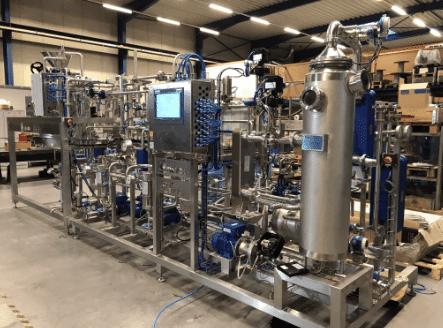
A functioning ethanol lab needs, at minimum, an extraction vessel or column sized to target throughput, a chilling system matched to warm or cold operation, a filtration stage to remove plant particulate, and a solvent recovery system to reclaim and reuse ethanol rather than losing it each run.
Ethanol extraction equipment built for commercial use typically integrates these stages rather than requiring them to be sourced and connected separately, which reduces both the engineering burden and the number of points where a mismatched component creates a bottleneck.
3. Post-Processing Equipment That Has to Be Planned Alongside It
Crude ethanol extract almost always needs winterization (chilling to precipitate out fats and waxes) and filtration before it’s a finished or even semi-finished product, and many operations add decarboxylation and distillation on top of that.
Planning extraction equipment without sizing the post-processing line behind it is one of the most common ways a lab ends up with a bottleneck: the extraction stage outproduces what winterization and filtration can actually clear, and crude oil backs up in storage rather than becoming finished product.
4. Facility Classification: What C1D2 Actually Requires
Ethanol is classified as a Category 2 flammable liquid under OSHA’s flammable liquids standard, with a flash point below 73.4°F and a boiling point above 95°F. That classification is what drives the requirement for a Class 1 Division 2 (C1D2) rated extraction room: explosion-proof or purged electrical equipment in the immediate extraction area, adequate ventilation, and gas detection.
It’s a meaningfully lower bar than hydrocarbon’s C1D1 requirement, but it’s still a defined electrical and construction standard, not something that can be retrofitted into a standard commercial space without real construction work.
5. Water, Wastewater, and Utility Planning
Ethanol extraction labs typically have higher water demands than hydrocarbon labs, both for high-purity water used in certain process steps and for equipment cooling and cleaning. Wastewater generated during cleaning and processing often needs treatment or permitted disposal rather than direct discharge, depending on local regulations.
Power draw for chillers, especially in cold ethanol operations, is also meaningfully higher than a comparably sized hydrocarbon setup. These utility requirements are easy to underestimate during initial planning and expensive to retrofit once a lease or building is locked in.
6. Compliance Documentation and GMP Readiness
Beyond facility classification, licensing increasingly requires documented standard operating procedures and, in a growing number of states, third-party GMP audits. New York’s processor regulations, for example, require licensees to submit proof of a qualified third-party GMP audit within one year of commencing operations, along with a master manufacturing record for each product type.
Building SOPs and documentation practices from day one, rather than reconstructing them retroactively for an audit, is significantly less disruptive to ongoing production.
Lab Layout: Zoning the Space for Workflow and Safety
A well-planned ethanol lab separates the space into distinct zones rather than treating it as one open production floor, both for safety and for workflow efficiency:
- Raw material storage: temperature-controlled, secured, and physically separate from the extraction area
- Extraction zone: the C1D2 rated room housing the extraction vessel, chiller, and solvent recovery system
- Post-processing area: winterization, filtration, decarboxylation, and distillation, ideally sequenced to match actual product flow
- Packaging and finished goods storage: a clean, separately controlled space to prevent solvent or contaminant exposure to finished product
Root Sciences’ facility layout design work maps product flow from raw material intake through finished goods specifically to catch the workflow bottlenecks and cross-contamination risks that show up when a layout is planned around available square footage rather than around the actual production sequence.
Ventilation, Fire Suppression, and Electrical Requirements
Ventilation in the extraction zone needs to handle solvent vapor evacuation specifically, not just general room air exchange, and typically requires non-recirculating make-up air when solvents are present. Fire suppression in solvent-based extraction areas generally can’t rely on standard water-based sprinkler systems; foam or dry-chemical suppression is the norm for spaces handling flammable liquids.
Electrical systems within the classified extraction zone need to meet C1D2 standards specifically, which usually means purged or explosion-proof fixtures rather than standard commercial electrical fittings. Some states go further on documentation: Minnesota’s cannabis manufacturing rules, for example, require a facility’s electrical, gas, fire suppression, and exhaust systems to be certified in writing by a qualified industrial hygienist or professional engineer before operation.
These three systems are typically the largest line items in an extraction room build-out, often exceeding the cost of the extraction equipment itself.
Staffing, Training, and SOPs
Ethanol extraction is generally considered more approachable for new operators than hydrocarbon extraction, but it still requires trained staff who understand solvent handling, emergency shutdown procedures, and the specific SOPs for the equipment installed.
Vendor-provided training at installation covers equipment operation, but ongoing internal training, refreshers, new-hire onboarding, and documented competency checks tend to fall on the facility itself. Facilities that treat training as a one-time event at installation rather than an ongoing program are more likely to see the inconsistent results and safety incidents that come from operator turnover eroding institutional knowledge over time.
Budget and Timeline Expectations
Equipment lead times commonly run six to eight weeks, but that’s rarely the pacing factor for the full project. Facility build-out for C1D2 electrical and ventilation, fire marshal inspection, and licensing approval frequently add several additional months beyond equipment delivery, and treating equipment arrival as the finish line rather than one step in a longer sequence is a common source of missed launch dates.
Total startup cost varies enormously by scale, but facility classification and utility build-out are frequently a larger share of total cost than most first-time operators expect going in, sometimes exceeding the extraction equipment’s own price tag.
Common Planning Mistakes
Most of the expensive mistakes in ethanol lab planning come from sequencing decisions in the wrong order rather than from any single bad equipment choice. The specific mistakes worth watching for:
- Purchasing equipment before confirming the building can support C1D2: discovering electrical or ventilation limitations after equipment has already arrived
- Undersizing post-processing relative to extraction throughput: creating a crude oil bottleneck that limits finished output regardless of extraction capacity
- Underestimating water and wastewater requirements: treating utility planning as an afterthought rather than a factor that can rule out a building
- Delaying SOP and documentation work until pre-audit: scrambling to reconstruct compliance documentation instead of building it alongside operations
- Treating equipment delivery as the project finish line: underestimating how much time inspection and permitting add after equipment is already installed
Conclusion
An ethanol lab that runs smoothly from day one is the product of sequencing, not just equipment selection. Product goals decide the extraction method, the extraction method decides the equipment and utility needs, the utility needs decide what building can actually work, and compliance documentation built in from the start avoids the scramble that comes from treating it as a final step. Getting that order right is what separates a lab that scales cleanly from one that needs expensive retrofits within its first year.
FAQs
1. Can an ethanol lab be retrofitted into a space originally built for hydrocarbon (C1D1) extraction?
Generally yes, since C1D1 exceeds the requirements of C1D2, meaning a hydrocarbon-rated space can typically run ethanol extraction without modification. The reverse isn’t true: a C1D2 space built for ethanol usually cannot legally run hydrocarbon extraction without an upgrade to C1D1 standards.
2. How much water does a commercial ethanol extraction lab actually use compared to a hydrocarbon lab?
It varies by scale and specific process steps, but ethanol labs generally have meaningfully higher water demands due to cooling requirements, cleaning protocols, and in some cases process water needs that hydrocarbon extraction doesn’t share. This is worth quantifying early with an equipment vendor, since it directly affects both utility bills and whether an existing building’s water and drainage capacity is sufficient.
3. Does choosing cold ethanol extraction eliminate the need for winterization entirely?
It significantly reduces the winterization burden by limiting how much chlorophyll and plant wax get co-extracted in the first place, but it doesn’t always eliminate the step entirely, particularly for biomass with higher lipid content. Many cold ethanol operations still run a lighter winterization pass rather than skipping it outright.
4. What’s the biggest planning mistake operators make when they’ve previously only worked with hydrocarbon extraction?
Underestimating the utility and wastewater planning that ethanol requires, since hydrocarbon extraction doesn’t carry the same water demands. Operators moving from a hydrocarbon background sometimes plan a facility around the C1D2-vs-C1D1 cost savings without accounting for the utility infrastructure ethanol needs instead.
5. Is it possible to start with warm ethanol extraction and add cold/cryo capability later?
Yes, and it’s a reasonably common scaling path, since warm ethanol equipment generally has a lower upfront cost and simpler chiller requirements. Adding cryogenic capability later means adding chiller capacity and cold storage for biomass, which is usually feasible as a facility expansion rather than requiring a full rebuild, provided the original layout left room for it.