
Nanoemulsification is changing infused beverages by breaking cannabinoid oil into droplets small enough to stay dispersed in water, so a drink can stay evenly mixed and nearly clear instead of separating. The difference is measurable: in a 2021 stress-testing study, a nanoemulsion with droplets of about 120 nanometers stayed largely stable for about six weeks, and diluted into a 355 mL serving, including with carbonated water, it stayed nearly transparent.
This blog explains what nanoemulsification changes in infused drinks, what the research does and does not show, and what processors should ask before committing to a formulation.
Key Takeaways
- Cannabinoids are oil-based, so a drink needs the oil broken into tiny droplets and held by an emulsifier, or it separates. Nanoemulsification does this.
- Formulation decides whether a drink holds up. One study found a nanoemulsion that resisted several stresses but broke down at pH 2 or below and with high calcium chloride or sucrose levels, and its CBD content fell about 17 percent over six weeks.
- Emulsions fail in different ways depending on oil concentration. In one study, Ostwald ripening was the main cause of coarsening only at oil fractions up to 0.05, while coalescence and flocculation mattered more at higher fractions.
- Infused drinks are still a small slice of regulated cannabis sales, about 1 percent in BDSA data reported in 2024, and hemp-derived THC drinks face a federal deadline of Dec. 11, 2026.
- Faster onset is the most repeated claim about nanoemulsion drinks, but the formulation research cited here measured stability, not absorption, so processors should ask suppliers for data.
The table compares three common ways to put cannabinoids into a drink.
Approach | How it works | What to expect in a drink | What the processor must control |
Direct oil addition | Oil-based cannabinoid is added with little or no emulsifier | Oil and water separate on standing | Mixing before use |
Nanoemulsion | Oil is broken into nanometer-scale droplets and held by an emulsifier | Can stay dispersed and nearly clear, depending on formulation | Droplet size, emulsifier, oil fraction, drink pH and ingredients |
Dry-carrier powder | Cannabinoid is combined with a carrier in powder form that disperses when mixed with water | Depends on the carrier and formulation | Dispersion, mixing, and carrier compatibility |
Why Infused Beverages Needed Nanoemulsification?
A beverage is mostly water, and cannabinoids such as THC and CBD do not dissolve in water. They dissolve in oil. For a beverage maker, that single fact sets up a chain of problems: pour oil-based extract into a drink and it floats as a film on the surface or clings to the bottle wall. The first sip and the last sip carry different doses, and a consumer who opens a can that has sat for a few weeks sees an oily ring and a drink that no longer looks or tastes the way it was designed to.
Early infused drinks tried to work around this with heavy flavors, cloudy formulas, or a “shake well” instruction on the label. None of those fixes the underlying issue. A product that has to be shaken to deliver its dose is hard to scale, hard to label accurately, and hard to keep consistent from one batch to the next.
Nanoemulsification went at the root of the problem. Instead of forcing oil and water to mix, it breaks the oil into extremely small droplets and holds them in the water phase with an emulsifier, so the cannabinoid stays evenly dispersed. In a 2021 study published in the Journal of Cannabis Research, researchers used high-pressure homogenization and a plant-derived emulsifier, quillaja saponin, to produce droplets of about 120 nanometers.
The resulting emulsion was nearly transparent when diluted into a 355 mL serving, including carbonated water, and it stayed stable for about six weeks at ambient conditions. The same work showed that the emulsifier concentration and the number of homogenization cycles strongly affected droplet size, which tells you why the result depends on the process and not just the recipe.
That is what changed for the industry. Clear or near-clear drinks became realistic, the dose became far more uniform from the first pour to the last, and shelf life became something a producer could test and plan around instead of hope for. The fundamentals of how nanoemulsification works in cannabis matter here only as the reason these gains are possible: smaller, evenly distributed droplets are what keep a water-based product looking and behaving like a consistent drink.
How Infused Beverages Are Performing in the Market?
image courtesy: getblitzd.us
Infused drinks are growing, but from a small base. In data reported by Cannabis Business Times, BDSA tracked $50 million in beverage retail sales across 15 markets in the first quarter of 2024, up from $48 million a year earlier. That was about 6 percent of edibles sales and about 1 percent of total cannabis sales, and BDSA expected the 1 percent share to hold. Beverage sales grew more slowly than edibles overall from the first quarter of 2022 to the first quarter of 2024.
Demand also shows up outside licensed dispensaries. A South Carolina convenience chain reported more than $267,000 in sales in the first three months after launching THC beverages, according to NACS, which quoted an industry coalition chair saying the category has demand and will be back whatever happens in December.
The two sources describe different parts of the market. BDSA tracks state-regulated cannabis sales, while the hemp-derived drinks sold through other retail channels follow a separate path. Neither source credits nanoemulsification for the sales numbers, so this blog does not either. The claim here is narrower: formulation is what makes these drinks viable at shelf life, which is why it has become a competitive issue.
Faster Onset and Consistent Dosing: What Is Proven and What Is Claimed
Faster onset is the benefit most often attached to nanoemulsion drinks. The formulation research cited in this blog does not measure it. The stress-testing study was motivated by the poor oral bioavailability of CBD and proposed nanoemulsions as a way to improve bioaccessibility, but it did not measure absorption in people and did not address time to effect.
Human data exists, but it is a separate body of work. A 2025 crossover study in the Journal of Cannabis Research compared a self-nanoemulsifying delivery system with a commercial oil-based formulation. That is a different delivery format from a ready-to-drink beverage, so its results should not be assumed to apply to a drink.
When a supplier or brand claims faster onset, these are the questions that separate a data-backed claim from a marketing one.
- Was the study done on the same formulation and dose form as the product being sold?
- How many participants took part, and what was measured?
- Was the comparison against an oil-based product at the same dose?
- Is the full study available to review?
Dose consistency is more testable. A drink only delivers a consistent dose if the droplets stay dispersed, and the stability section below shows how much that depends on formulation.
How Nanoemulsion Affects Clarity, Stability, and Shelf Life
Clarity comes from droplet size: very small droplets scatter little light, so a drink looks nearly transparent. In the stress-testing study, the emulsion diluted into a 355 mL serving stayed nearly transparent with droplets in the sub-micron range. The emulsion stayed largely stable for about six weeks of ambient storage.
Stable did not mean unchanged. CBD content fell by about 17 percent over the six weeks, and the authors linked the loss to changes in phase stability rather than chemical breakdown in most of the stress tests. The emulsion also had limits: it destabilized at pH 2 or below and at high calcium chloride or sucrose levels. A formulation that works in one drink can fail in another, so it has to be tested in the final drink.
Emulsions break down through different pathways, and which one dominates depends on the system. In a paper on nanoemulsions stabilized by non-ionic surfactants, the authors report that Ostwald ripening, where larger droplets grow at the expense of smaller ones, is the main cause of coarsening only at oil fractions up to 0.05. At oil fractions of 0.15 to 0.45, other mechanisms dominate, including flocculation, where droplets clump, and coalescence, where they merge.
Failure pathway | What happens | When it dominated in the study |
Ostwald ripening | Larger droplets grow while smaller ones shrink | Oil fractions up to 0.05 |
Flocculation | Droplets clump without merging | Early days in one surfactant system at oil fractions of 0.15 to 0.45 |
Coalescence | Droplets merge into larger ones | Main long-term mechanism in one surfactant system at oil fractions of 0.15 to 0.45 |
Two caveats apply. The paper used liquid paraffin as the oil, not cannabinoids, so it describes how nanoemulsions behave in general rather than how a cannabinoid drink will behave. The stress-testing study used a single emulsifier and carrier oil and was mostly in vitro, so its numbers will not transfer directly to another formulation.
The Equipment That Decides the Result
A formulation is only as consistent as the process that makes it. In the stress-testing study, droplet size depended strongly on homogenization cycles and emulsifier concentration, which is why processors rely on dedicated nanoemulsification equipment with controlled, repeatable settings. Choosing between machine types is a separate question, and the guide to cannabis homogenizers covers how the main types differ.
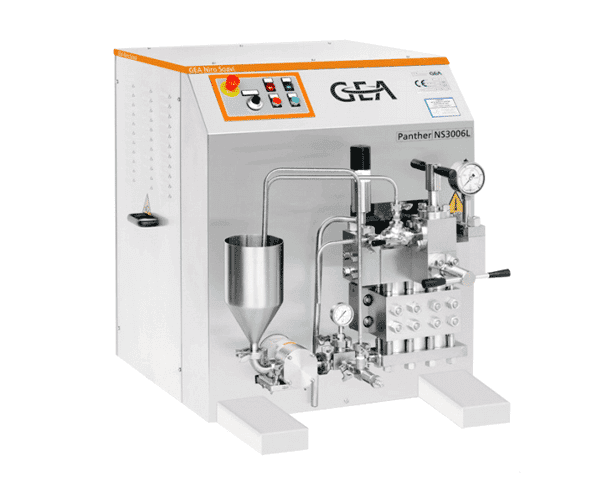
Whatever the equipment, these are the variables that the research cited here shows can change the outcome.
- Number of homogenization cycles and the settings used for each.
- Emulsifier type and concentration, which changed both droplet size and failure behavior.
- Oil fraction, which changed which failure pathway dominated.
- Drink composition, including acidity and sugar or mineral levels.
Measuring droplet size on every batch, not only during development, is what turns these variables into a consistent product.
Nanoemulsification and the Federal Hemp Deadline
The federal picture is still moving. Supply Side FBJ reported in August that the fiscal 2026 agriculture appropriations bill would ban hemp-derived THC above 0.4 mg per package, with an original effective date of Nov. 12, 2026 and a proposed one-month delay. It described the ready-to-drink category as having grown through a loophole in the 2018 Farm Bill, and said large alcohol companies reportedly have THC beverages approved or developed and are waiting for federal certainty.
NACS reported in October that, under current law, hemp-derived products are scheduled to become illegal on Dec. 11, 2026 unless lawmakers change the law. The same coverage noted that each state differs, so a formulation that is legal to sell in one state may not be in another.
For a processor, the practical result is that formulation work and compliance planning run side by side. A stable nanoemulsion is valuable only if the product it goes into can be sold, so the intended format, dose, and states should be settled before a batch is scaled.
What This Shift Means for Beverage Processors?
When nanoemulsification is part of a formulation, it changes how suppliers and partners should be judged. The table lists questions worth asking, along with why each matters.
Question to ask | Why it matters |
How is droplet size measured, and what range is typical per batch? | Droplet size drives clarity and stability |
Has stability been tested in the final drink, not only the concentrate? | Acidity, sugar, and minerals broke down one tested nanoemulsion |
What does potency testing show across the shelf life? | CBD content fell about 17 percent in one six-week test |
What oil fraction does the formulation use? | Oil fraction changed which failure pathway dominated |
What human data supports any onset claim, and in what format? | Studies on powders or oils may not apply to a drink |
Which states and formats is the product intended for? | Federal and state rules differ and are still shifting |
The common thread is evidence. Claims about clarity, stability, and onset are easy to make and harder to support, and processors who ask for data early avoid reformulating after launch.
Conclusion
Nanoemulsification matters to infused beverages because it determines whether a drink stays mixed, stays clear, and delivers a consistent dose through its shelf life. The research shows it can work well, and it also shows how dependent that result is on the formulation, the process, and the drink it is placed in.
The category is small in regulated sales and uncertain in hemp-derived channels, which makes evidence more important, not less. Processors that test in the final drink, measure droplet size on every batch, and confirm the regulatory path before scaling are the ones most likely to turn a promising formulation into a product that lasts.
Frequently Asked Questions
Can a nanoemulsion survive carbonation, heat, and cold?
In the 2021 stress-testing study, the optimized emulsion resisted heat, cold, dilution, and carbonation, and a diluted serving made with carbonated water stayed nearly transparent. The same emulsion failed at pH 2 or below and at high calcium chloride or sucrose levels. The result applies to one emulsifier and one carrier oil, so a different formulation should be tested under the same conditions before it is assumed to hold up.
Why does oil concentration change how an emulsion fails?
In a study of nanoemulsions stabilized by non-ionic surfactants, Ostwald ripening was the main cause of coarsening only at oil fractions up to 0.05. At oil fractions of 0.15 to 0.45, flocculation and coalescence dominated, and the pattern differed between surfactant systems. The practical lesson is that a fix aimed at one pathway may not help when the oil concentration changes, so stability testing should use the actual oil fraction of the product.
Can a drink look stable and still lose potency?
Yes. In the stress-testing study, the emulsion remained largely stable for about six weeks, yet CBD content fell by about 17 percent over that period. The authors linked the loss to changes in phase stability rather than chemical breakdown in most of the stress tests. For processors, that is a reason to test potency at several points across shelf life, not only at filling.
How should a processor judge an onset or bioavailability claim?
Start with whether the study used the same formulation and dose form as the product, since a result for a powder or an oil does not automatically apply to a drink. Then check how many people took part, what was measured, what the comparison product was, and whether the full study is available. A claim that cannot answer those questions is a marketing statement, not evidence.
Does one emulsifier work for every cannabinoid drink?
No. The stress-testing study used a single plant-derived emulsifier and one carrier oil, and the surfactant study found that different surfactant systems failed in different ways. Droplet size and stability depend on the emulsifier, its concentration, the oil, and the drink, so results from one system should be treated as a starting point for testing, not a guarantee.